

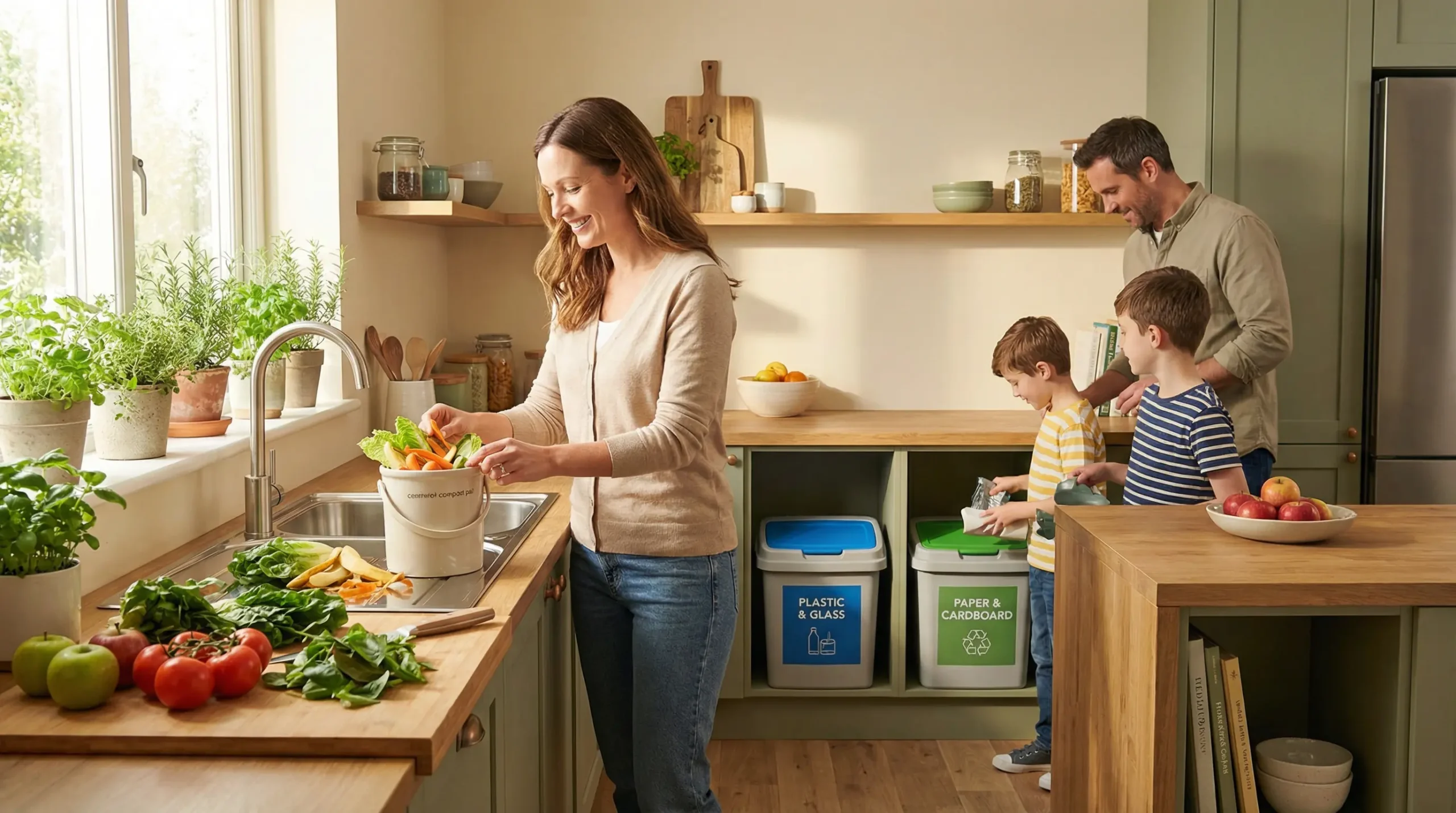

Every day, millions of households throw away valuable kitchen waste without realizing the impact. The sad truth is that a large portion of food waste ends up in landfills. This waste creates environmental problems. It also wastes money and resources. The good news is that there are simple ways to change this. Reducing kitchen waste through composting and recycling is easier than many people think. It helps the planet. It also saves money. This guide will show readers exactly how to do it.
Understanding Kitchen Waste
Kitchen waste comes in many forms. It includes food scraps, vegetable peels, and fruit leftovers. It also includes packaging materials. Food waste is organic material that breaks down naturally. Organic waste like eggshells, coffee grounds, and meat bones can be composted. Non-organic items like plastics, metals, and paper fall into the recycling category.
Many people don’t realize how much waste their kitchens produce. Studies show that the average household throws away about 250 pounds of food waste each year. This represents roughly one-third of all purchased food.
Waste reduction starts with understanding what ends up in the trash. Most kitchen waste is preventable. Spoiled food accounts for a large portion of food disposal in homes. Biodegradable waste like fruit skins and vegetable scraps make up another significant amount. When this material reaches landfills, it produces methane gas.
Methane is a harmful greenhouse gas. It contributes to climate change. By managing kitchen waste properly, families can make a real difference. The environmental impact is substantial. Money savings are also significant. Proper waste management benefits both the planet and household budgets.
How to Start Composting at Home
Composting is one of the best ways to handle organic waste. It transforms kitchen scraps into rich garden soil. Home composting is simple, affordable, and rewarding. Many people think composting requires special knowledge or space.
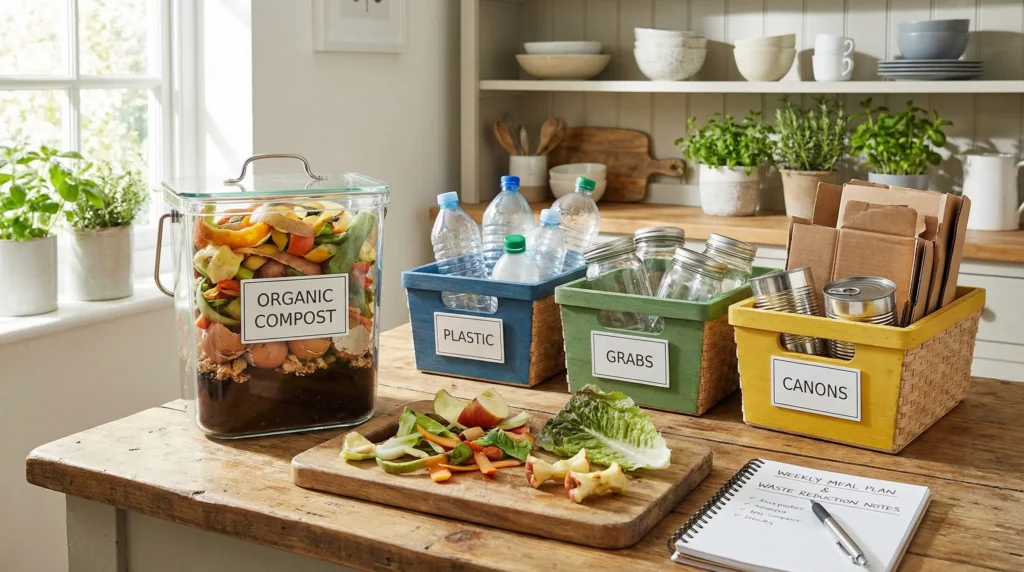
This is not true. Beginners can start composting in apartments, small yards, or even on balconies. The basic idea is to let organic materials break down naturally. Bacteria and microorganisms do the work. Over time, the waste becomes compost, which is dark, crumbly, and nutrient-rich.
There are several composting methods to choose from. A traditional compost bin is ideal for backyards. These bins are containers where waste decomposes. Composting piles are another option for those with space. Gardeners simply pile materials in a designated area. Vermicomposting uses special worms to break down organic waste. This method works well indoors. Bokashi composting is a fermentation process. It’s perfect for apartments. It handles meat and dairy, which traditional methods don’t.
The composting process requires two types of materials: green materials, such as food scraps, grass clippings, and plant trimmings. These are nitrogen-rich. Brown materials include dried leaves, newspaper, and cardboard. These contain carbon.
The ideal ratio is three parts brown to one part green. This balance helps materials decompose efficiently. The process typically takes two to six months. Quality compost is ready when it looks like dark soil. It should smell earthy, not rotten. Temperature matters too. Hotter piles decompose faster than cool ones.
Recyclable Kitchen Items
Kitchen recycling is straightforward once people know what items qualify. Plastics numbered 1 and 2 are most recyclable. These include milk jugs, soda bottles, and food containers. Higher numbers are rarely accepted in standard programs.
Glass containers of all colors can be recycled. This includes jars, bottles, and food containers. Aluminum and steel cans are highly recyclable. They have significant resale value. Cardboard boxes, paper bags, and newspaper are welcome in recycling bins.
Food packaging often contains recyclable materials. Cardboard takeout containers go in recycling. So do paper bags from groceries. Metal lids from jars can be included. However, contaminated items should never be recycled. Food waste left on containers contaminates entire batches. Oil or grease prevents proper recycling.
Glass jars should be rinsed clean. This simple step prevents problems at recycling facilities. Waste segregation at home makes the entire process run more smoothly. It keeps recyclable materials clean and usable.
Local recycling guidelines vary by area. Some communities accept certain plastics, others don’t. Some accept glass while others prefer alternatives. Checking with local waste management programs is essential. Most cities provide guides online.
Understanding these rules prevents contamination. It ensures materials actually get recycled. Many people unknowingly send items to landfills. They believe these items are recyclable. This is called “wish-cycling.” It hurts recycling programs. Proper knowledge prevents this problem.
Practical Strategies to Reduce Kitchen Waste
Waste reduction begins before groceries even enter the kitchen. Smart shopping prevents unnecessary food waste. Making meal plans before shopping helps tremendously. Planned purchases mean fewer impulse buys. Fewer impulse buys mean less spoiled food. Checking what’s already at home prevents duplicate purchases. Creating shopping lists based on actual meal plans saves money. It also prevents waste.
Food storage techniques significantly extend shelf life. Understanding how to store different items properly makes a huge difference. Organic produce lasts longer when stored correctly. Some items belong in the refrigerator. Others stay fresher on the counter. Leafy greens last longer in breathable containers. Root vegetables prefer cool, dark places. Bread stays fresh longer when frozen. Herbs last weeks when stored like flowers in water. These simple changes prevent early spoilage.
Creative uses of food scraps dramatically reduce kitchen waste. Vegetable scraps make excellent food stock. Carrot tops, celery ends, and onion skins create flavorful broths. Stale bread becomes breadcrumbs or croutons. Overripe bananas make delicious smoothies or baked goods. Wilted vegetables work perfectly in soups and stir-fries. Using these items prevents them from becoming food waste. It also saves money on ingredients.
Tools & Equipment You’ll Need
Starting composting requires minimal investment. A simple compost bin costs twenty to fifty dollars. Larger systems run higher but last many years. For bokashi composting, a special bucket costs thirty to sixty dollars. These buckets come with starter culture needed for fermentation. Kitchen collection containers are helpful. Small bins hold scraps between trips to the compost area. These cost five to fifteen dollars. Recycling bins for the kitchen organize different materials. Label them clearly to avoid contamination.
Optional tools make composting easier. A pitchfork helps turn piles. A thermometer monitors pile temperature. A sifter separates finished compost from undecomposed materials. These items are not essential. Many gardeners skip them. Starting simple is fine. Equipment can be added later as confidence grows. Some people use tools they already have. This makes starting even cheaper.
Benefits of Composting & Recycling
Environmental benefits of proper waste management are substantial. Sending less to landfills reduces methane emissions. This helps fight climate change. Recycling conserves natural resources. It requires less energy than making new products from raw materials.
Recycling aluminum uses 95% less energy than mining new aluminum. This difference is remarkable. It impacts energy use and carbon emissions significantly. Composting returns nutrients to soil. This reduces the need for chemical fertilizers. It promotes healthier ecosystems.
Cost savings from kitchen waste reduction add up quickly. Families waste approximately 1,500 dollars yearly on spoiled food. Preventing this waste through food storage improvements saves money. Composting eliminates tipping fees at waste facilities.
Some communities charge by weight. Reducing trash volume means lower costs. Gardening with homemade compost eliminates expensive soil purchases. Growing food at home saves on groceries. These combined savings become significant over time.
Garden benefits from composting are excellent. Homemade compost improves soil structure. It increases water retention. Plants in compost-enriched soil grow stronger and healthier. Vegetables taste better. Flowers bloom more vibrantly.
This enriched soil supports beneficial microorganisms. These organisms promote plant health naturally. No chemical fertilizers are needed. This means healthier produce and lower chemical exposure. The quality improvement is noticeable and rewarding.
Conclusion
Reducing kitchen waste through composting and recycling is achievable for everyone. Starting small is perfectly fine. Even one compost bin or one organized recycling bin makes a difference. The benefits are clear. The environment improves. Money is saved. Gardens flourish. These changes don’t require perfection. They need consistency and knowledge. This guide provides the knowledge. Now readers can take action. Start today. Choose one strategy. It could be organizing kitchen recycling. It could be starting a small compost bin. Either choice is positive. Build from there. Soon, waste reduction becomes a habit. The household produces less trash. The planet gets healthier. Everyone wins.