
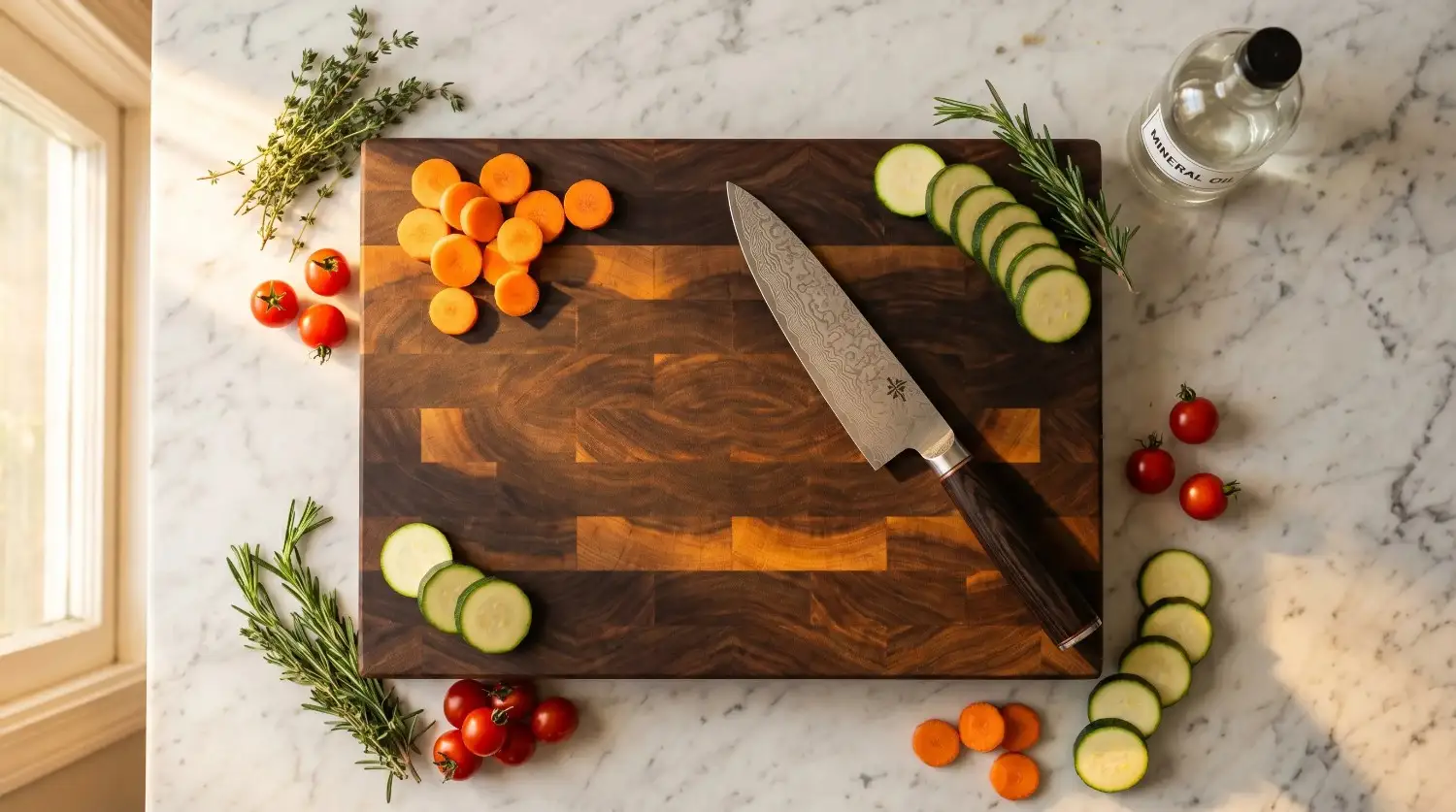

Your cutting board touches every meal you make. So it makes sense to ask: is it actually safe for you and for the planet? Let’s break down everything you need to know about choosing an eco friendly cutting board that works as hard as you do.
What Is an Eco Friendly Cutting Board?
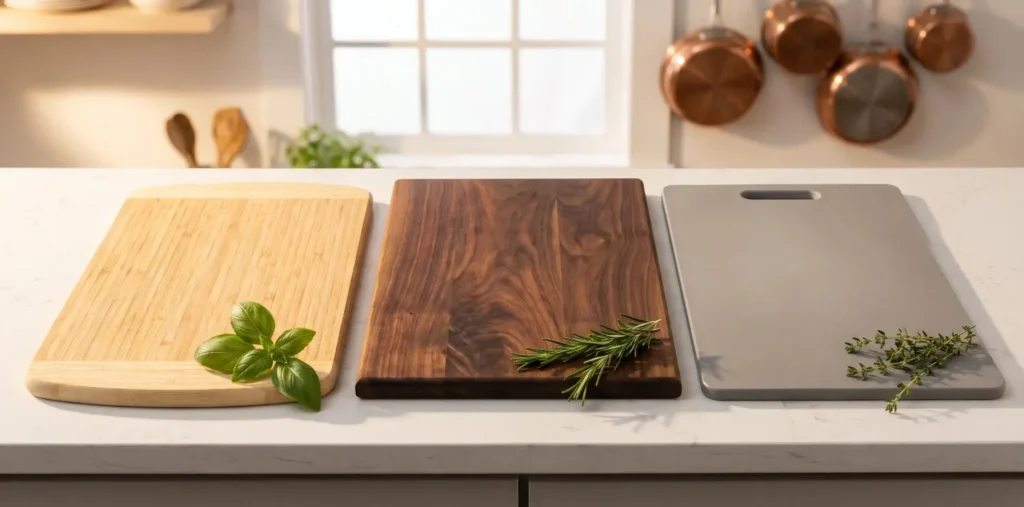
An eco friendly cutting board is made from natural, sustainable, or recycled materials that have a low environmental impact from the way they’re harvested to how they break down at the end of their life.
Think bamboo, hardwood like maple or walnut, or even recycled composite materials. These are all reusable, long-lasting options that skip the plastic and the chemicals that come with it.
Unlike conventional plastic boards, eco friendly boards don’t shed microplastics into your food. They’re made from renewable resources, often treated with food-safe, non-toxic oils, and designed to last for years. In short, they’re green kitchen tools built to be better for your kitchen and for the world outside it.
Why Choose an Eco Friendly Cutting Board?
Switching to a sustainable cutting board isn’t just a feel-good decision. There are real, practical reasons it makes sense.
Saves the Planet
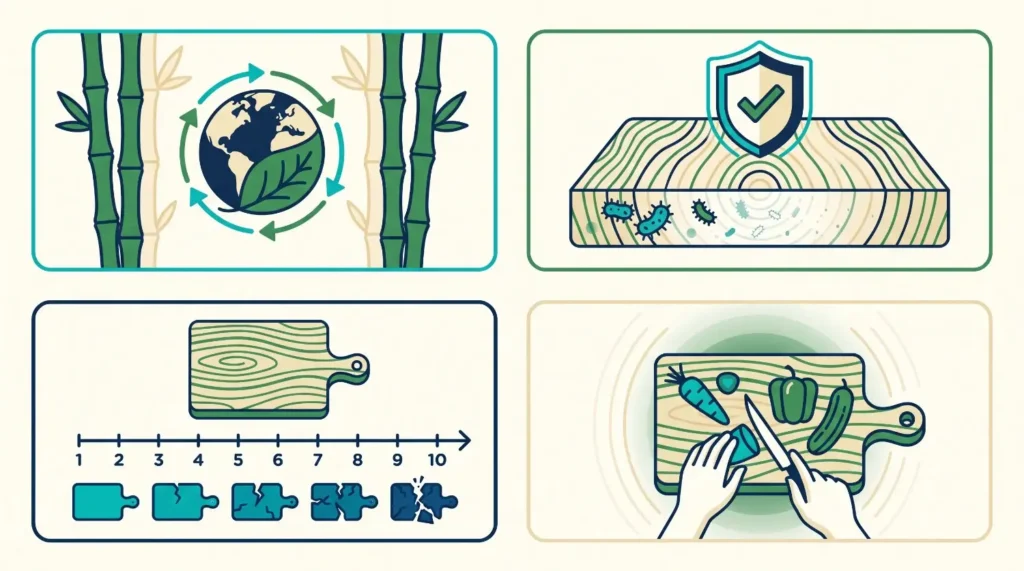
Plastic cutting boards are petroleum-based and almost never recycled. They end up in landfills or worse in oceans. Natural and recycled cutting board materials, on the other hand, come from renewable sources. Bamboo, for example, grows incredibly fast without pesticides or replanting. Hardwoods from responsibly managed forests are another solid choice. Every time you choose a natural board, you’re cutting demand for virgin plastic.
Keeps Food Safe
Here’s something most people don’t think about: every knife stroke on a plastic board scrapes tiny pieces of plastic into your food. A 2023 study found that plastic cutting boards can shed millions of microplastic particles per year. Natural boards wood, bamboo, composite don’t do that. They’re a healthier surface for food prep, period.
Lasts Longer
A good hardwood or bamboo board, when cared for properly, can outlast half a dozen plastic boards. That means less waste and better value over time. The upfront cost might be higher, but the math works out. A reusable board that lasts 10 years beats a cheap plastic one you replace every two.
Feels Good to Use
There’s something about chopping on a solid wood board that just feels right. It’s quieter, gentler on your knives, and honestly, more satisfying. It also looks great on a kitchen counter a small detail that makes cooking feel more enjoyable.
Benefits of Using Sustainable Cutting Boards
Beyond the obvious eco angle, sustainable boards bring a lot to the table (pun intended).
They’re knife-friendly. Hardwood and bamboo surfaces are softer on blade edges than plastic or glass. That means your knives stay sharper longer, which saves you money on sharpening and replacements.
They’re naturally antimicrobial. Studies show that wood has natural antibacterial properties. When bacteria seep into tiny cuts in a wooden surface, they often die off rather than multiply. Plastic boards, by contrast, can harbor bacteria in knife grooves — and they’re harder to sanitize once scratched.
They’re non-toxic. No BPA, no PVC, no mystery chemicals leaching into your dinner. When you prep food on a natural board, the only thing touching your vegetables is wood or bamboo.
They handle heavy use well. Whether you’re breaking down a whole chicken or slicing a watermelon, a solid hardwood board won’t warp, chip, or crack under pressure — as long as you care for it with regular oiling.
They add beauty to your kitchen. This might seem minor, but it matters. A walnut or maple board is something you actually want to leave out on the counter. It doubles as a serving board, a charcuterie platter, and a prep surface all in one.
They reduce your carbon footprint. When you buy a single board that lasts a decade instead of cycling through cheap plastic ones, you’re reducing your overall consumption and the waste that goes with it.
Best Materials for Eco Friendly Cutting Boards
Not all sustainable boards are created equal. Here’s a quick breakdown of the most common materials and what they’re good for.
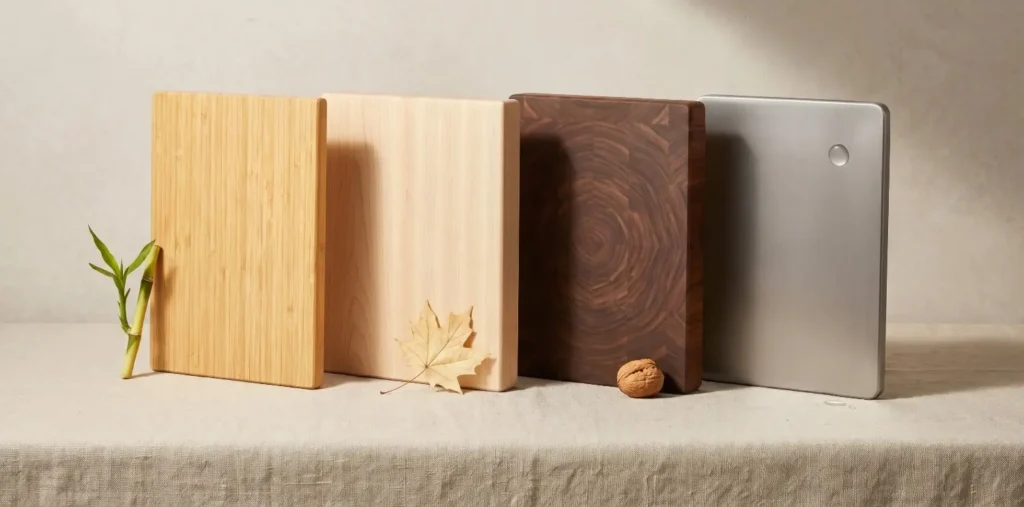
Bamboo Boards
Bamboo is technically a grass, not a wood, and it grows faster than almost any plant on Earth. That makes it one of the most renewable materials available. Bamboo boards are lightweight, affordable, and naturally water-resistant. The trade-off? Bamboo is harder than most hardwoods, which means it can be a little tough on knife edges. Still, for eco-conscious shoppers on a budget, bamboo is a great starting point.
Hardwood Boards
Maple, walnut, cherry, and teak are the go-to hardwoods for cutting boards. They’re durable, beautiful, and knife-friendly. End-grain hardwood boards where the wood is cut to expose the end of the fibers are especially forgiving on blades and self-healing in a way that regular boards aren’t. The downside is cost: quality hardwood boards can run $50–$200 or more.
Composite Options
Composite boards are made from a mix of recycled wood fibers and food-safe resins. They’re dishwasher-safe, highly durable, and a good middle ground between plastic and natural wood. They don’t look quite as elegant, but they perform well and are a smart recycled cutting board option for heavy-duty kitchens.
Metal Boards
Yes, metal boards are a thing. Titanium and stainless steel boards are nearly indestructible, completely non-porous, and easy to sanitize. They’re not knife-friendly, but for raw meat prep and hygiene-obsessed cooks, metal boards offer unbeatable durability and zero risk of harboring bacteria.
What to Look For When Choosing
Before you buy, keep these factors in mind:
- Material: Does it come from a sustainable or recycled source?
- Thickness: Thicker boards are more stable and last longer.
- Finish and sealing: Look for food-safe oil finishes, not chemical coatings.
- Size: Match it to how you actually cook a small board for quick prep, a large one for full meals.
- Ease of maintenance: Can you oil it yourself? Is it dishwasher-safe (if that matters to you)?
- Certifications: Look for FSC (Forest Stewardship Council) certification on wood boards to ensure responsible sourcing.
How to Choose the Best Eco Friendly Cutting Board
Choosing the right board comes down to your cooking style, budget, and priorities.
If you care most about sustainability and price, go with bamboo. It’s renewable, affordable, and widely available.
If you care most about knife longevity and aesthetics, go with a hardwood like maple or walnut. End-grain is best, but edge-grain works well too.
If you want maximum hygiene with zero maintenance, a composite or metal board might be worth the investment.
If you cook a lot of meat and need easy sanitizing, look for boards with antimicrobial properties or non-porous surfaces.
Whatever you choose, look for boards made without synthetic dyes, chemical glues, or toxic sealants. A truly green kitchen tool should be safe from the inside out.
The Best Wood Choices for Cutting Boards
Wood is still the gold standard for cutting boards, and not all woods are equal. Explore the best wood options in detail, but here’s a quick overview:
Maple is the most popular choice for a reason. It’s hard, durable, and has a tight grain that resists moisture and bacteria. It’s also relatively affordable compared to walnut or teak.
Walnut is softer than maple, which makes it even gentler on knives. It has a rich, dark color that makes it visually stunning. It’s pricier, but for a forever board, it’s worth it.
Cherry sits between maple and walnut in hardness and develops a beautiful reddish patina over time. It’s a great middle-ground option.
Teak is naturally oily, which makes it highly water-resistant. It’s an excellent choice for boards that see a lot of moisture. Look for sustainably sourced teak to keep it eco-friendly.
Avoid softwoods like pine or cedar for cutting boards they’re too porous and prone to deep knife marks that harbor bacteria.
Bamboo vs Maple vs Walnut Cutting Boards: Which Is Best?
This is one of the most common questions in the eco kitchen space. The short answer: it depends on your priorities. For a detailed breakdown, check out this bamboo vs wood comparison, but here’s a quick summary:
Bamboo wins on sustainability and price. It’s the most renewable option and typically costs under $30. The downside is that it’s harder on knives and can splinter if not properly maintained.
Maple wins on durability and value. A thick maple board will outlast most bamboo boards and stay knife-friendly for years with proper oiling. It’s a workhorse of a cutting board.
Walnut wins on aesthetics and knife care. If you want the prettiest, most knife-gentle board available, walnut is hard to beat. But you’ll pay for it.
In practice, many eco-conscious cooks have one of each: a bamboo board for everyday quick cuts, and a walnut or maple board for serious prep work and serving.
Eco Friendly Cutting Board vs Plastic Cutting Board
Let’s put them head to head.
| Factor | Eco Friendly Board | Plastic Board |
| Microplastics | None | Yes, sheds into food |
| Knife-friendliness | High (wood/bamboo) | Medium |
| Hygiene | Good (naturally antimicrobial) | Poor once scratched |
| Durability | Excellent with care | Degrades quickly |
| Environmental impact | Low | High |
| Cost | Higher upfront | Lower upfront |
| End of life | Compostable/biodegradable | Landfill |
Plastic boards have one real advantage: they’re cheap and dishwasher-safe. But that convenience comes at a cost to your health and to the planet.
The microplastic issue alone is a strong reason to switch. When your plastic board develops those familiar knife grooves, every cut is dragging plastic particles directly onto your food. Natural boards don’t do this. Wood fiber stays in the board.
Over a lifetime, a good hardwood or bamboo board is also cheaper than repeatedly replacing cheap plastic ones. And when a wooden board finally gives out, it can be composted or safely discarded without adding to the plastic waste problem.
What to Use Instead of Plastic Cutting Boards?
Plenty of great options exist that are reusable, durable, and far better for the environment.
Wood Boards — The classic swap. Maple, walnut, and cherry are top picks. They’re beautiful, long-lasting, and naturally resistant to bacteria.
Bamboo Boards — The budget-friendly eco pick. Lightweight, fast-drying, and made from one of the fastest-growing plants on Earth.
Metal Boards — Best for hygiene. Titanium and stainless steel boards are easy to sanitize, non-porous, and virtually indestructible. Not great for knives, but excellent for raw meat.
Other Picks — Recycled composite boards (made from reclaimed wood fibers) are a solid option for cooks who want dishwasher-safe convenience without the plastic guilt.
Best Cutting Board Suggestions
Here are a few types to look for when you’re ready to buy:
For eco beginners: A mid-size bamboo board from a reputable brand. It’s affordable, sustainable, and a huge step up from plastic. Check out this bamboo review for a real-world look at how one of the most popular options holds up.
For serious home cooks: An end-grain maple or walnut board. Look for boards at least 1.5 inches thick, finished with food-safe mineral oil. Brands like Boos, Virginia Boys Kitchens, and BoardSmith are well-regarded.
For hygiene-first kitchens: A titanium or stainless steel board. More of a niche pick, but unbeatable for raw meat prep.
For apartment cooks: A smaller composite board dishwasher-safe, durable, and eco-friendly without taking up half your counter.
Whatever your budget, there’s an eco friendly option that works for you. The key is to buy once, buy well, and skip the plastic.
Frequently Asked Questions
What is the most eco friendly cutting board material?
Bamboo is generally considered the most sustainable option due to its rapid regrowth rate and minimal need for pesticides or irrigation. Hardwoods from FSC-certified forests are a close second.
Are bamboo cutting boards really sustainable?
Yes, when sourced responsibly. Bamboo grows to maturity in 3–5 years (compared to decades for most trees), making it one of the most renewable materials available. Just make sure your board uses food-safe, formaldehyde-free glue.
What is the healthiest material for a cutting board?
Hardwood (like maple or walnut) and bamboo are the healthiest options because they don’t shed microplastics and have natural antimicrobial properties. Avoid plastic boards once they show knife grooves.
What is the most hygienic cutting board?
Wood and bamboo boards are surprisingly hygienic bacteria tend to die inside wood grain rather than multiply. For raw meat, non-porous metal or composite boards are easiest to sanitize.
What cutting boards do not release microplastics?
Wood, bamboo, composite, and metal boards are all free from microplastic shedding. Only plastic boards break down into microplastic particles with use.
Why not use bamboo cutting board?
Bamboo is harder than most hardwoods, which can dull knives faster. Some bamboo boards also use adhesives containing formaldehyde, so always check for food-safe certifications before buying.
What cutting board to avoid?
Avoid cheap plastic boards once they develop heavy knife scoring they actively shed microplastics into food. Also avoid glass boards entirely: they’re terrible for knives and don’t offer any real hygiene advantage over wood.
What do chefs recommend for cutting boards?
Most professional chefs prefer large, thick hardwood boards usually maple or walnut for their knife-friendliness, durability, and stability. End-grain boards are a favorite for heavy use. Many also keep a separate plastic or composite board exclusively for raw meat.