

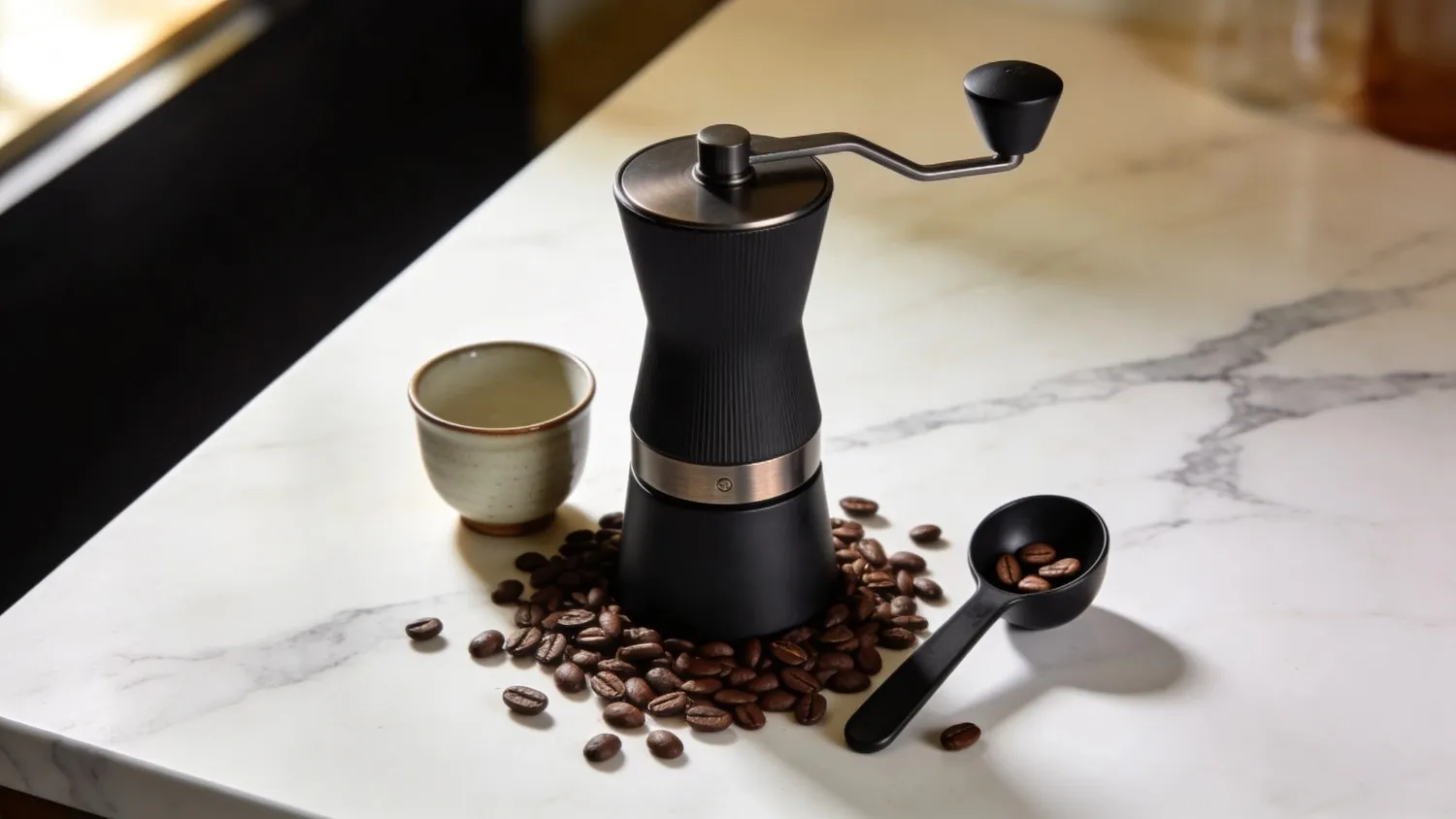

The best coffee grinders in 2026 are burr grinders — specifically matched to your primary brewing method and budget. For most home brewers, a conical burr grinder in the $130–$300 range delivers the clearest, most immediate improvement in cup quality. Replacing a blade grinder with a quality burr grinder has more impact on flavor than upgrading your espresso machine or buying more expensive beans.
Table of Contents
ToggleWhat Is a Burr Coffee Grinder and Why Does It Matter?
A burr grinder crushes coffee beans between two abrasive rotating surfaces — called burrs — set a precise distance apart, producing uniformly sized particles. Uniform particles extract at the same rate when hot water passes through them, producing balanced, even flavor. A blade grinder chops beans randomly, creating a mix of fine powder and large chunks that simultaneously over-extract (bitter) and under-extract (sour) in every single cup — a problem that no adjustment to grind time can fix.
As CoffeeGeek documents in their annual grinder guides, the grinder is the single most important tool for making great coffee at home — more impactful than your brewer, your kettle, or even your beans, assuming you start with quality raw material.
Blade grinders also generate significant heat as blades spin at high speed, damaging the volatile aromatic compounds responsible for a coffee’s floral, fruity, and sweet notes. Once those aromatics are cooked off, no brewing technique recovers them.
Any conical burr grinder from a specialty coffee brand outperforms any blade grinder, regardless of price difference.
Conical vs. Flat Burr Grinder — Which Should You Choose?
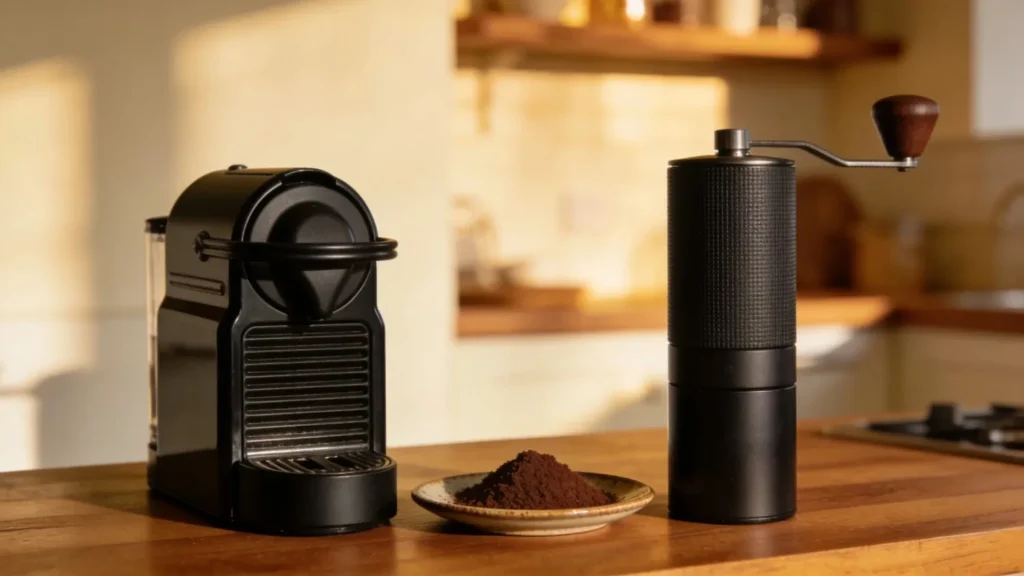
Flat burr grinders produce tighter particle uniformity and flavor clarity — making them the preferred choice for espresso and light-roast specialty coffee. Conical burr grinders run quieter, generate less heat, and perform consistently across multiple brewing methods — making them the better default for most home users.
Running the same washed Ethiopia natural through a flat burr grinder versus a conical on the same espresso machine produces a noticeable difference: the flat burr shot is brighter, with sharper fruit acidity and a cleaner finish; the conical shot is richer in body, chocolatier, and more forgiving to dial in. Neither is objectively better — the right choice depends on your taste and brew style.
Key differences at a glance:
- Flat burrs: higher RPM, louder operation, heat risk at budget price points, tighter particle distribution — ideal for espresso and light roast clarity
- Conical burrs: lower RPM, quieter, cooler grinding, body-forward flavor profile — ideal for versatility across brew methods
- Price reality: Most grinders under $200 use conical burrs. Flat burrs begin dominating the $300+ tier (Fellow Ode Gen 2, DF54, Eureka Mignon range)
- Burr size matters: Larger burrs dissipate heat more effectively and produce more consistent output — a key differentiator as you move up in price
Decision rule: Espresso with light roasts → flat burr. Pour-over, French press, or multi-method household → conical burr.
Conical burrs vs. flat burrs — how each one works
Conical burrs use a cone-shaped inner burr nested inside a ring-shaped outer burr. Beans are pulled downward and crushed in a rolling motion, which generates less heat and less noise. Flat burrs use two parallel discs facing each other, grinding beans horizontally at higher RPM — producing tighter particle uniformity, especially valued for espresso dialing. Both designs outperform blade grinders by any measurable standard.
Stepped vs. stepless grind adjustment
Stepped grinders click between fixed grind settings, making them easy to use and quick to replicate for beginners. Stepless grinders allow infinite micro-adjustment, giving espresso enthusiasts precise control when dialing in shots — but requiring more skill and patience. For most home users, stepped is the right starting point. For espresso-focused home baristas who pull daily shots, stepless or micro-step adjustment (like the Baratza Encore ESP Pro’s 2.5-micron increments) is worth the additional investment.
How to Choose a Coffee Grinder Based on Your Brewing Method
The single most important factor in choosing a home coffee grinder is matching it to your primary brew method. Choose the grinder for how you actually brew — then filter by budget.
As John Holmquist, customer experience manager at Seattle Coffee Gear, recommends: look for grinders that match your brewing style first, since a mismatch between grinder and method undermines even the best beans.
Here’s how to think about each method:
- Espresso: Requires fine, precise, consistent grinding. Needs stepless or micro-step adjustment and burrs optimized for the fine range. The Baratza Encore ESP Pro ($299.95) is the 2026 benchmark entry point for serious home espresso.
- Pour-over / drip / Aeropress: Medium-fine to medium grind; most conical burr grinders $130+ perform well here. The Fellow Ode Gen 2 ($399.95) is the 2026 benchmark for pour-over particle uniformity.
- French press / cold brew: Coarse grind required. Almost any quality burr grinder handles this tier; grinder retention and static become the real differentiators.
- Multi-method households: Prioritize a wide grind range and stepless adjustment over single-purpose optimization — versatile grinders like the Baratza Encore ESP handle everything from espresso to French press reliably.
Grind size quick reference by brew method
Brew Method | Grind Size | Texture Reference | Adjust If Off |
Espresso | Extra fine | Powdered sugar | Bitter → coarser; Sour → finer |
Pour-over / drip | Medium | Table salt | Bitter → coarser; Watery → finer |
AeroPress | Medium-fine | Fine sand | Bitter → coarser; Weak → finer |
French press | Coarse | Sea salt | Muddy → coarser; Thin → finer |
Cold brew | Extra coarse | Coarse breadcrumbs | Bitter → coarser; Weak → finer |
Starting from these benchmarks and adjusting 2 clicks toward finer (if sour/weak) or coarser (if bitter/harsh) is the fastest way to dial in any grinder on any coffee.
Why Your Coffee Tastes Bad — and How to Fix It With Your Grinder
If your coffee tastes bitter and harsh, your grind is too fine — coarsen by 2 clicks. If it tastes sour, watery, or weak, your grind is too coarse — go finer by 2 clicks. These two flavor signals diagnose the majority of home grinder problems.
After pulling sour, thin espresso shots for a week straight, the culprit turned out to be a grind setting two positions too coarse — not the machine, not the beans, not the water. One adjustment, and the shots immediately improved. This is the most common and most easily fixed grinder error home brewers make.
Additional causes worth checking:
- Grinder retention and stale oils: Leftover grounds from previous sessions sit inside the grinder, go rancid, and contaminate fresh beans. This shows up as a flat, stale, slightly bitter note even with freshly roasted coffee.
- Worn or dirty burrs: Inconsistent output increases as burrs accumulate coffee oil residue — producing uneven particle sizes that extract unpredictably.
- When the grinder isn’t the problem: Check bean freshness (roast date within 4–6 weeks), water temperature (195–205°F / 90–96°C), and brew ratio before changing your grind setting. These three variables interact directly with grind size.
According to Specialty Coffee Association brewing standards, water temperature and grind consistency are the two variables with the highest measurable impact on extraction yield — both are controllable at home without expensive equipment.
How often should you clean your coffee grinder?
For daily home users, brush loose grounds out of the burr chamber after each session and perform a full burr disassembly clean every 2–4 weeks. Coffee oils oxidize inside grinders within days and turn rancid, imparting a stale, bitter character even to freshly roasted beans. High-retention grinders — those that hold more leftover grounds between sessions — require more frequent cleaning. This is the primary reason single-dose, low-retention grinder designs have grown significantly in popularity through 2025–2026.
Manual vs. Electric Coffee Grinder — Which Is Better for Home Use?
Manual grinders produce cup quality equivalent to electric grinders costing two to three times more. The reason is simple: without a motor, manufacturers can invest more of the budget directly into precision burr quality. The trade-off is speed: grinding 18g for a single espresso shot takes 60–90 seconds by hand versus 5–10 seconds electrically.
Multiple independent Q Grader-reviewed comparisons published in 2025–2026 document the 1Zpresso K-Ultra ($220) competing directly with the Niche Zero ($700+) in grind quality for filter coffee — a gap of over $500 with near-identical cup results in blind tasting. For flavor-per-dollar value, manual grinders are objectively hard to beat, as reviewed by CoffeeChronicler.
When manual wins unconditionally:
- Travelers and minimalists who prioritize portability
- Single-cup brewers who don’t need high-volume throughput
- Home baristas who want espresso-level grind quality at filter-grinder prices
When electric is the practical choice:
- Households brewing 3+ cups daily
- Anyone who values hands-free speed and repeatability
- Grind-by-weight functionality — now appearing in the $200–$300 electric tier — provides dosing precision that no manual grinder can currently match
2026 standout manual options:
- Timemore C3 ESP Pro: ~$89.99 — best entry-level value, handles both filter and espresso
- 1Zpresso K-Ultra: $220 — competes with $500+ electric grinders
- Comandante C40: ~$230 — premium travel-optimized precision
Best Coffee Grinders by Budget in 2026
In 2026, the meaningful price thresholds for home burr grinders are: under $100 (entry-level burr, suitable for drip and French press), $150–$200 (the sweet spot for most home brewers), and $280–$350 (serious home espresso territory). Above $400, performance gains become incremental unless you are dialing in specialty espresso daily. All prices below are verified June 2026 street prices direct from Amazon.
Best coffee grinder under $100
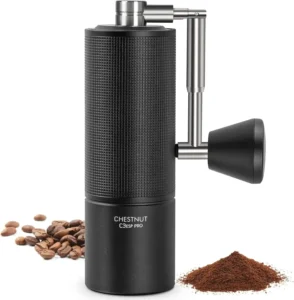
Top pick: Timemore Chestnut C3 ESP Pro — ~$99 on Amazon
The Timemore C3 ESP Pro is the best flavor-per-dollar option in 2026 for home coffee grinding under $100. Unlike the standard C3 Pro, the ESP variant uses the precision S2C660 stainless steel conical burrs with a finer 0.0233mm-per-click adjustment pitch — making it capable of genuine espresso dialing, not just filter coffee. Its all-metal aluminum alloy body, foldable handle, and 38mm burrs produce exceptional particle uniformity across all brew methods, with near-zero retention.
Pros:
- Genuine espresso-capable grind precision under $100
- All-metal body — no plastic internals, built to last
- Compact and travel-friendly with foldable handle
- Covers espresso, pour-over, AeroPress, and French press
Cons:
- Manual grinding effort required (~60–90 seconds per espresso dose)
- 25g capacity — sufficient for 1–2 cups only
- No electric option at this price tier
Best coffee grinder under $200
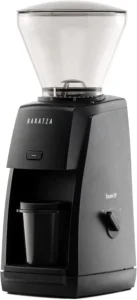
Top pick: Baratza Encore ESP — $199.95 on Amazon
The Baratza Encore ESP is the most widely recommended entry electric burr grinder for both filter coffee and entry-level espresso in 2026. It uses 40mm hardened M2 alloy steel burrs manufactured in Liechtenstein, with 40 stepped grind settings — the first 20 settings optimized specifically for espresso precision. As documented by CoffeeGeek’s 2026 budget grinder guide, it remains the benchmark for accessible, repairable, barista-trusted grinding at this price point.
Pros:
- Handles espresso and all filter methods from one machine
- Trusted, repairable platform with widely available spare parts
- 40mm hardened alloy steel burrs — consistent and durable
- Backed by Baratza’s industry-leading customer support
Cons:
- Stepped adjustment (not stepless) limits fine espresso tuning
- Loud operation (~70–75 dB during grinding)
- Higher retention than newer single-dose designs
Best coffee grinder $280–$400 (prosumer / espresso tier)
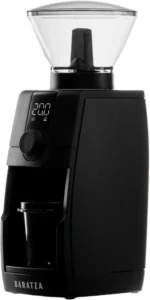
Top pick: Baratza Encore ESP Pro — $299.95 on Amazon
The Baratza Encore ESP Pro is the 2026 benchmark for serious home espresso under $300. Introduced in summer 2025, it upgrades the proven Encore platform with true stepless grind adjustment at 2.5-micron espresso increments — compared to the standard ESP’s 9-micron stepped settings. It also adds a digital display for shot repeatability, an anti-static ionizer, a metal chassis, and dual workflow modes (single-dose and hopper-fed). As reported by CoffeeGeek’s first-look review, it fits both 54mm and 58mm portafilters and is compatible with Baratza’s full range of replacement parts.
Pros:
- True stepless adjustment at 2.5-micron espresso increments
- Digital display for precise, repeatable dosing
- Dual modes: single-dose auto-stop and timer-based hopper grinding
- Anti-static ionizer reduces mess significantly
- Metal chassis — sturdier build than prior Encore models
Cons:
- $299.95 positions it at the ceiling of the budget tier
- 40mm conical burrs — capable for espresso, but not flat-burr clarity
- Newer release; long-term user reliability data still accumulating
Conclusion
The best coffee grinder for home brewing in 2026 is a burr grinder matched to how you actually brew — not the most expensive model or the one with the most features. For most home brewers, the Baratza Encore ESP ($199.95) or the Timemore C3 ESP Pro (~$99.00 manual) covers the full range of daily brewing needs.
The single most actionable upgrade you can make is replacing any blade grinder with a conical burr grinder from a specialty coffee brand — the flavor difference is immediate and noticeable in the first cup. Start today by identifying your primary brew method, then use the budget tiers above to find the right grinder for your setup.
Frequently Ask Questions
What is the best budget coffee grinder for home use?
The Timemore C3 ESP Pro (~$89.99) is the best value manual option — capable of both filter coffee and genuine espresso precision. The Baratza Encore ESP ($199.95) is the top entry-level electric burr grinder. Either outperforms any blade grinder for daily home brewing.
Is a burr grinder worth it for drip coffee?
Yes. A burr grinder produces uniform particle sizes that extract evenly in a drip brewer, resulting in a balanced, cleaner cup. A blade grinder’s random chopping creates inconsistent grounds that produce simultaneous bitterness and sourness — a problem a burr grinder eliminates entirely.
What is the difference between a burr grinder and a blade grinder?
A burr grinder crushes beans between two precision surfaces set a fixed distance apart, producing uniformly sized particles for even extraction. A blade grinder chops beans randomly with spinning blades, creating a mix of powder and coarse chunks that extract unevenly and degrade coffee flavor regardless of grind time.
How many grind settings do I actually need?
For drip and French press brewing, 10–20 stepped settings are sufficient. For espresso, you need either stepless adjustment or a minimum of 40 micro-step settings to dial in shots accurately. More settings only matter if you brew multiple methods or frequently switch between bean types.
Can I use an espresso grinder for pour-over or drip coffee?
Yes, most espresso grinders can grind coarse enough for pour-over and drip. However, espresso-optimized grinders are designed for precision at the fine end of the range — their coarse settings are often less refined than a dedicated filter grinder like the Fellow Ode Gen 2.