
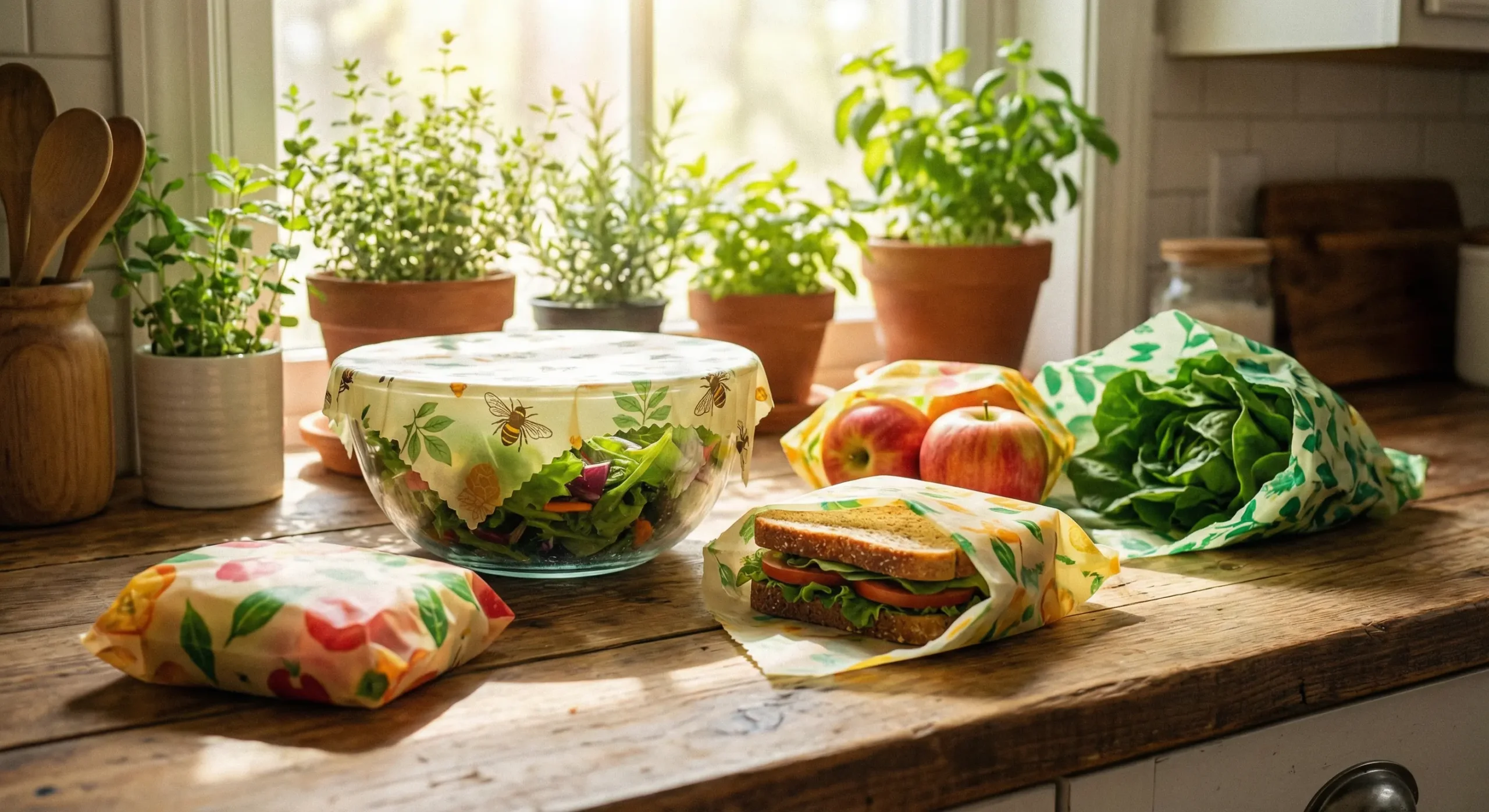

Every day, millions of households rely on plastic wrap and other single use plastic products to store leftovers, pack lunches, and keep ingredients fresh. While convenient, this habit quietly contributes to growing environmental pollution and overflowing landfills. Traditional plastic-based food storage solutions are rarely recycled and often used for only a few minutes before being thrown away.
This is where beeswax wrapping paper offers a smarter, sustainable alternative. Also known as beeswax wrap, bee wrap, or reusable beeswax food wraps, this eco-friendly solution is designed to keep your food fresh without harming the planet. Made from natural materials like cotton fabric, beeswax, and tree resin (sometimes blended with oils such as jojoba or coconut oil), these reusable food wraps create a breathable, protective seal around your food.
In this complete guide, you’ll learn what beeswax wrapping paper is made of, how it works, how to use it properly, its benefits compared to plastic wrap, and how to choose the best beeswax wraps for your kitchen. By the end, you’ll know whether switching to bee wraps is the right move for your sustainable lifestyle.
What Is Beeswax Wrapping Paper?
Beeswax wrapping paper is a reusable, eco-friendly food storage material made from cotton fabric coated with beeswax, tree resin, and natural oils. It is designed to replace plastic wrap by creating a flexible, breathable seal that keeps food fresh for longer.
Often referred to as beeswax wrap, beeswax food wrap, bee wrap, or reusable beeswax wrap, this sustainable alternative is widely used for wrapping fruits, vegetables, sandwiches, cheese, and covering bowls. Some brands market it as bee’s wrap, bees wrap, or simply reusable food wraps, but the function remains the same — reducing reliance on single use plastic in the kitchen.
Unlike traditional wrapping paper, which is typically used for gifts and cannot preserve food, beeswax wrapping paper is specifically designed for food storage. It becomes soft and moldable when warmed with your hands, allowing it to stick to itself and form a natural seal. Unlike plastic wrap, it is breathable, washable, and reusable for months.
In short, beeswax wrapping paper is a natural, reusable solution that helps reduce plastic waste while keeping your food fresh in a safer and more sustainable way.
What Is Beeswax Wrapping Paper Made Of?
High-quality beeswax wrapping paper is made from a small number of natural, food-safe ingredients that work together to create a flexible and durable seal. Unlike plastic wrap, which is petroleum-based, reusable beeswax food wraps rely on plant-based and bee-derived materials to keep food fresh safely.
Here’s what typically goes into a beeswax food wrap and why each ingredient matters:
Organic Cotton Fabric
Organic cotton forms the base layer of reusable food wraps. It acts as the structural foundation that holds all the other ingredients together.
Why it matters:
- Provides durability and flexibility
- Allows the wrap to be folded and shaped easily
- Makes the wrap washable and reusable
Organic cotton is preferred because it avoids harmful chemical residues, making it safer for direct food storage. The tightly woven fabric helps the wrap maintain its strength even after repeated use.
Natural Beeswax
Beeswax is the key ingredient that gives bee wraps their signature texture and sealing ability. It coats the cotton fabric and creates a slightly sticky surface when warmed by your hands.
Why it matters:
- Creates a water-resistant barrier
- Helps keep food fresh
- Provides mild natural antibacterial properties
Beeswax has been used for centuries in food preservation and is considered food-safe. It allows the wrap to protect food while remaining breathable — something traditional plastic wrap cannot do.
Jojoba Oil
Many premium beeswax wraps include jojoba oil as a conditioning ingredient. Some lower-cost alternatives may use coconut oil, but jojoba oil is more stable and resistant to spoilage.
Why it matters:
- Keeps the wrap soft and pliable
- Prevents cracking over time
- Enhances durability
Jojoba oil is naturally antimicrobial and helps extend the life of the wrap, making reusable beeswax wrap products last several months with proper care.
Tree Resin
Tree resin (often pine resin) is what gives beeswax wrapping paper its self-adhesive quality. Without resin, the wrap wouldn’t cling properly to bowls or itself.
Why it matters:
- Improves stickiness
- Strengthens the seal
- Enhances flexibility
The combination of beeswax and tree resin allows the wrap to form a secure covering over food, similar to plastic wrap — but without contributing to single use plastic waste.
Food-Safe Composition
All these ingredients — organic cotton, natural beeswax, jojoba oil (or coconut oil), and tree resin — are considered food-safe when sourced properly. They contain no BPA, synthetic chemicals, or petroleum-based plastics.
Together, they create a breathable, reusable, and biodegradable alternative to plastic wrap, making beeswax wrapping paper a safer and more sustainable solution for everyday food storage.
How Does Beeswax Wrapping Paper Work?
Beeswax wrapping paper works through simple heat activation. When you press a beeswax wrap or bee wrap for food between your hands, your body heat softens the beeswax, tree resin, and oils, making the material flexible and moldable. You can then shape it around bowls, fruits, or even a beeswax wrap sandwich, and it will self-seal as it cools. Unlike plastic wrap, it is breathable, which helps keep food fresh longer by preventing excess moisture buildup. Thanks to natural beeswax’s mild antibacterial properties, reusable beeswax food wraps also help protect food during everyday food storage.
Benefits of Using Beeswax Wrapping Paper
Switching to beeswax wrapping paper offers both environmental and practical advantages. Unlike traditional plastic wrap, this natural solution supports safer, smarter food storage while reducing household waste.
Reduces Plastic Waste
- Replaces single use plastic in daily kitchen routines
- Minimizes landfill and ocean pollution
- Supports a zero-waste lifestyle
- Reduces dependence on disposable plastic wrap
Using reusable beeswax wrap instead of plastic significantly lowers your environmental footprint.
Reusable and Long-Lasting
- Can be reused for 6–12 months with proper care
- Washable and durable
- Maintains flexibility after multiple uses
- Available in sheets and even beeswax bags for added convenience
High-quality beeswax food wrap products are designed for repeated use, making them a reliable alternative to disposable options.
Keeps Food Fresh Naturally
- Breathable material prevents excess moisture buildup
- Forms a secure seal around bowls and food
- Ideal for fruits, vegetables, cheese, and a beeswax wrap sandwich
- Natural beeswax helps maintain freshness without chemicals
Unlike plastic wrap, bee wraps allow food to breathe while still protecting it.
Compostable and Biodegradable
- Made from cotton, beeswax, and tree resin
- Breaks down naturally at end of life
- Safe for composting once worn out
- Contains no petroleum-based materials
This makes bees wax wraps a truly eco-friendly food storage solution.
Cost-Effective Over Time
- One set of reusable beeswax food wraps replaces hundreds of plastic wraps
- Saves money in the long run
- Reduces recurring purchases of disposable plastic wrap
- Many brands offer value sets from the best companies selling beeswax wraps
Although the upfront cost may be higher, investing in the best beeswax wrap options pays off over time — both financially and environmentally.
Beeswax Wrap vs Plastic Wrap: Which Is Better?
When it comes to food storage, choosing between beeswax wrap and plastic wrap can impact your health, wallet, and the environment. Here’s a detailed comparison:
| Feature | Beeswax Wrap | Plastic Wrap |
| Environmental Impact | Biodegradable, compostable, reduces single use plastic | Petroleum-based, non-biodegradable, pollutes land and oceans |
| Cost | Higher upfront cost, cost-effective over time | Low upfront cost, recurring purchases needed |
| Health & Safety | Food-safe, BPA-free, natural antibacterial properties | May contain BPA, chemicals can leach into food |
| Longevity | Reusable for 6–12 months | Single use, disposed after one use |
| Convenience | Flexible, self-sealing, washable | Easy to use, ready-made, but disposable |
Overall, beeswax wrapping paper is a sustainable, reusable, and safer alternative to traditional plastic wrap. While plastic may feel more convenient initially, reusable beeswax food wraps save money and protect the environment in the long run.
How to Clean and Care for Beeswax Wrap
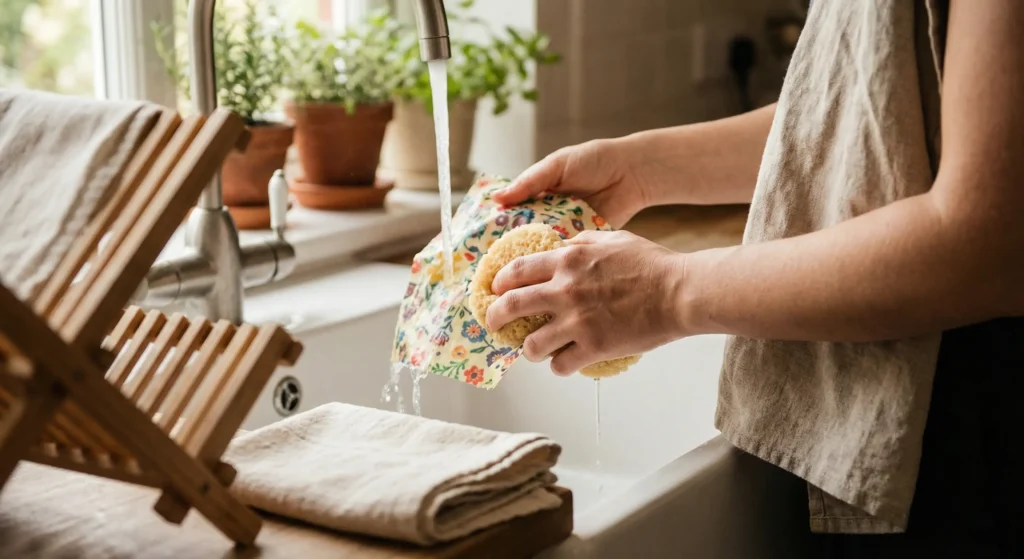
Proper care extends the life of your beeswax wrap and keeps your reusable beeswax food wraps performing at their best. With simple steps, a single wrap can last 6–12 months or even longer.
How to Wash It
- Use cold or lukewarm water; hot water can melt the beeswax
- Gently clean with mild soap and a soft sponge
- Avoid harsh scrubbing or dishwashers, which can damage the wrap
- Rinse thoroughly to remove any food residue
How to Dry It
- Air dry by hanging or placing on a clean towel
- Make sure the wrap is completely dry before storing
- Do not wring or twist, as this can deform the shape
How to Store It
- Fold and store in a drawer or container at room temperature
- Keep away from heat sources like stoves or direct sunlight
- Avoid tightly packing with other items to maintain flexibility
How to Refresh Old Wrap
- If your beeswax wrap starts to lose stickiness, you can lightly recoat it with a mixture of beeswax, tree resin, and coconut oil
- Melt gently in the oven or with an iron on low heat, then allow to cool
- This restores sealability and extends its life
By following these steps, your reusable beeswax wrap can last up to a year, making it a reliable and eco-friendly alternative to plastic wrap for everyday food storage.
Is Beeswax Wrapping Paper Safe?
Yes, beeswax wrapping paper is food-safe when made from natural ingredients like organic cotton, beeswax, tree resin, and oils such as coconut oil or jojoba. Unlike plastic wrap, it is BPA-free and contains no synthetic chemicals. While safe for fruits, vegetables, cheese, and sandwiches, it is not recommended for raw meat or very moist foods, as prolonged contact can promote bacterial growth. To prevent mold, always wash with cold water, dry completely, and store at room temperature. Proper care ensures your reusable beeswax food wraps remain hygienic, safe, and effective for months.
How to Make Beeswax Wrapping Paper at Home (DIY Guide)
Creating your own beeswax wrapping paper is a fun and eco-friendly way to reduce single use plastic in your kitchen. With a few simple materials, you can make reusable beeswax food wraps that keep your food fresh naturally.
Materials Needed
You will need organic cotton fabric, natural beeswax, tree resin, and either coconut oil or jojoba oil. A baking tray, parchment paper, and an oven or iron are also required for the application process. These ingredients form the perfect combination for a flexible, self-sealing wrap.
Oven Method
Preheat your oven to low heat, around 150°F (65°C). Place the fabric on parchment paper and evenly sprinkle the beeswax, tree resin, and oil mixture over it. Slide the tray into the oven for a few minutes until the wax melts and spreads. Remove carefully and use a brush or spatula to evenly coat the fabric if needed. Let it cool completely, and your DIY bee wrap for food is ready.
Iron Method
Place the fabric between two sheets of parchment paper. Heat your iron to low or medium and gently press over the top sheet, allowing the wax, resin, and oil to melt into the fabric. Move the iron slowly to avoid overheating. Once fully coated, peel off the parchment and let the wrap cool. This method creates a smooth, even finish for beeswax wrap sandwiches or covering bowls.
Pro Tips for Best Results
Use thin, tightly woven cotton for better flexibility. Apply wax evenly to avoid stiff patches. Always let the wrap cool completely before use, and store in a dry place. Refresh older wraps with a light reapplication of beeswax and oil to extend their life. Following these tips ensures your reusable beeswax food wraps stay effective for months while keeping your kitchen eco-friendly.
What to Look for When Buying Beeswax Wrapping Paper
When buying beeswax wrapping paper, choose products with organic certification and good resin quality for better seal and durability. Look for substantial thickness so the wrap lasts longer. Brand transparency about ingredients ensures safety. Value sets from trusted manufacturers make reusable beeswax wraps more affordable and practical for everyday food storage compared to single wraps.
Why Trust Best Eco Kitchen Tools
Best Eco Kitchen Tools is a trusted online resource dedicated to promoting sustainable and eco-friendly kitchen solutions. The website’s brand identity focuses on reducing single use plastic, supporting zero-waste lifestyles, and helping users make informed choices for everyday food storage.
Through detailed blogging, product reviews, and educational guides, the site provides practical tips on using reusable beeswax wraps, bee wrap for food, and other sustainable tools. Readers can rely on honest recommendations, comparisons of best beeswax wraps, and step-by-step guidance for a greener, healthier kitchen. The platform combines knowledge, authority, and eco-conscious values to help consumers make smart, sustainable decisions.
Check Related Post: How to Store Beeswax Wraps | How Long Do Beeswax Wraps Last | How to Make Your Own Beeswax Wraps | Homemade Beeswax Wraps – A Complete Beginner’s Guide | How to Clean Beeswax Wraps Without Damaging Them
Frequently Asked Questions
What are the disadvantages of beeswax wraps?
Beeswax wraps can’t handle raw meat, hot foods, or dishwasher cleaning. They may lose stickiness over time and require proper care to avoid mold.
What’s the point of a beeswax wrap?
The purpose of a beeswax wrap is to provide a reusable, eco-friendly alternative to plastic wrap, keeping food fresh while reducing single use plastic waste.
How long does a beeswax wrap last?
With proper care, a quality beeswax wrap lasts 6–12 months, maintaining flexibility and seal for everyday food storage.
What can you not wrap with beeswax?
Avoid wrapping raw meat, very wet foods, or hot dishes, as these can damage the wrap and promote bacterial growth.