

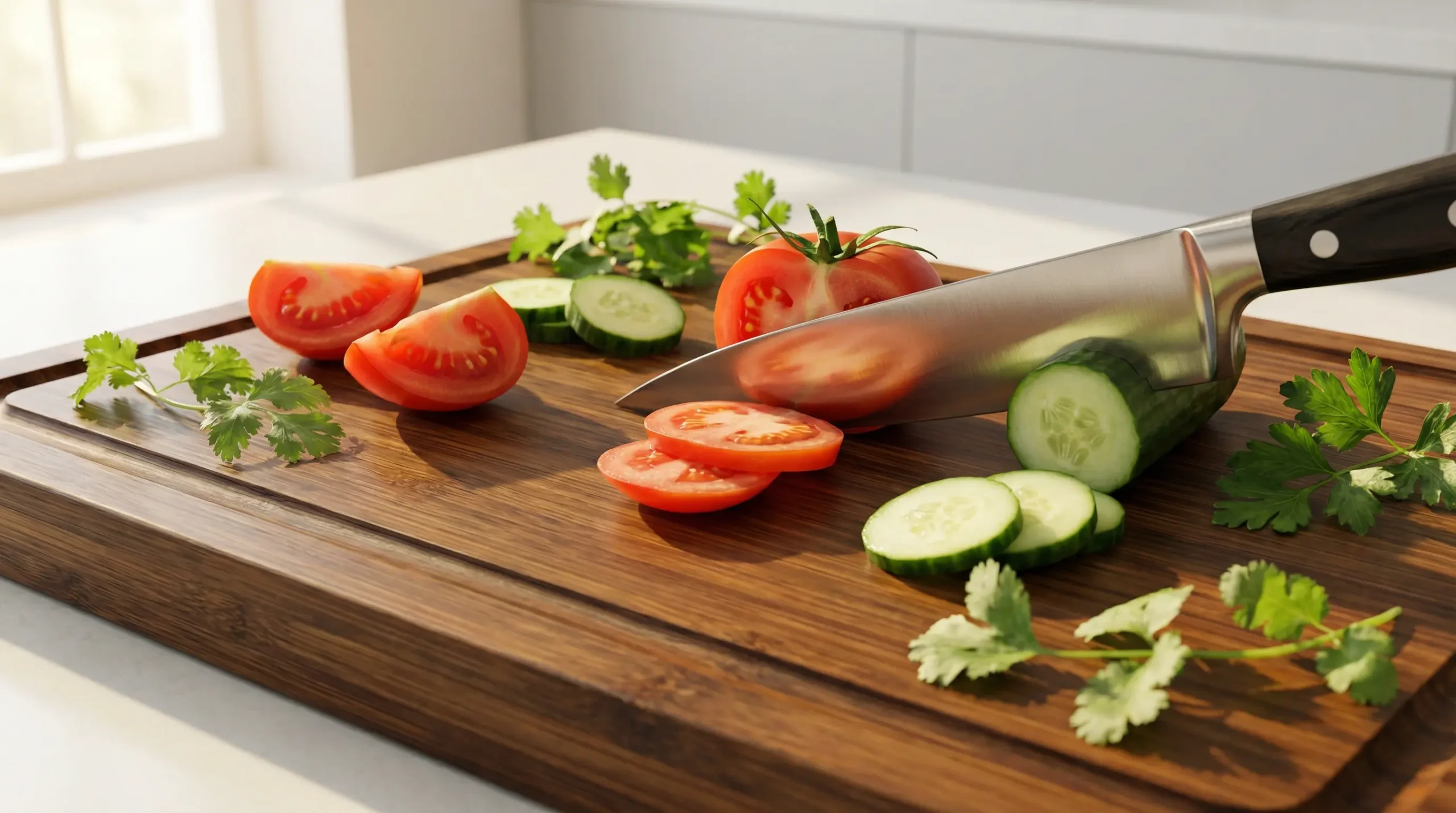

I’ve been chopping vegetables on the same cutting board for years without thinking much about it. Then my old plastic board started looking like a crime scene — deep grooves everywhere, that weird grey tinge that no amount of scrubbing fixes — and I figured it was time to actually do some research before buying a replacement. That research led me down a rabbit hole about carbonized bamboo cutting boards, and honestly, I wasn’t expecting to care this much.
Here’s everything I found out, plus what it’s actually like to use one every day.
Quick Summary: Carbonized Bamboo Cutting Board Review
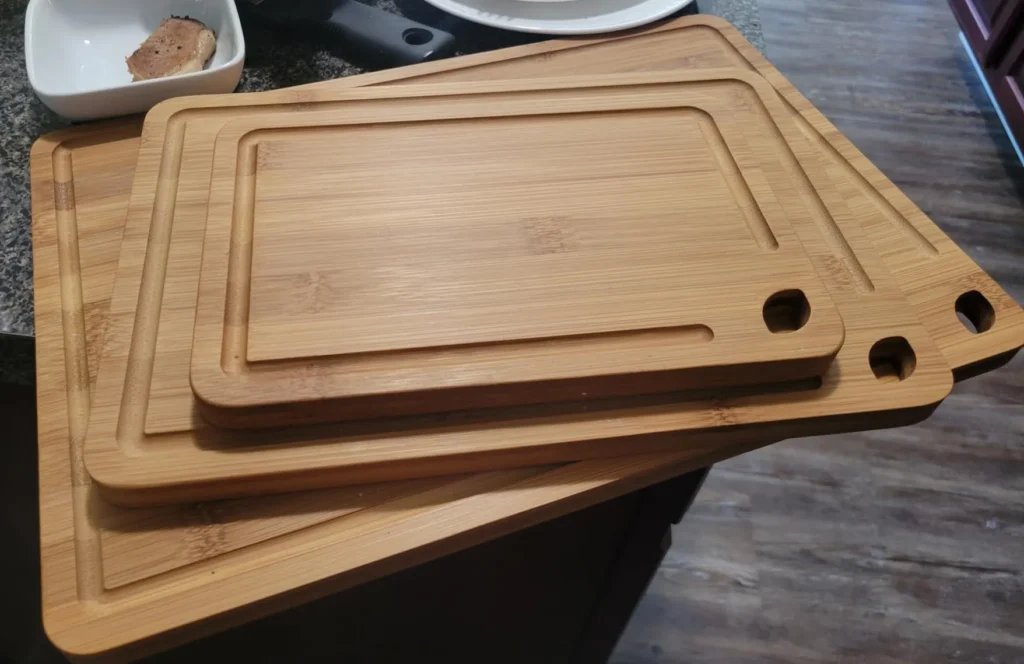
If you’re in a hurry: a carbonized bamboo cutting board is harder, denser, and more moisture-resistant than regular bamboo. It holds up well to daily use, it’s food-safe, and it looks good on the counter. The main trade-off is that it needs hand washing and monthly oiling — skip that and you’ll regret it. For most home cooks, it’s a solid upgrade from plastic without the eye-watering price of a hardwood board.
What Is a Carbonized Bamboo Cutting Board?
People ask me this a lot. What is a carbonized bamboo cutting board, exactly, and why does it look so dark?
The short answer: it’s bamboo that’s been heat-treated through a process called pyrolysis — basically exposing the raw bamboo to intense heat (above 1000°F) in a low-oxygen environment. That process burns off moisture, compresses the fibers, and caramelizes the natural sugars in the bamboo. That last part is why it turns that deep, warm brown color. No dye, no stain. Just heat.
The result is a board that’s noticeably harder than natural bamboo, denser, and much more resistant to warping when it gets wet. Moso bamboo is the species used most often — it grows fast, which is good for the environment, and it has long, tight fibers that respond well to carbonization.
Is a Carbonized Bamboo Cutting Board Safe for Food?
This is the question I kept coming back to when I was researching. People want to know: is carbonized bamboo cutting board safe, and is the dark color from some kind of chemical treatment? I get the concern. Here’s what I found.
FDA Food-Contact Standards & Certification
Any cutting board sold in the US for food use has to meet FDA food-contact standards (specifically 21 CFR regulations). A properly manufactured carbonized bamboo cutting board passes these requirements without any special treatment — the bamboo itself is inert, and the carbonization process doesn’t introduce anything harmful. Look for boards that explicitly state FDA compliance on the packaging. If a board doesn’t mention it, that’s worth paying attention to.
Is Carbonized Bamboo Free of Toxins and Chemicals?
Here’s the nuance most reviews skip. The bamboo itself? Totally fine. No BPA, no known toxins, nothing to worry about. But some boards use urea-formaldehyde glue to laminate multiple bamboo layers together, and that’s where you want to be careful. The question isn’t really is carbonized bamboo safe — it is — the question is whether the glue used in your specific board is food-safe. Solid one-piece boards sidestep this entirely. For laminated boards, check that the adhesive is food-grade.
Antimicrobial Properties: What the Research Shows
Bamboo does contain a natural antimicrobial agent called “bamboo kun.” There’s some research supporting its effectiveness against bacteria like E. coli and Salmonella — but I’d be cautious about leaning too hard on this. Are carbonized bamboo cutting boards safe for cutting raw chicken without proper cleaning? No. The antimicrobial properties help, but they don’t replace washing. Think of it as a bonus, not a substitute for hygiene.
Safe for Raw Meat? Cross-Contamination Guide
Yes, with the right habits. I use a dedicated board for raw meat — full stop. That’s not a bamboo thing, that’s just basic food safety (USDA recommends it for any cutting surface). Wash your carbonized cutting board with hot soapy water after raw meat contact, dry it immediately, and stand it upright so air gets to both sides. Don’t leave raw meat juices sitting on any board, bamboo or otherwise.
Key Features of a Carbonized Bamboo Cutting Board
What actually makes one board better than another? A few things I look for:
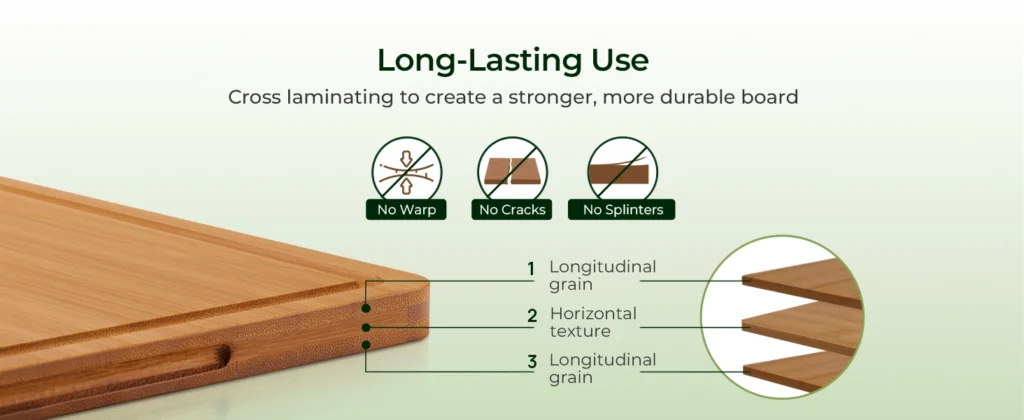
Construction type matters more than most buyers realize. Solid one-piece boards are more durable and don’t have glue layers to worry about. Laminated boards can be fine but check the adhesive. End-grain construction (where you’re cutting against the ends of the fibers) is gentler on knives; edge-grain is more common and still very good.
Hardness is where carbonized bamboo cutting board vs regular bamboo really shows the gap. Carbonized bamboo scores higher on the Janka hardness scale than natural bamboo — your knife won’t sink in, but it also won’t bounce off. It’s a good middle ground.
Other features worth checking:
- Juice grooves deep enough to actually catch liquid (some are decorative at best)
- Non-slip feet, especially if you chop fast
- At least 1-inch thickness for stability
- A handle if you move it around a lot
Performance Review
I’ve been using mine almost daily for about six months now. Vegetables chop cleanly, bread slices without the board sliding around, and meat prep is fine as long as I’m not hacking through bone.
The thing that surprised me most: my knives actually seem to stay sharper longer compared to when I was using the plastic board. Plastic sounds soft but develops these micro-grooves that wreck edges over time. The bamboo surface is more consistent.
What I don’t love: turmeric stains permanently. I sliced fresh turmeric once without thinking and now there’s a yellow patch in the corner that’s there forever. The dark color hides most stains, which I appreciate, but that one got through. Annoying, and there’s no fixing it.
Pros and Cons
Advantages of Carbonized Bamboo Cutting Boards
- Naturally antimicrobial — bamboo kun compound actively fights bacteria like E. coli and Salmonella without any chemical treatment
- Knife-friendly surface — harder than plastic but won’t destroy your edges the way glass or ceramic does
- Outlasts plastic by years — with proper care you’re looking at 10-15 years, versus 2-3 years for a typical plastic board
- Eco-friendly material — Moso bamboo regenerates in 3-5 years, making it one of the most sustainable cutting surface options available
- Moisture and warp resistant — the carbonization process compresses fibers so tightly that the board holds its shape even with regular water exposure
- Looks great on the counter — the deep, warm brown color from heat treatment works in almost any kitchen without trying too hard
Disadvantages of Carbonized Bamboo Cutting Boards
- Hand washing only — toss it in the dishwasher once and the heat and moisture will warp it; no exceptions
- Needs monthly oiling — skip the mineral oil routine a few times and the surface will dry out, crack, and split faster than you’d expect
- Harder on delicate knife edges — if you’re using thin Japanese blades, carbonized bamboo is tougher on edge retention than end-grain maple or walnut
- Permanent staining is real — turmeric, beet juice, and a few other ingredients will leave marks that no amount of scrubbing will fix
Carbonized Bamboo vs Other Cutting Board Materials
Carbonized Bamboo vs Natural Bamboo
This is the most useful comparison. Carbonized bamboo vs natural bamboo cutting board comes down to: do you want something harder and more moisture-resistant, or are you fine with a lighter, slightly softer board at a lower price? The carbonized vs natural bamboo cutting board gap in hardness is real and noticeable. Natural bamboo is fine. Carbonized is better. It lasts longer, resists warping more, and the surface stays more consistent over years of use. Worth the extra few dollars.
Carbonized Bamboo vs Hardwood (Maple, Walnut)
Hardwood boards — especially end-grain maple or walnut — are the gold standard for serious cooks. They’re easier on knives, they self-heal micro-cuts over time, and they last decades. The carbonized bamboo cutting board can’t quite match that. What it can do is come close for a fraction of the price, while being more eco-friendly. If you’re spending $150+ on a John Boos, you know what you’re getting. For most people, the bamboo is the smarter buy.
Carbonized Bamboo vs Plastic
Save your money on plastic. It’s cheap upfront, but those knife grooves become bacteria traps that you can’t fully clean. Plastic also isn’t recyclable once it’s worn out. Is carbonized bamboo good for cutting boards compared to plastic? Not even close. Better hygiene, longer life, no microplastics going into your food. The bamboo wins this one easily.
Carbonized Bamboo vs Glass & Composite
Glass boards destroy knife edges. I don’t know who keeps buying them. Composite boards (like Epicurean) are fine — durable, dishwasher-safe — but they’re essentially high-density paper fiber and don’t have the same natural properties. Carbonized bamboo cutting board edges out composite for most home kitchen use, though composite wins on convenience if maintenance is your main concern.
Durability and Lifespan
How Long Does a Carbonized Bamboo Board Last?
With proper care — hand washing, monthly oiling, upright storage — you’re looking at 10-15 years easily. Some people get 20. Regular bamboo typically makes it 5-7 years before it starts looking rough. Plastic boards need replacing every 2-3 years once the surface is scored enough to harbor bacteria.
Signs It’s Time to Replace Your Board
Deep cracks that go all the way through are the main one. Surface splintering is another — you don’t want bamboo fibers in your food. Significant warping means the board no longer sits flat, which is a safety issue. If you’ve been oiling consistently and it’s still drying out and cracking, it’s done. Most well-maintained boards won’t hit these points for a long time, but it’s worth knowing about.
Care and Maintenance Guide
Keep it simple. Rinse immediately after use with warm water and a bit of dish soap. Don’t soak it — ever. Pat it dry right away, then stand it upright so both sides air dry. Leaving it flat while wet is how warping starts.
Once a month, rub food-grade mineral oil into the surface with a cloth, going with the grain. Tung oil also works and some people prefer it for its deeper penetration. Let it sit for 30 minutes, wipe off the excess. That’s the whole routine. If you’re cooking meat on it daily, oil every two weeks instead.
Don’t stack anything on top of it while it’s stored. Keep it away from the stovetop or any heat source.
Buying Guide: How to Choose the Best Carbonized Bamboo Cutting Board
What to Look For: Size, Construction & Certification
18 x 12 inches is the sweet spot for most home kitchens — big enough for a whole chicken or a large watermelon, manageable enough to store easily. One inch thick is the minimum I’d go for stability. Solid construction over laminated if you can find it. FDA compliance stated on the packaging. Juice grooves if you prep meat regularly.
Common Mistakes Buyers Make
Buying the cheapest option available. I’ve seen $12 bamboo boards on Amazon that are thin, lightly finished, and warped within a month. The quality variance in this category is huge. Read reviews that are at least a year old — those will tell you about long-term durability. Also: ignoring whether the board is solid or laminated, and what glue was used if it’s laminated.
Is Carbonized Bamboo Worth It? Our Verdict
Yeah, it is. Not because it’s perfect, but because it hits the right balance for most people — affordable, durable, food-safe, eco-friendly, and good-looking. If you want to spend $200 on a Teakhaus end-grain teak board, go for it. But if you want something that performs well for everyday cooking without costing a lot or hurting the environment, a quality carbonized bamboo cutting board is exactly what you’re looking for.
Conclusion
I didn’t expect a cutting board to take up this much space in my brain. But here we are. After testing mine for six months and going deep on the research, I can say: if you’re replacing a worn-out plastic board or want something more sustainable than hardwood, carbonized bamboo is the right move. Just commit to the maintenance. A neglected bamboo board is a sad bamboo board, and the oiling schedule is genuinely the only thing standing between you and a board that lasts a decade.
Frequently Asked Questions
What is a carbonized bamboo cutting board?
What is a carbonized bamboo cutting board? It’s a cutting board made from bamboo that’s been heat-treated through pyrolysis — a high-heat process that compresses the fibers, removes moisture, and turns the wood dark brown naturally. The result is harder and more durable than regular bamboo.
Are carbonized bamboo cutting boards healthy?
Yes. Are carbonized bamboo cutting boards safe? They’re food-safe, free of BPA and toxins, and have natural antimicrobial properties. Just make sure the board you’re buying uses food-safe adhesive if it’s a laminated construction, and wash it properly after raw meat.
Which is better, bamboo or carbonized bamboo?
Carbonized, pretty much every time. The carbonized bamboo cutting board vs regular bamboo comparison consistently favors carbonized: harder surface, better moisture resistance, longer lifespan. The price difference is usually small enough that it’s not worth skimping.
What are the disadvantages of bamboo cutting boards?
Hand washing only, monthly oiling required, can stain permanently (looking at you, turmeric), and harder than softwood so slightly less forgiving on knife edges. Is carbonized bamboo food safe? Yes — but the maintenance is real, and if you ignore it the board will crack and split. That’s the main thing people underestimate.