

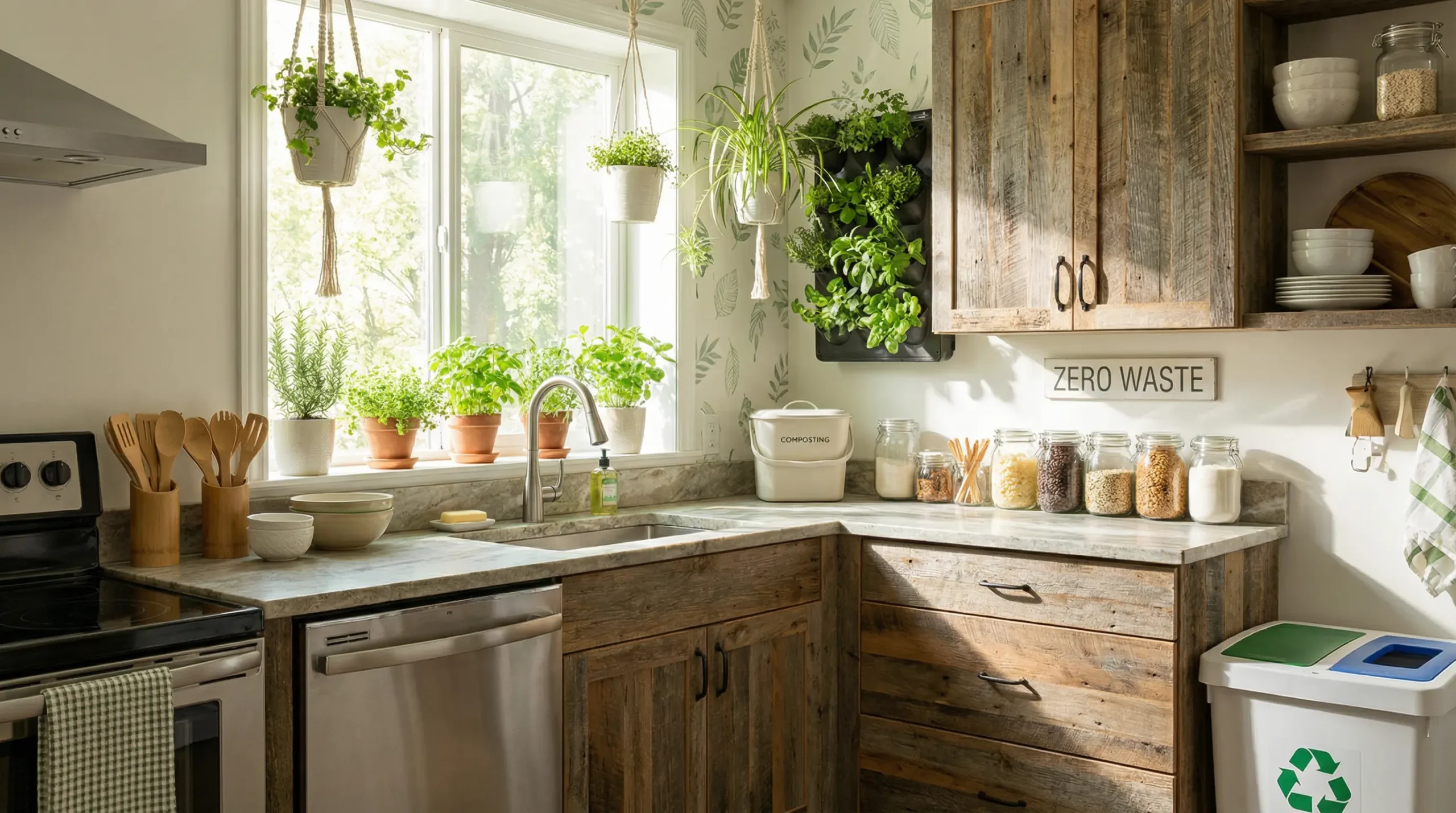

A Greener Kitchen is no longer a trend. It has become a practical choice for healthier living in American homes. Kitchens shape daily habits, food safety, and indoor air quality. Small eco-friendly changes inside this space quietly improve health, cut waste, and lower utility bills without sacrificing comfort.
Why a Greener Kitchen Matters More Than Ever
A kitchen touches every part of daily life. It handles food, water, heat, and cleaning products.
A Greener Kitchen reduces chemical exposure, lowers energy demand, and supports cleaner air inside the home. Many U.S. households unknowingly release toxins through cookware, cabinets, and cleaners. Sustainable kitchen choices help prevent that harm.
Homes with eco-friendly kitchens also save money long term. Efficient appliances reduce power use. Water-smart habits cut monthly bills.
Health improves too. Cleaner food prep spaces lower risks linked to plastics and fumes. Over time, a greener kitchen becomes a quiet protector of family well-being.
What Is a Greener Kitchen and How Does It Work?
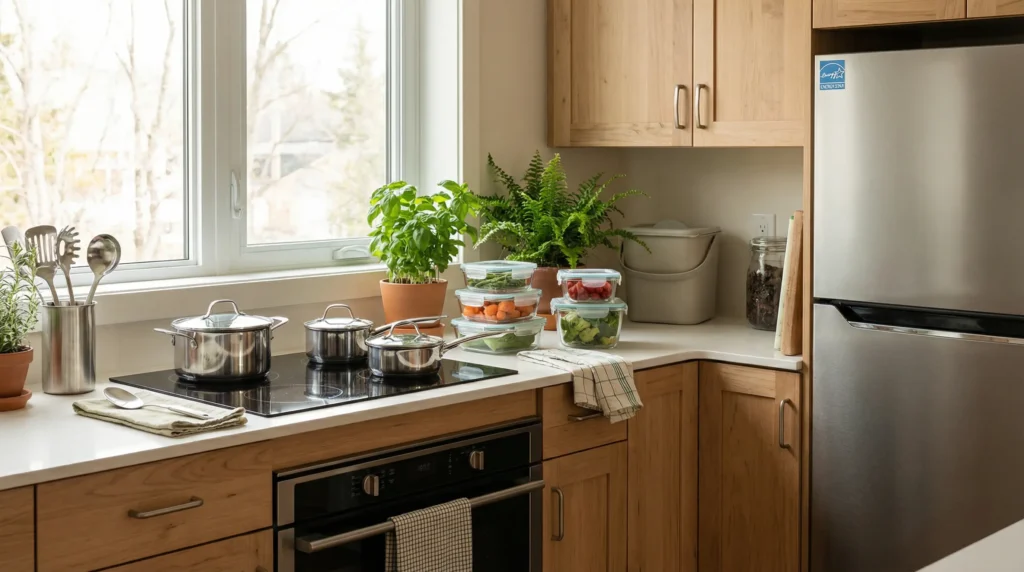
A Greener Kitchen blends smart design with responsible habits. It focuses on using fewer resources while keeping food safe and fresh. Unlike traditional kitchens, it avoids wasteful energy use and toxic materials. Every item, from faucets to storage, serves a purpose beyond convenience.
This approach works through balance. Energy-efficient tools handle heavy tasks.
Reusable materials replace disposable ones. Non-toxic surfaces keep indoor air cleaner. Together, these choices turn the kitchen into a healthier and more sustainable living space.
Core Principles Behind a Truly Greener Kitchen
A successful Greener Kitchen relies on efficiency, safety, and mindful use. Energy efficiency reduces power waste. Waste reduction limits landfill impact.
Non-toxic materials protect lungs and skin. Responsible consumption avoids excess buying. These principles quietly work together every day.
Smart Greener Kitchen Choices That Improve Daily Health
Kitchen materials influence health more than most people realize. Many cabinets, pans, and cleaners release fumes. Over time, these pollutants affect breathing and food safety. A Greener Kitchen removes these hidden risks by using safer alternatives.
Eco-friendly kitchens support wellness through cleaner air and surfaces. Families notice fewer odors and less irritation. Food preparation becomes safer. Health benefits grow slowly but steadily, especially for children and seniors.
Non-Toxic Surfaces and Safer Kitchen Materials
A Greener Kitchen favors low-VOC cabinets, mineral-based countertops, and BPA-free cookware. Traditional plastics can leach chemicals when heated. Safer materials stay stable and clean. Choosing stainless steel, ceramic, and untreated wood protects food quality and indoor air.
Energy-Efficient Appliances for a Greener Kitchen
Appliances consume most kitchen energy. Old models waste power without showing obvious signs. A Greener Kitchen relies on ENERGY STAR-rated appliances, which meet strict U.S. efficiency standards. These appliances use less electricity while performing the same tasks.
Over time, efficient appliances reduce strain on the power grid. Homeowners see lower bills and quieter operation. Energy efficiency becomes a daily benefit rather than a sacrifice.
Smart Appliance Upgrades That Make the Biggest Impact
Refrigerators, dishwashers, and induction cooktops offer the biggest savings in a Greener Kitchen. Modern refrigerators maintain temperature with less energy. Efficient dishwashers clean better with less water. Induction cooktops heat faster and waste less power.
Water-Saving Strategies Every Greener Kitchen Should Use
Kitchens waste water through leaks, rinsing, and inefficient washing. A Greener Kitchen addresses this problem with simple upgrades. According to U.S. environmental data, small changes can save thousands of gallons each year.
Water conservation also reduces energy use. Heating water requires power. Using less water lowers both water and energy bills. Sustainable kitchens protect local water supplies while saving money.
Low-Flow Fixtures and Smart Dishwashing Habits
Low-flow faucets reduce waste without lowering pressure. Efficient dishwashers clean more dishes using less water. Smart habits matter too. Full loads and proper scraping save gallons daily in a Greener Kitchen.
Waste Reduction Tips for a More Sustainable Kitchen
Food waste and packaging overload landfills. A Greener Kitchen tackles this problem at its source. Thoughtful storage and portion control prevent spoilage. Recycling becomes easier with better organization.
Reducing waste also saves money. Less discarded food means fewer grocery trips. Sustainable kitchens support a cycle of use instead of disposal.
Composting, Recycling, and Food Waste Control
Kitchen composting turns scraps into soil instead of trash. Proper recycling keeps materials in circulation. Airtight containers extend food life. Together, these habits strengthen the impact of a Greener Kitchen.
Greener Kitchen Storage and Organization Solutions
Organization supports sustainability. Clutter leads to waste. A Greener Kitchen uses clear storage systems to track food and supplies. This prevents overbuying and forgotten items.
Reusable storage replaces disposable packaging. Glass and steel containers protect food quality and reduce plastic exposure. An organized kitchen saves time and supports healthier choices.
Reusable Containers and Plastic-Free Storage Ideas
Glass jars, stainless containers, and silicone lids replace single-use plastics. These materials last longer and clean easily. Plastic-free storage keeps food safer and supports the goals of a Greener Kitchen.
Eco-Friendly Cooking Habits That Support a Greener Kitchen
Daily habits shape environmental impact. A Greener Kitchen encourages efficient cooking methods. Using lids, matching pan size, and planning meals saves energy and time.
Energy-smart cooking also protects nutrients. Faster methods preserve food quality. Sustainable habits blend health and efficiency naturally.
Energy-Smart Cooking Techniques
Batch cooking reduces repeated heating. Pressure cooking shortens cook times. Proper burner use avoids wasted heat. These habits strengthen the effectiveness of a Greener Kitchen.
Budget-Friendly Greener Kitchen Tips for U.S. Homeowners
Sustainability does not require remodeling. A Greener Kitchen grows through small steps. Affordable swaps deliver real results without strain. Many changes cost less than expected.
Reusable towels replace paper products. DIY cleaners reduce chemical use. These simple actions build momentum toward a healthier home.
Simple Swaps That Deliver Significant Environmental Wins
Cloth towels, refillable bottles, and natural cleaners replace disposables. These changes save money over time. Even small steps strengthen a Greener Kitchen.
Long-Term Benefits of Building a Greener Kitchen
The benefits of a Greener Kitchen extend beyond utility bills. Health improves through cleaner air and safer food surfaces. Environmental impact shrinks through reduced waste and energy use.
Home value often increases. Buyers favor eco-friendly features. A sustainable kitchen becomes an investment in comfort, responsibility, and future readiness.
Conclusion
A Greener Kitchen does not require perfection. Progress matters more. Each thoughtful choice improves health and sustainability. Over time, these choices transform daily routines into lasting benefits.
Building a healthier home begins in the kitchen. Small eco-friendly steps today shape a cleaner and more responsible tomorrow.