Homemade beeswax wraps are becoming a must-have for eco-conscious kitchens. If you’re tired of single-use plastics and want a smarter, greener option, homemade beeswax wraps offer a practical solution that’s easy to make and rewarding to use. This guide will walk you through everything—from understanding what they are to learning how to make beeswax wraps at home while choosing sustainable kitchen habits that actually last.
What Are Homemade Beeswax Wraps?
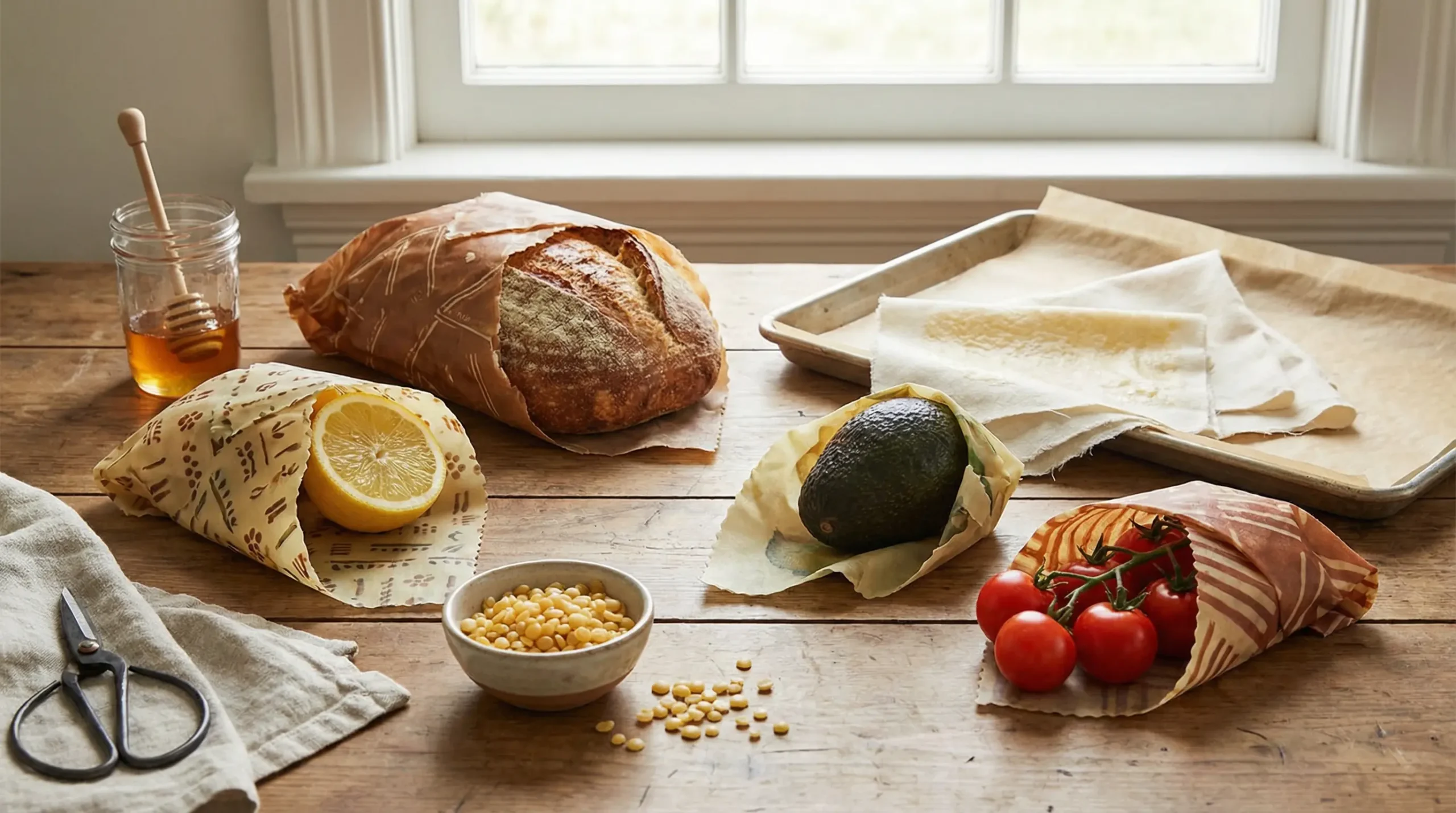
Homemade beeswax wraps are reusable, wax-coated cloths used as natural food wraps to cover bowls, wrap produce, or store snacks. Often referred to as DIY beeswax wraps, they’re made using simple, natural materials and work through the warmth of your hands to seal food gently.
Unlike plastic, these homemade food wraps breathe slightly, helping food stay fresh without trapping moisture. As part of modern natural food storage solutions, they’re safe, reusable, and compostable when worn out.
Benefits of Homemade Beeswax Wraps
One of the biggest benefits of beeswax wraps is their role in plastic-free food storage. By switching to reusable beeswax wraps, you reduce waste while saving money over time. They’re flexible, washable, and long-lasting, making them ideal zero waste kitchen wraps.
As an eco-friendly food wrap, they align perfectly with eco-friendly kitchen swaps and other sustainable kitchen alternatives. Plus, they’re visually appealing and customizable—something store-bought wraps can’t always offer.
Materials Needed to Make Homemade Beeswax Wraps
Before you begin, gather the right materials to make durable, food-safe wraps. Using quality ingredients ensures better adhesion, flexibility, and longer lifespan.
Cotton fabric (organic vs regular)
Choose 100% cotton fabric with a tight weave. Organic cotton is preferable because it’s chemical-free and safer for food contact, but regular cotton also works well if it’s clean and untreated. Avoid synthetic or blended fabrics, as wax won’t bond properly to them.
Beeswax pellets or grated beeswax:
Beeswax pellets are the easiest option because they melt evenly and distribute smoothly. Grated beeswax works too but may require extra care to spread evenly. Always use food-grade beeswax for safety.
Optional ingredients (jojoba oil, pine resin):
Jojoba oil adds flexibility, preventing wraps from becoming brittle, while pine resin improves stickiness and sealing power. These are optional but helpful if you want wraps closer in performance to store-bought versions.
Tools required (oven, brush, parchment paper):
You’ll need an oven or heat source to melt the wax, a pastry brush to spread it evenly, and parchment paper to protect baking trays and surfaces. Scissors for cutting fabric and tongs for handling hot wraps are also useful.
How to Make Homemade Beeswax Wraps (Step-by-Step Guide)
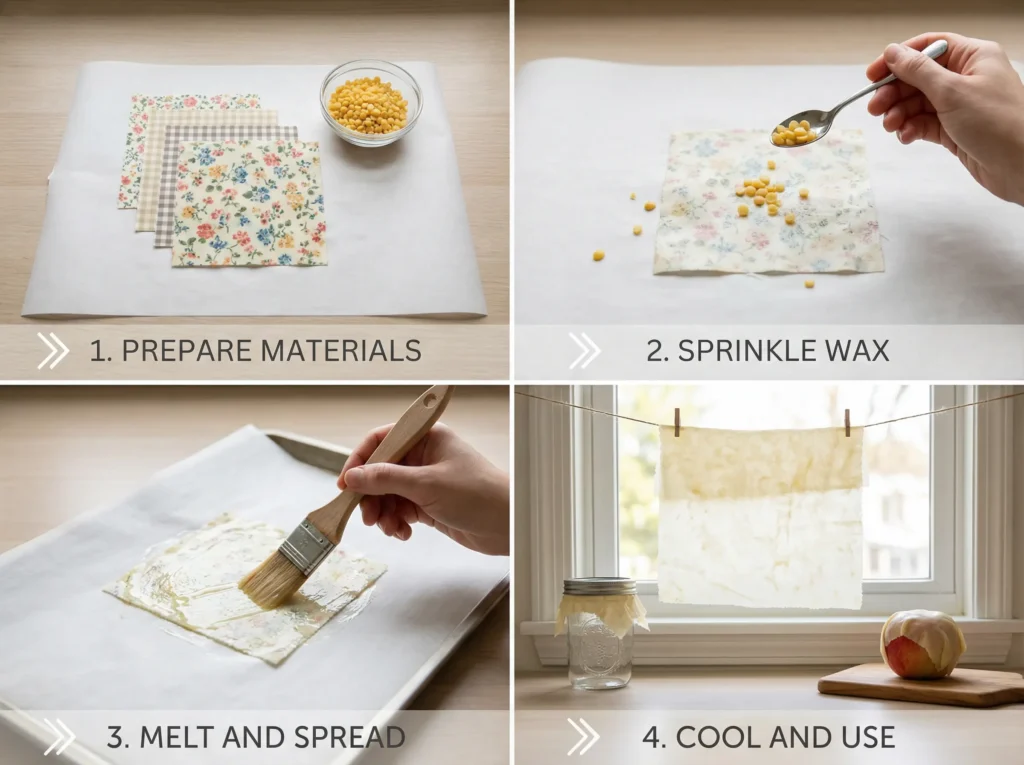
Making homemade beeswax wraps is a simple process when broken into clear steps. Follow these carefully to avoid uneven coating or overheating the wax.
Step 1: Preparing and cutting the fabric
Wash and dry the cotton fabric to remove any sizing or residues. Lay it flat and cut it into desired sizes—small squares for snacks, medium for produce, and large for covering bowls.
Step 2: Melting beeswax safely
Preheat your oven to a low temperature (around 80–90°C / 175–195°F). Place the fabric on a parchment-lined baking tray and sprinkle beeswax pellets or grated wax evenly across the surface. Keep the temperature low to prevent scorching.
Step 3: Applying wax evenly
Once the wax melts, use a brush to spread it evenly across the fabric, reaching the edges and corners. If the wax starts to harden, return the tray to the oven briefly until it melts again.
Step 4: Setting and cooling the wraps
Carefully lift the fabric with tongs and gently wave it in the air for a few seconds. The wax will cool and set quickly. Once fully cooled, the wrap should feel slightly tacky but not wet.
Best Fabric for Homemade Beeswax Wraps
Choosing the right fabric is crucial. Cotton fabric for beeswax wraps works best because it absorbs wax evenly and remains breathable. Avoid synthetic blends, as they don’t bond well with wax and may not be food-safe.
High-quality cotton improves durability, enhances beeswax wrap uses, and makes beeswax wrap care easier over time. A good fabric choice directly affects how long do homemade beeswax wraps last and how often you’ll need re-waxing beeswax wraps.
Homemade Beeswax Wraps vs Plastic Wrap
When comparing beeswax wrap vs plastic wrap, the difference is clear. Plastic wrap is single-use, non-biodegradable, and generates significant waste. In contrast, beeswax wraps are biodegradable, reusable food wraps. Many people askwhether beeswax wraps are safe for food.
Yes—when made properly, they’re a reliable part of natural food storage solutions. They’re easy to maintain, and knowing how to clean homemade beeswax wraps ensures hygiene without compromising sustainability.
Final Thought
By choosing homemade beeswax wraps, you’re not just creating a product—you’re embracing a lifestyle shift toward mindful consumption. Whether you’re experimenting for fun or transitioning fully into eco-friendly living, these wraps are a powerful, practical upgrade for any kitchen.
Check Related Posts: How to Clean Beeswax Wraps Without Damaging Them | How to Wash Beeswax Wraps Properly (Step-by-Step Guide) | Bamboo Toothbrush Benefits | Best Silicone Tongs | How to Reduce Kitchen Waste | Ultimate Guide to Kitchen Sponges
Frequently Asked Questions
Latest Posts