

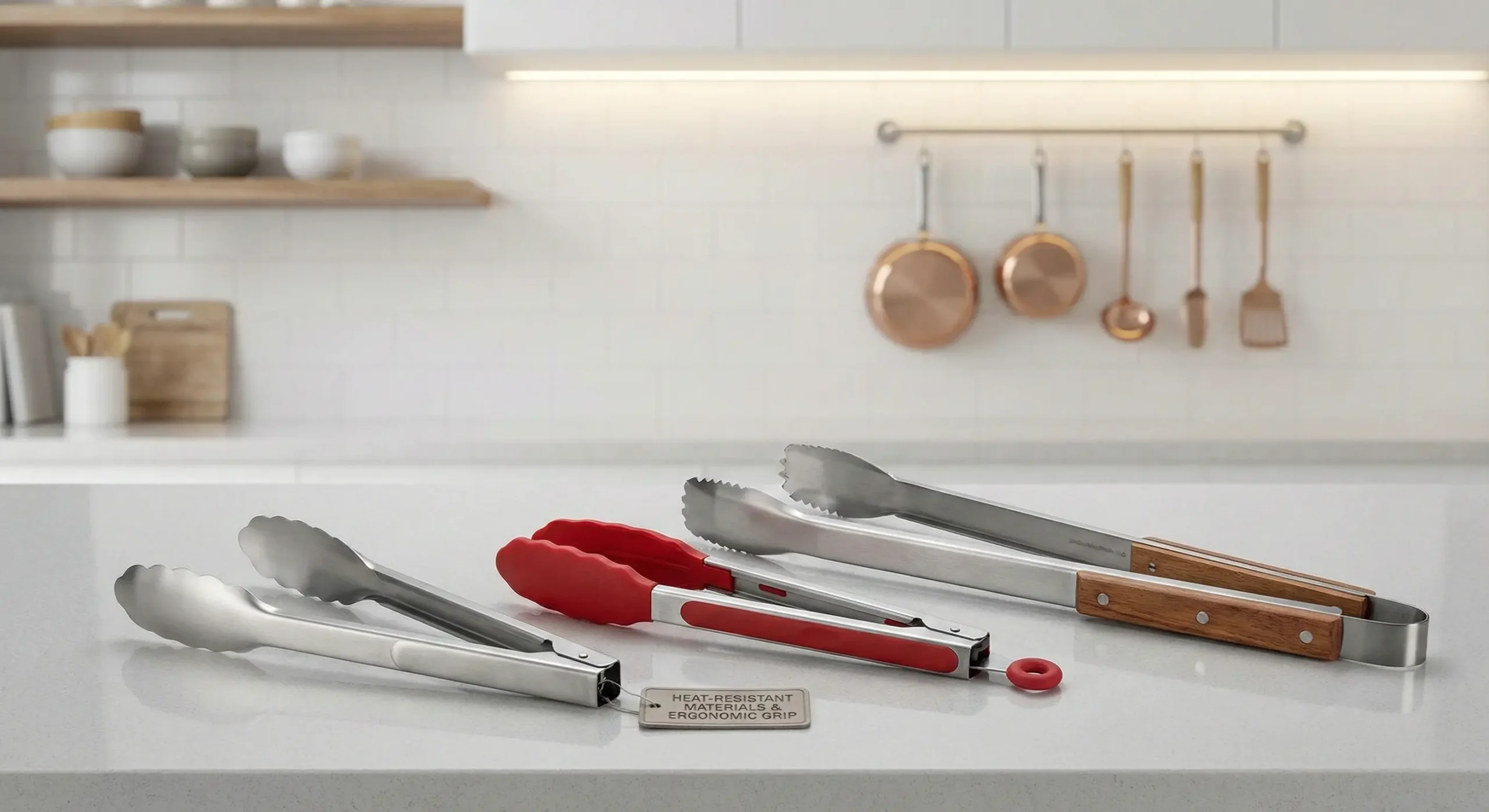

When it comes to cooking, having the right kitchen tools makes all the difference. Cooking tongs are one of the most versatile and essential cooking utensils in any kitchen. Whether you’re grilling, flipping, sautéing, or serving food, kitchen tongs can elevate your cooking experience, making tasks quicker and safer. But with so many options available, choosing the best cooking tongs can be a bit overwhelming. Here’s a comprehensive guide to help you make the best choice based on size, material, and essential features.
Why Choosing the Right Kitchen Tongs Matters
The Role of Tongs in Everyday Cooking
Cooking tongs are essential for a variety of kitchen tasks. From food handling to precision cooking, tongs are used to grab, flip, and serve foods in ways that are often quicker and safer than using forks or spatulas. Tongs are incredibly handy for grilling, tossing salads, flipping meat in a hot pan, and even serving pasta directly from the pot. Tongs for grilling or tongs for delicate foods help you manage different cooking styles without damaging your non-stick cookware.
The best kitchen tongs can not only improve your cooking speed but also enhance your safety in the kitchen. With the right set of high-quality kitchen utensils, you can handle hot foods, stir sauces, and serve dishes with cooking precision. Tongs help maintain control over food placement and prevent burns from hot cookware or boiling liquids. These simple kitchen essentials make cooking easier and more enjoyable, allowing you to multitask safely.
Consequences of Picking the Wrong Tongs
While versatile kitchen tongs are great for cooking, using the wrong pair can lead to several issues. For example, flimsy tongs made from low-quality materials may not handle the heat or weight of food, making cooking more challenging. If tongs are poorly designed, they might slip on greasy or hot items, increasing the risk of burns. Additionally, using the wrong size tongs for the task can lead to scratches on cookware, especially non-stick cookware.
In the long term, investing in cooking tongs that are poorly made or incorrect for your needs can be costly. You may end up replacing them more frequently or dealing with damaged cookware. For instance, stainless steel construction may scratch or damage delicate non-stick protection, ultimately leading to more repairs or replacements. It’s essential to consider the quality, size, and features when selecting your cooking tongs, so you can avoid these common pitfalls.
Key Factors to Consider When Choosing Kitchen Tongs
Material & Durability — What the Tong is Made Of
When choosing kitchen tongs, the material is one of the most important considerations. Stainless steel tongs are a popular choice due to their durability and heat resistance. These tongs can withstand high temperatures, making them ideal for grilling or sautéing. However, silicone-tipped tongs are perfect for non-stick cookware, as they offer food protection without causing scratches or damage. Silicone is also heat-resistant, making these tongs suitable for a variety of cooking tasks.
Other materials, like nylon or plastic, may be more affordable but are typically less heat-resistant and durable. If you’re looking for professional kitchen tools, investing in high-quality silicone tongs or stainless steel construction is usually the best choice. These materials are designed to last longer, ensuring your cooking tools perform well over time.
Size & Length — Matching Tongs to Cooking Tasks

The size and length of cooking tongs are crucial factors when it comes to precision and safety. For everyday cooking tasks, a medium-sized pair of tongs (around 10–12 inches) works well. They are versatile enough for flipping burgers, tossing salads, or grabbing items out of hot pans. However, for grilling or barbecue tools, long grill tongs (around 14–18 inches) are better suited. The longer length gives you more control and helps keep your hands safely away from heat sources.
Choosing tongs for delicate foods also requires attention to size and design. Tongs for plating or cooking tweezers are smaller, with a scalloped edge for better precision. These precision cooking tweezers allow you to carefully handle fine ingredients, such as garnishes or seafood, without damaging them. Cooking tongs come in many sizes, so choosing the right one for your specific cooking needs is essential for safety and ease.
Types of Kitchen Tongs & Which One Fits Your Style
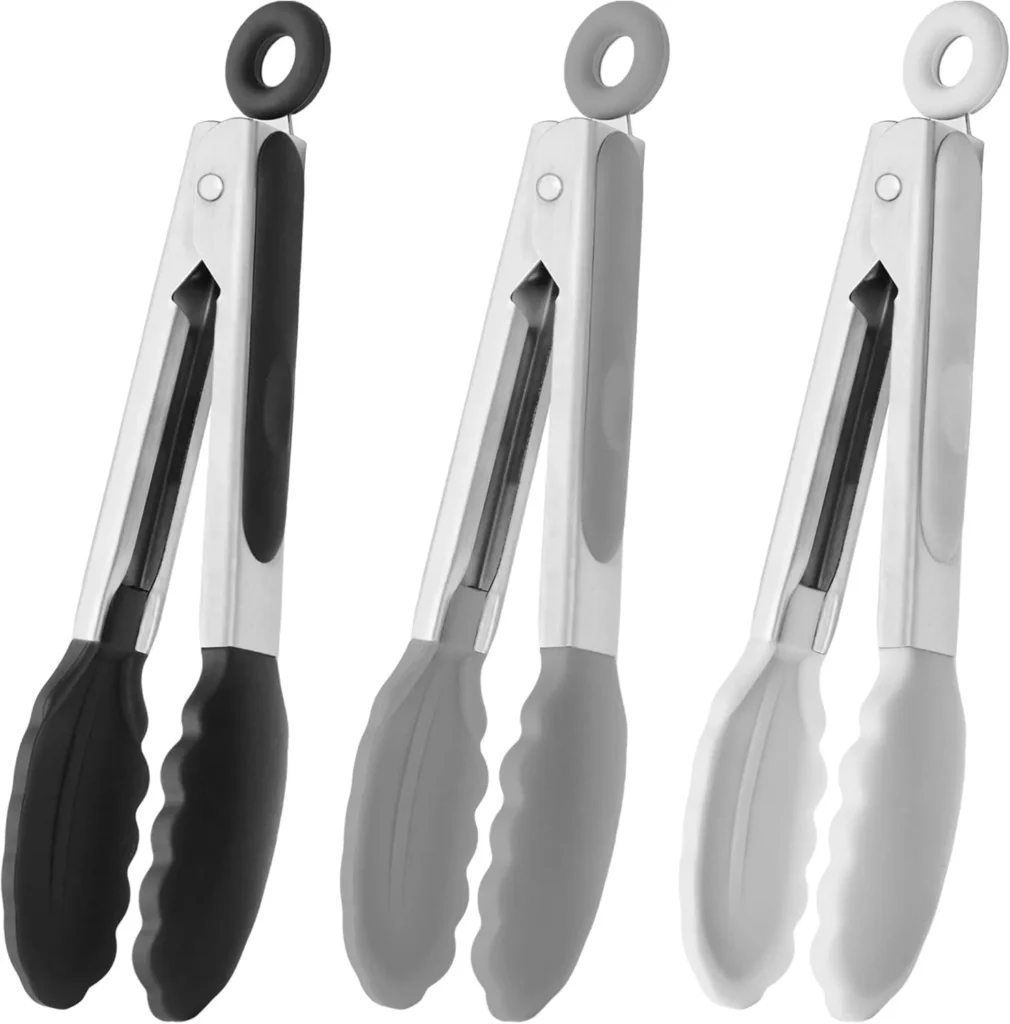
All-Purpose / Everyday Tongs
For those who do a variety of cooking tasks, all-purpose kitchen tongs are a great choice. These tongs are often made from stainless steel or silicone-tipped materials and are versatile enough for flipping, serving, or sautéing a wide range of foods. Whether you’re making a stir-fry, grilling chicken, or serving pasta, these multi-purpose kitchen tools provide the flexibility needed to tackle various tasks. They’re an excellent choice for anyone looking to streamline their kitchen tools.
Grill-Oriented Long Tongs
If grilling is a regular part of your cooking routine, you’ll need long grill tongs. These tongs are typically 14–18 inches long, designed to help you reach over a hot grill or BBQ safely. Long grill tongs are perfect for flipping steaks, burgers, or vegetables on the grill, giving you the added reach to avoid burns. The stainless steel construction and heat-resistant materials of these tongs make them durable and perfect for outdoor cooking.
Specialty Tongs — Silicone, Nylon, Plastic, Wooden, and Precision Tweezers
If you need more specialized tongs, there are plenty of options available. Silicone tongs are ideal for non-stick cookware, as they won’t scratch the surface. For light tasks, like serving salads or flipping delicate food, wooden tongs work well. For precision cooking, such as plating or handling small items, cooking tweezers or scissor tongs provide the utmost control. These high-quality kitchen utensils are designed to help you handle delicate or fine foods with the precision needed for food preparation and food protection.
How to Choose the Best Kitchen Tongs for Your Needs
Step 1 — Identify Your Cooking Habits and Needs
The first step in selecting kitchen tongs is to understand your cooking habits. Do you frequently grill or BBQ? If so, long grill tongs are essential. If you often cook with non-stick cookware, silicone-tipped tongs will help protect your pans. If you use your tongs for delicate tasks like plating or handling small foods, consider cooking tweezers. The right tongs for different cooking tasks will depend on your style, so it’s essential to assess your needs before making a purchase.
Step 2 — Prioritize Material and Build Quality
Investing in cooking tongs made from high-quality materials like stainless steel or heat-resistant silicone ensures durability and long-term use. These durable tongs are built to withstand high temperatures, heavy foods, and frequent use. Choosing tongs with ergonomic handles also improves comfort during extended cooking sessions, preventing hand strain.
Step 3 — Consider Comfort, Grip, and Safety Features
Look for tongs with handle ergonomics that make them comfortable to use. Some tongs feature a locking mechanism for easy storage, while others have non-slip grips to enhance safety and control. For safety, always choose cooking tongs for safety with heat-resistant handles to protect against burns.
Maintenance & Care Tips to Make Kitchen Tongs Last
Cleaning Best Practices
To ensure your cooking tongs last for years, always clean them properly. Most stainless steel tongs are dishwasher-safe, but silicone-tipped tongs should be hand-washed to preserve their flexibility. Regular cleaning prevents the buildup of grease and food residue, which can affect performance. Always dry your tongs thoroughly to prevent rusting.
Storage Recommendations
To keep your cooking tongs in good condition, store them properly. Consider using kitchen storage solutions, such as utensil drawers or hooks. If your tongs have a locking mechanism, keep them locked when not in use to avoid damage. Proper storage will ensure your tongs are always ready for use and in good working condition.
Conclusion — Make the Right Choice and Cook with Confidence
Choosing the best cooking tongs doesn’t have to be difficult. By considering factors such as size, material, and features, you can find the perfect pair for your needs. Whether you need tongs for grilling, tongs for delicate foods, or an all-purpose pair for everyday cooking, the right kitchen tongs can elevate your cooking experience. Invest in high-quality kitchen utensils today, and enjoy safer, more precise cooking for years to come.