
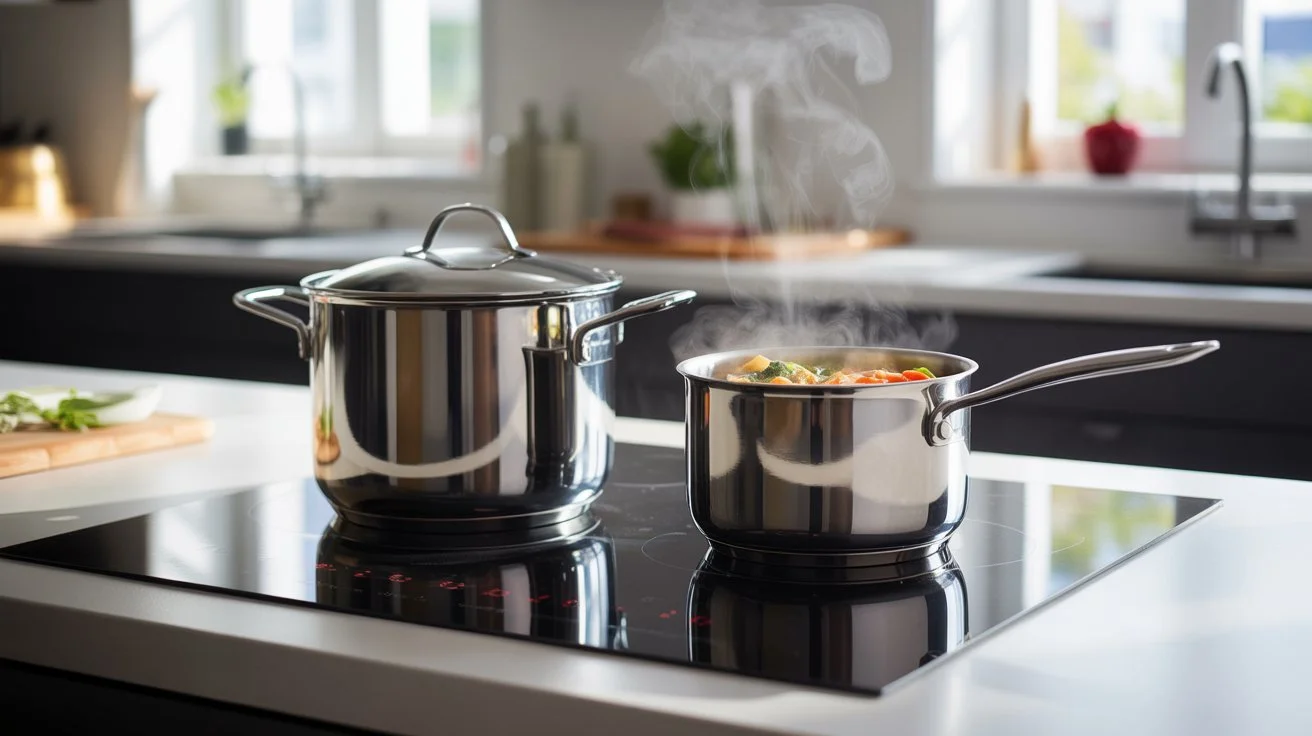

Induction cooking is fast, energy-efficient, and incredibly precise—but only if you’re using the right cookware. Choosing the best induction cookware pots can completely transform your cooking experience, helping you boil faster, simmer more evenly, and reduce energy waste.
Unlike traditional gas or electric stoves, induction cooktops rely on magnetic technology. That means not every pot in your kitchen will work. In this complete buying guide, you’ll learn how to select the perfect induction cookware pot based on material, construction, size, durability, and performance—so you can cook confidently and efficiently.
Table of Contents
ToggleWhat Are Induction Cookware Pots?
Induction cookware pots are specially designed pots that work with induction cooktops through magnetic conductivity. Instead of heating the burner first, induction technology uses electromagnetic energy to directly heat the pot itself. This makes cooking faster, safer, and more energy-efficient.
For a pot to function properly on induction, it must have a magnetic base. If a magnet sticks firmly to the bottom, it’s compatible. This applies to various types of induction pot cookware, including saucepans, stock pots, and even an induction cookware pasta pot.
Many modern induction cookware pots and pans are built with layered construction to ensure even heating and durability. The key is magnetism—without it, the cooktop simply won’t activate.
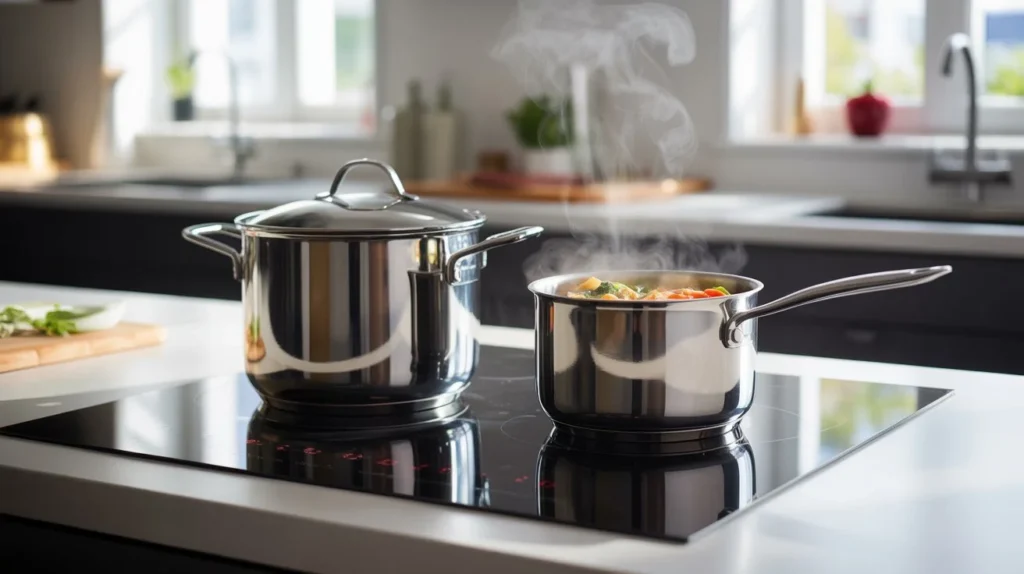
Why Not All Pots Work on Induction Cooktops
Traditional cookware made of pure aluminum, copper, or glass does not contain magnetic material. Since induction cooktops generate heat through magnetic fields, non-magnetic cookware will not heat up.
This is why many people are surprised when their old favorite pot doesn’t work on a new induction stove. Induction cooking requires specific materials or a magnetic base layer. Even some stainless steel cookware won’t work if it lacks magnetic properties.
Choosing proper induction pots cookware ensures:
- Efficient heating
- Reduced energy loss
- Better temperature control
- Safer cooking (cooler cooktop surface)
Understanding compatibility before purchasing saves both time and money.
Key Factors to Consider When Choosing Induction Cookware Pots
Selecting the right cookware involves more than checking for magnetism. Here’s what truly matters:
1. Material Compatibility
The material determines durability, heat distribution, and long-term performance.
Stainless Steel (Magnetic Grades)
Magnetic stainless steel is one of the best choices for induction cookware pots. Look for 18/10 stainless steel with a magnetic base. It’s durable, rust-resistant, and ideal for everyday cooking.
Cast Iron
Cast iron works perfectly on induction due to its natural magnetism. It offers exceptional heat retention, making it great for slow cooking and braising. However, it is heavy.
Carbon Steel
A lighter alternative to cast iron, carbon steel heats quickly and works well for high-heat cooking.
Aluminum with Magnetic Base
Aluminum alone won’t work, but many modern induction cookware pot designs include a bonded magnetic stainless-steel base to ensure compatibility.
Copper with Induction Plate
Copper offers superior heat responsiveness but requires a magnetic induction plate layer to function properly.
2. Magnetic Base & Construction
The construction of your cookware directly impacts cooking performance.
Fully Clad vs Disc-Bottom
Fully clad cookware has magnetic layers running throughout the entire body of the pot. Disc-bottom cookware only has a magnetic base attached to the bottom. Fully clad options provide better heat distribution.
Multi-Layer Construction (Tri-Ply, 5-Ply)
Tri-ply or 5-ply cookware combines stainless steel, aluminum, and magnetic layers. This improves durability and ensures even cooking.
Even Heat Distribution
High-quality induction cookware stock pot models are designed to prevent hot spots, which can burn food.
3. Pot Thickness & Base Design
Thickness plays a critical role in performance.
Flat Bottom Importance
Induction cooktops require flat-bottom cookware for proper contact. Even slight warping can reduce efficiency.
Warping Issues
Thin, low-quality pots may warp over time, causing uneven heating and poor performance.
Heat Retention
Thicker bases retain heat longer and maintain consistent temperatures.
4. Size & Capacity
Choosing the correct size ensures efficiency and convenience.
Small Sauce Pots vs Stock Pots
For sauces and small meals, a smaller pot is sufficient. For soups, pasta, or batch cooking, an induction cookware pasta pot or induction cookware stock pot is ideal.
Family Cooking vs Single-Person Use
Large families benefit from bigger capacities, while singles or couples can opt for compact cookware.
5. Handle & Lid Quality
Comfort and safety matter just as much as performance.
Heat-Resistant Handles
Handles should stay cool and provide a secure grip.
Riveted vs Welded
Riveted handles are generally stronger and more durable over time.
Tempered Glass vs Stainless Steel Lids
Glass lids allow you to monitor cooking, while stainless steel lids offer better durability.
6. Nonstick vs Stainless Steel
Both options have advantages.
Cleaning Convenience
Nonstick induction cookware pots and pans are easier to clean and require less oil.
Durability Comparison
Stainless steel is more durable and resistant to scratches.
Best Use Cases
Nonstick works best for eggs and delicate foods, while stainless steel excels at searing and browning.
How to Check If a Pot Is Induction Compatible
Before purchasing or replacing cookware, try these steps:
- Place a magnet on the bottom.
- If it sticks firmly, the pot is compatible.
- Look for the induction symbol (a coil-like icon).
- Check product specifications for induction compatibility.
This simple method ensures your induction pot cookware will function properly.
Best Materials for Induction Cooking Pots
For long-term performance, magnetic stainless steel and cast iron are top choices. Stainless steel offers versatility and durability, while cast iron provides unmatched heat retention.
Modern multi-layer induction cookware pots with aluminum cores deliver the perfect balance of even heating and strength. When selecting induction pots cookware, focus on durability, magnetic strength, and base stability rather than just appearance.
Final Thoughts: Choosing the Best Induction Cookware Pots
The right induction cookware pots improve cooking speed, precision, and overall efficiency. By focusing on material compatibility, construction quality, thickness, and proper sizing, you can invest in cookware that lasts for years.
Whether you’re selecting a compact saucepan, a versatile everyday pot, or a large induction cookware stock pot, choosing thoughtfully ensures better cooking results and energy savings.
Induction cooking is a smart upgrade—your cookware should match that intelligence.
Why Trust Best Eco Kitchen Tools
At Best Eco Kitchen Tools, we focus on detailed research, performance evaluation, and material analysis before recommending any cookware. Our content is designed to help home cooks understand not just what to buy—but why.
We evaluate construction quality, magnetic compatibility, durability, and practical performance to ensure our readers get reliable guidance. Our mission is to provide honest, informative, and eco-conscious kitchen advice that helps you make smarter purchasing decisions.
When you read our guides, you’re getting research-backed insights designed to simplify your buying journey.
Check Related Posts: 7 Best Induction Ready Cookware Sets | How to Make Your Own Beeswax Wraps | Are Bamboo Straws Biodegradable | Silicone vs Wood Cooking Utensils | Which Are the Best Metal Utensils for Cooking
Frequently Asked Questions
What type of cookware is best for induction cooking?
Magnetic stainless steel and cast iron are considered the best materials. Multi-layer stainless steel cookware with a magnetic base provides excellent heat distribution and durability.
What pots are suitable for induction cooking?
Any pot with a magnetic bottom is suitable. This includes many stainless steel pots, cast iron cookware, and specially designed induction cookware pots and pans.
Is induction cookware safe?
Yes. Induction cooking is one of the safest cooking methods because heat is generated directly in the cookware, leaving the cooktop surface cooler and reducing burn risks.