

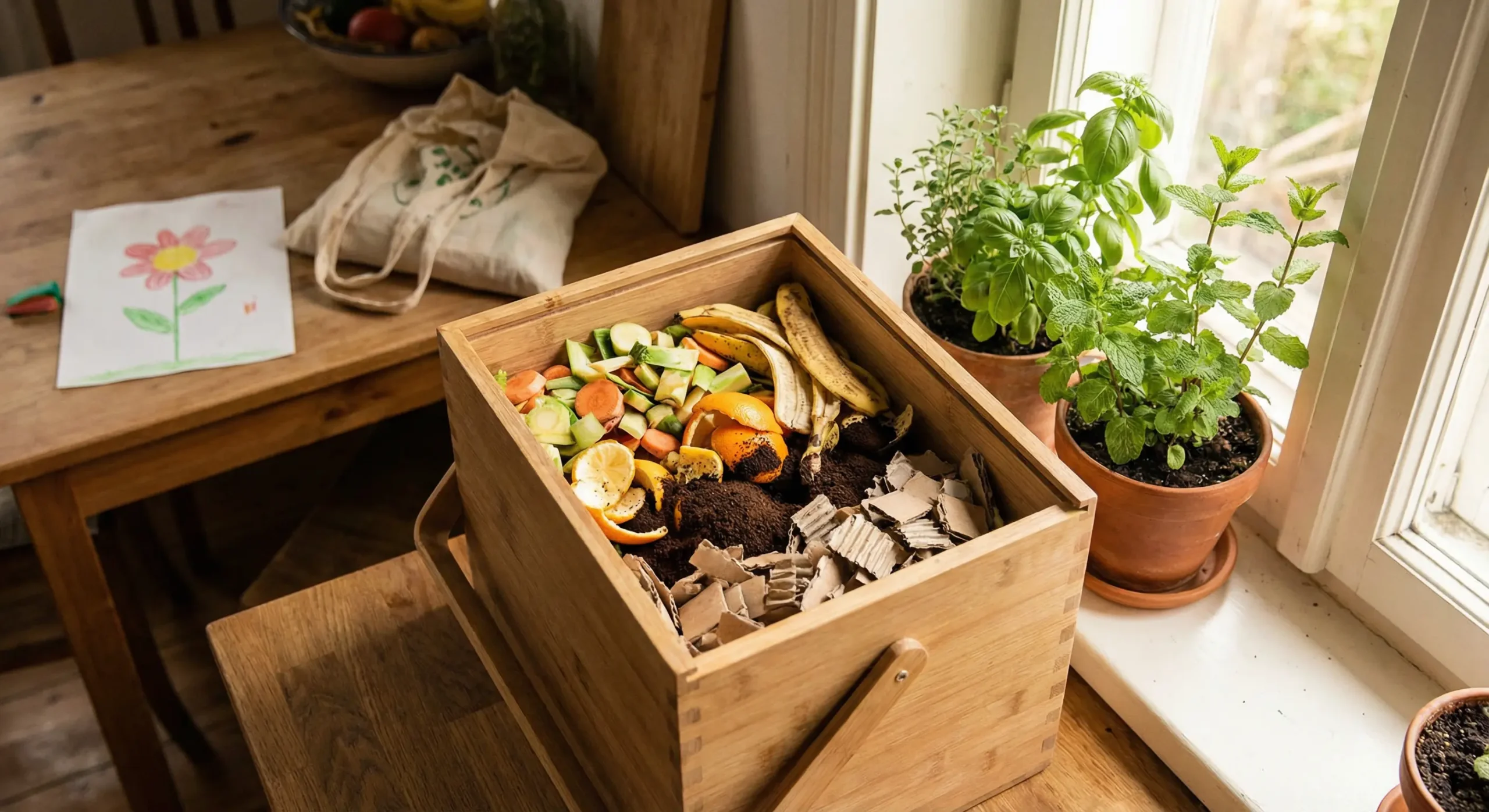

Learning how to make compost at home with kitchen waste is becoming very important in modern households. Every day, a large amount of food waste is thrown away from kitchens. This waste ends up in landfills and creates pollution. Kitchen waste composting helps turn organic scraps into useful soil food. It is a simple habit that supports sustainable living, reduces trash, and keeps homes cleaner. Even small households can easily start home composting without special tools or skills.
This guide explains how to compost at home using everyday kitchen waste in a clear and simple way. Readers will learn about organic waste management, composting benefits, and easy methods that work in small spaces. It also covers how to reduce kitchen waste, avoid common composting mistakes, and use finished compost safely. By the end, readers will understand how eco-friendly composting can save money, improve soil health, and protect the environment naturally.
What Is Composting?
Composting is a natural process where organic waste like fruit peels and vegetable scraps turns into rich, dark soil called compost. Compost is full of nutrients and helps plants grow better. It improves soil structure, keeps moisture longer, and supports healthy soil without using chemical fertilizers.
The composting process works because of tiny microorganisms like bacteria and fungi. These living organisms break down waste using air and moisture. A good carbon-to-nitrogen balance is important. Greens vs Browns means mixing wet food waste with dry materials. Over time, natural decomposition turns kitchen waste into usable compost.
Benefits of Making Compost at Home
Making compost at home creates strong environmental benefits for everyday households. When people compost kitchen scraps, less kitchen waste goes to landfills. This reduces methane gas, which is a harmful greenhouse gas. Home composting supports waste reduction and helps protect air and soil quality naturally.
There are also clear household and gardening benefits. Compost works as free organic fertilizer and improves soil structure over time. Plants grow healthier and stronger without chemicals. From a money perspective, composting lowers waste disposal costs and reduces the need for store-bought fertilizers. This makes eco-friendly composting both practical and cost-effective.
Types of Kitchen Waste Suitable for Composting
Understanding the right types of kitchen waste suitable for composting is crucial to success. Compost needs a balance of wet and dry materials to break down properly. When the correct waste is added, home composting becomes faster, cleaner, and odor-free.

Kitchen waste is mainly divided into green waste and brown waste. Green materials add moisture and nitrogen. Brown materials add carbon and airflow. Some kitchen items should always be avoided because they slow down the composting process and cause nasty smells.
Green Waste (Nitrogen-Rich Materials)
Green waste includes fresh and moist kitchen scraps. These materials provide nitrogen, which feeds microorganisms during decomposition. Typical examples are vegetable peels, fruit scraps, and coffee grounds and tea leaves. These items break down quickly and help heat the compost naturally.
Brown Waste (Carbon-Rich Materials)
Brown waste is dry and carbon-rich. It balances wet kitchen scraps and prevents odor. Good options include dry leaves, shredded newspaper, and cardboard and paper towels. These materials improve airflow and keep the compost pile healthy and well-structured.
Kitchen Waste You Should Avoid
Some kitchen waste should never go into compost. Meat and fish scraps, dairy products, and oily or greasy food waste attract pests and cause strong smells. These items also slow down organic waste decomposition and make compost unsafe for home use.
How to Make Compost at Home With Kitchen Waste (Step-by-Step)
Learning how to make compost at home with kitchen waste is simple when done step by step. The composting process depends on the right method, correct materials, and regular care. When each step is followed properly, home composting becomes clean, fast, and very effective.
This step-by-step guide explains kitchen waste composting in an easy way. It covers choosing the right method, preparing waste, layering materials, and maintaining the compost pile. These steps help ensure healthy organic waste decomposition without bad smell or pests.
Step 1: Choose the Right Composting Method
Choosing the right composting method depends on space and lifestyle. The Compost Bin Method works best for homes and apartments because it controls odor and pests. Pit composting is ideal for backyards with open soil. Bucket or container composting suits small spaces and balconies.
Step 2: Select a Suitable Composting Container
A good composting container should match household waste quantity. Medium-sized containers work well for daily kitchen scraps. The container material should be strong and breathable. Proper drainage and airflow are important to prevent water buildup and support microorganisms.
Step 3: Prepare Kitchen Waste for Composting
Kitchen waste should be chopped into small pieces. This helps faster decomposition and better mixing. Maintaining the right moisture balance is also important. Waste should feel damp, not wet. Too much water slows the composting process.
Step 4: Layering Compost Correctly
Correct layering keeps compost healthy. A proper green and brown material ratio allows smooth breakdown. Wet kitchen waste should always be covered with dry materials. This layering technique controls odor, improves airflow, and speeds up compost formation.
Step 5: Maintain the Compost Pile
Regular care keeps compost active. Turning and aeration add oxygen for microorganisms. Moisture control prevents drying or rotting. Temperature monitoring helps identify healthy compost activity. With simple maintenance, eco-friendly composting becomes successful and rewarding.
How Long Does Compost Take to Be Ready?
The time needed for how to make compost at home with kitchen waste depends on several factors. Usually, home composting takes between two to six months. Warm weather, proper layering, and regular turning help speed up the composting timeline and support faster organic waste decomposition.
Several factors affect composting speed. These include waste size, moisture level, airflow, and the carbon-to-nitrogen balance. Smaller kitchen scraps break down faster. Good aeration supports microorganisms. When conditions stay balanced, the composting process works smoothly without delays.
Signs Your Compost Is Ready to Use
Finished compost has a soft and crumbly texture similar to garden soil. It should have an earthy smell, not a bad odor. The appearance becomes dark brown or black. When kitchen waste is no longer visible, the compost is ready for safe use.
How to Use Finished Compost at Home
Finished compost is a natural treasure for every home. In home gardening, it can be mixed with soil to enrich nutrients. A typical soil mixing ratio is one part compost to two parts garden soil. This improves soil texture and plant growth naturally.
For potted plants, compost should be added carefully to avoid over-fertilizing. Mixing a small amount with potting soil ensures safe nutrient release. In lawns and landscaping, spreading a thin layer of compost improves soil health and retains moisture. Best practices include avoiding thick layers and watering after application.
How to Reduce Kitchen Waste
Reducing kitchen waste is as important as composting itself. Food waste contributes significantly to environmental pollution. By managing leftovers and planning meals, households improve sustainability and save money. Small actions, like proper storage, have a big positive effect.
Practical Ways to Reduce Kitchen Waste at Home
Smart meal planning helps avoid buying excess food. Proper food storage techniques prevent spoilage. Using leftovers creatively, like soups or stir-fries, reduces waste further.
Kitchen Habits That Support Composting
Segregating waste at source makes composting easy. Following eco-friendly cooking practices, like peeling only what is necessary, supports organic waste management.
Composting as Part of a Zero-Waste Kitchen
Combining waste reduction and composting ensures minimal landfill contribution. Over time, these habits promote a long-term sustainable lifestyle approach for the home.
Composting Tips for Beginners
Beginners should follow simple do’s and don’ts of home composting. Avoid overwatering and adding non-compostable items. Seasonal composting tips help maintain decomposition throughout the year. For small apartments, container composting hacks make the process manageable and odor-free.
Conclusion
Starting home composting with kitchen waste is simple, eco-friendly, and cost-effective. Reducing waste and making compost benefits both the environment and gardens. By following proper steps, anyone can create nutrient-rich soil and contribute to a sustainable lifestyle. Every small action in waste reduction has a long-term positive impact.