
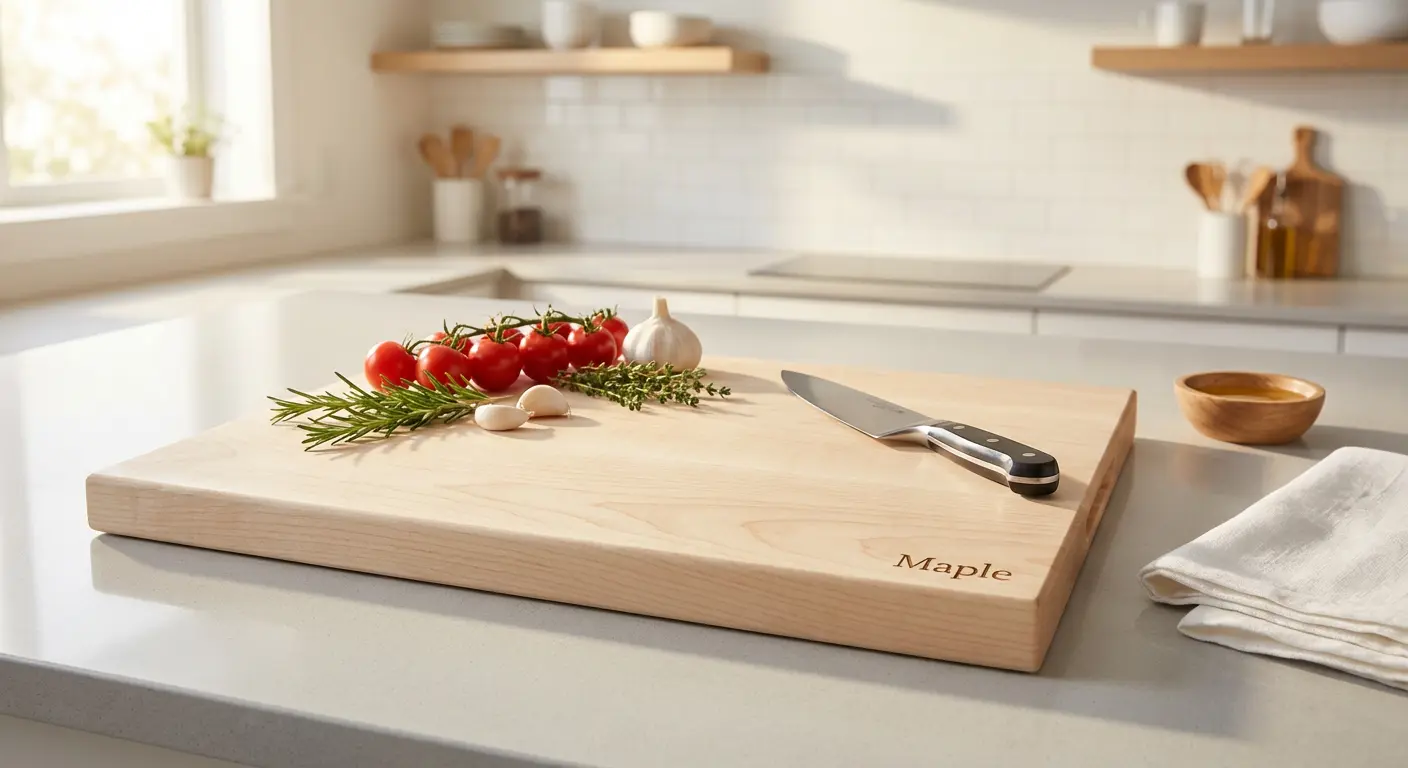

For centuries, craftsmen have recognized maple as one of the finest materials for creating wooden cutting boards. The tradition of making maple cutting boards dates back to early American kitchens, where settlers discovered that this abundant hardwood offered exceptional durability and stability for daily food preparation. Today, maple remains the gold standard among professional and home cook cutting boards alike, prized for its perfect balance of strength and gentleness on knife edges.
Choosing the right food preparation surface isn’t just about aesthetics. The wood you select directly impacts your knives’ longevity, kitchen hygiene, and even the flavor of your food. A quality hardwood cutting board becomes a workhorse in your kitchen, handling everything from delicate herbs to heavy-duty meat preparation. In this comprehensive guide, you’ll discover why maple wood for cutting board construction continues to dominate professional and home kitchens, along with honest insights into both its advantages and limitations.
Types of Maple Wood for Cutting Boards
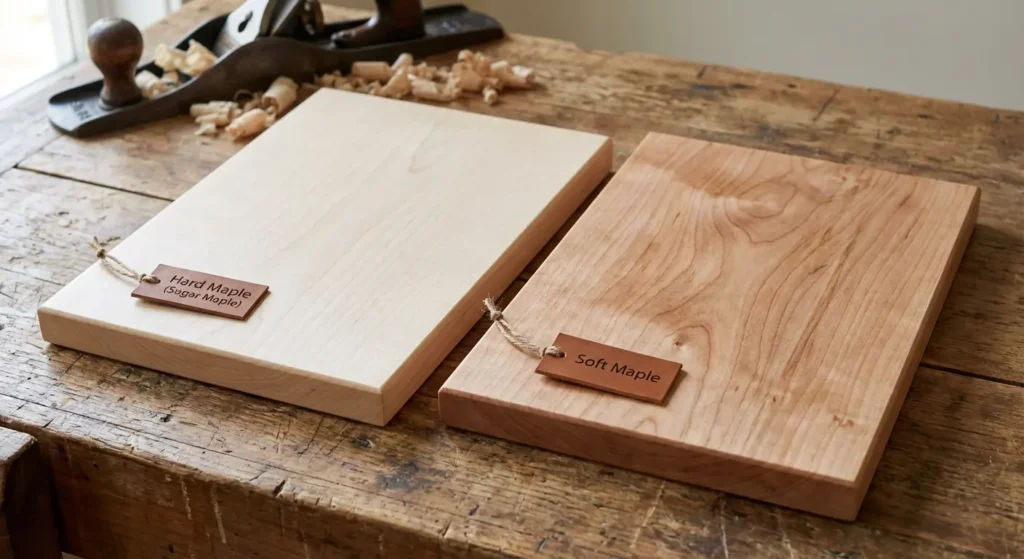
Hard Maple (Sugar Maple)
When woodworkers refer to hard maple cutting board materials, they’re typically discussing sugar maple wood, which boasts impressive hardness ratings on the Janka scale. This premium wood cutting board material delivers superior scratch resistance and dent resistance, making it ideal for heavy daily use. The dense grain structure of hard maple creates a naturally hygienic surface that resists bacteria penetration while maintaining excellent knife edge retention properties.
Soft Maple
Soft maple varieties, while less common in cutting board construction, offer a more affordable hardwood cutting board option. Though slightly less hard than their sugar maple cousins, soft maple boards still provide adequate durability for light to moderate kitchen use. They maintain the characteristic tight grain structure that makes maple desirable, though they may show wear patterns more quickly under intensive chopping.
Pros of Maple Wood Cutting Boards
Knife-Friendly Surface
One of maple’s greatest strengths lies in its ability to protect your blade’s sharpness. The wood’s perfect hardness creates a knife-friendly cutting board surface that’s firm enough to support clean cuts without being so hard that it damages your knives’ edges, ensuring optimal blade sharpness over time.
Resistant to Bacteria
The tight grain structure of maple creates natural antibacterial properties that help maintain a hygienic surface. Unlike porous materials, a properly maintained antibacterial wood cutting board made from maple resists harboring harmful bacteria, supporting excellent food safety standards in your kitchen.
Long-Lasting Durability
A quality maple butcher block or cutting board represents long-lasting performance that can span decades. The exceptional stability and split resistance of this durable cutting board material means your investment continues paying dividends year after year, making it more economical than repeatedly replacing inferior boards.
Easy to Maintain
Despite requiring regular oiling and basic wood maintenance, maple boards are surprisingly straightforward to care for. Simple sanitizing routines with mild soap and proper drying prevent water damage and mold development, while periodic conditioning keeps the wood in prime condition.
Affordable and Accessible
Compared to exotic hardwoods, maple offers an affordable hardwood cutting board solution without sacrificing quality. Its abundance in North America makes it widely available at reasonable prices, particularly when choosing between edge grain maple board versus more expensive end grain maple board constructions.
Food-Safe and Non-Toxic
As a natural wood cutting board material, maple requires no chemical treatments to be safe for food preparation surface use. Its inherent properties make it perfectly suited for direct contact with all foods, from acidic fruits to raw proteins.
Cons of Maple Wood Cutting Boards
Requires Regular Maintenance
The primary drawback involves the regular oiling schedule necessary to prevent drying and cracking. Without proper wood maintenance, even the best wood grain cutting board can develop issues with moisture resistance and overall performance.
Can Show Stains and Marks
Maple’s light neutral color tone and color sensitivity mean that pigmented foods like beets, berries, and turmeric can leave visible marks. This staining doesn’t affect functionality but may compromise the board’s aesthetic appeal over time.
Potential for Warping
Without careful attention to moisture resistance, maple boards can experience warping. Proper care ensures warp resistance, but neglecting to dry your board thoroughly or exposing it to extreme humidity changes can cause problems.
Heavier Than Some Alternatives
A substantial heavy wooden cutting board made from maple provides excellent stability during use but can be cumbersome to move and store, especially larger maple butcher block pieces that may weigh ten pounds or more.
What Makes Maple Wood Ideal for Cutting Boards?
Hardness and Durability
Maple’s exceptional Janka rating delivers the perfect combination of hardness and resilience, offering superior scratch resistance while maintaining enough give to protect knife edges during thousands of cuts.
Tight Grain Structure
The dense grain and closed pore structure create a naturally protective barrier against bacteria and moisture, distinguishing quality kitchen cutting surface options from inferior alternatives.
Natural Aesthetic Appeal
The subtle grain pattern and clean appearance of maple complement any kitchen design, from rustic farmhouse to modern minimalist, while the neutral color tone won’t clash with your existing décor.
Maple vs. Other Cutting Board Woods
Maple vs. Walnut
While walnut offers rich color and excellent properties, maple provides superior hardness at lower cost, making it the practical choice for most home cooks.
Maple vs. Cherry
Cherry develops beautiful patina but shows knife marks more readily than maple’s harder surface, which maintains its appearance longer.
Maple vs. Bamboo
The maple vs bamboo cutting board debate often centers on sustainability, though maple’s superior knife edge retention and durability make it the better long-term investment.
Maple vs. Teak
Teak’s natural oils provide excellent moisture resistance, but maple’s affordability and comparable performance make it more accessible for everyday use.
Conclusion
Maple wood for cutting board construction offers an unbeatable combination of performance, value, and longevity. While requiring some maintenance commitment and showing staining from certain foods, the benefits of knife-friendly surfaces, antibacterial properties, and long-lasting performance far outweigh these minor drawbacks.
Whether you choose an end grain maple board for maximum durability or an edge grain maple board for budget-conscious quality, you’re investing in a natural wood cutting board that will serve your kitchen faithfully for years. Take proper care of your maple board through regular oiling and correct cleaning, and it will reward you with decades of reliable service. Share your maple cutting board experiences in the comments below!
Check Related Posts: The 6 Best Compact Toasters | Pantry Glass Food Storage Containers | Homemade Beeswax Wraps | Bamboo Toothbrush Benefits | 5 Best Silicone Tongs | The 6 Best Kitchen Utensil Sets