
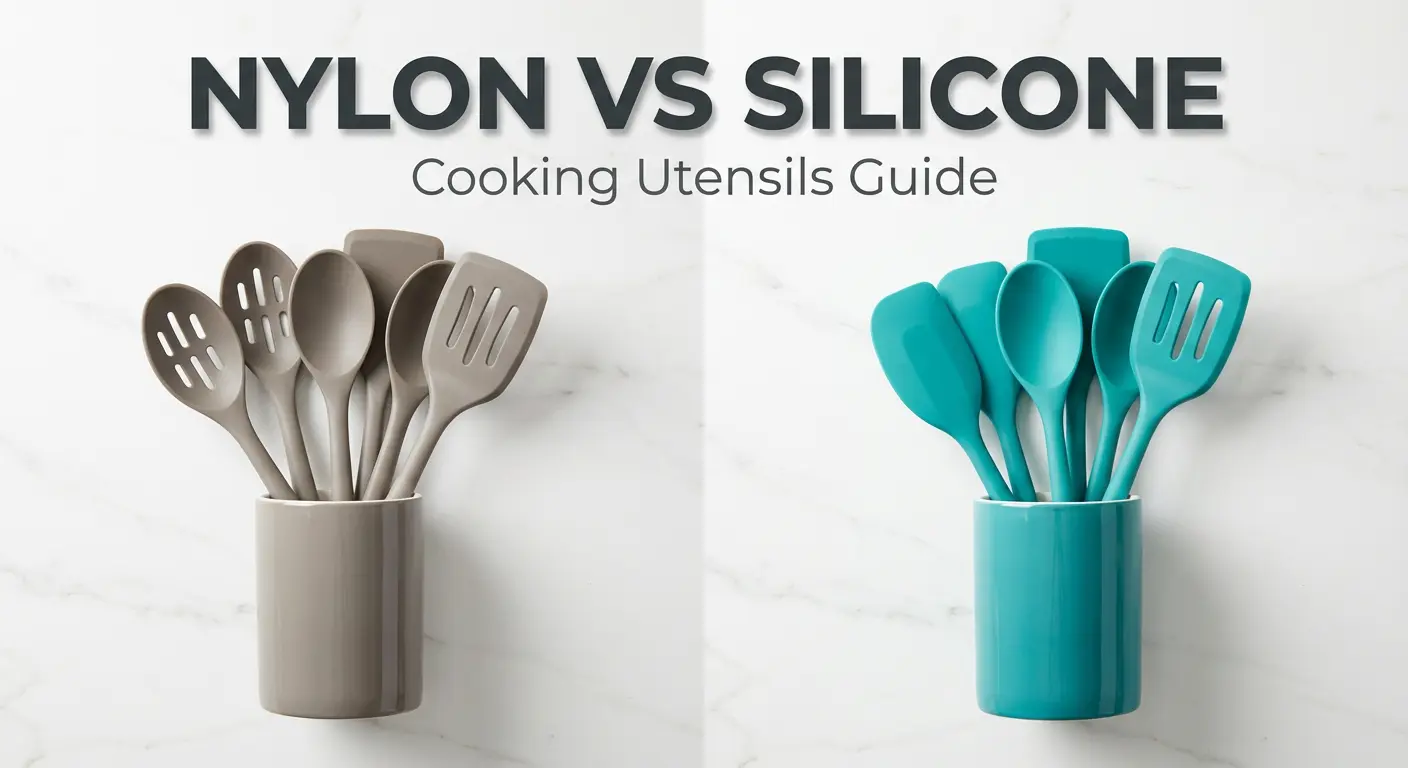

Standing in the kitchen aisle, staring at rows of colorful spatulas and spoons, you’re faced with a crucial decision in the nylon vs silicone cooking utensils debate. This choice isn’t just about aesthetics or price—it directly impacts your cooking performance, cookware longevity, and even your family’s health. The right utensils for nonstick pans can make the difference between a scratched, ruined pan and years of perfect sautéing.
Both nylon kitchen tools and silicone kitchen tools have earned their place in modern kitchens, each offering distinct advantages for different cooking needs. Whether you’re flipping burgers on a sizzling griddle or gently folding ingredients for delicate baked goods, understanding this kitchen utensil comparison helps you build a kitchen arsenal that truly works. Your choice depends on your cooking habits, temperature tolerance levels, and budget considerations.
What Are Nylon Cooking Utensils?
Material Composition and Manufacturing
Nylon cooking utensils are crafted from synthetic polymers, typically Nylon 6 or Nylon 6/6, which are engineered plastics known for their strength and abrasion resistance performance. These professional chef utensils undergo a molding process where the nylon is heated and shaped into various kitchen tool designs.
The manufacturing process allows for reinforced handles and precisely engineered heads that maintain their firm nylon structure even during heavy-duty stirring support tasks. Many manufacturers produce BPA-free cooking utensils in nylon form, addressing concerns about chemical leaching risk that plagued earlier plastic kitchen tools.
Key Characteristics of Nylon Utensils
Nylon utensils shine with their heat resistance up to 400°F (204°C), making them suitable for moderate heat cooking tasks like everyday sautéing and stirring. Their rigid construction provides excellent control when scraping batter from bowls or performing utensils for stirring thick sauces like ragu or béchamel.
The non-abrasive surface protection they offer makes them a safe choice for ceramic coated pan utensils and safe utensils for Teflon pans. However, they can experience warping and melting under heat if accidentally left resting on a hot pan edge or exposed to high-temperature cooking performance scenarios beyond their limits.
What Are Silicone Cooking Utensils?
Material Composition and Manufacturing
Food grade silicone utensils are manufactured from a synthetic rubber made primarily from silicone, oxygen, carbon, and hydrogen. This chemical-free cooking tools material is produced through a process that creates a stable, inert substance resistant to extreme temperatures.
The result is a flexible silicone head that can withstand the rigors of daily cooking while maintaining its shape and integrity. Premium silicone cooking tools often feature reinforced cores or stainless steel interiors to combine flexibility with structural support.
Key Characteristics of Silicone Utensils
Silicone’s standout feature is its impressive heat resistance up to 600°F (315°C), making it ideal for high heat cooking utensils applications including frying, sautéing, and stirring sauces at high temperatures. The material’s inherent flexibility vs rigidity in utensils debate leans heavily toward flexibility, which provides superior non-stick cookware utensils performance and cookware coating protection.
Silicone demonstrates excellent odor and stain resistance, doesn’t retain flavors between uses, and supports kitchen safety and hygiene through its naturally antimicrobial properties. As a long-lasting silicone material, it resists heat degradation risks that commonly affect other materials.
Head-to-Head Comparison: Nylon vs Silicone Cooking Utensils
Heat Resistance
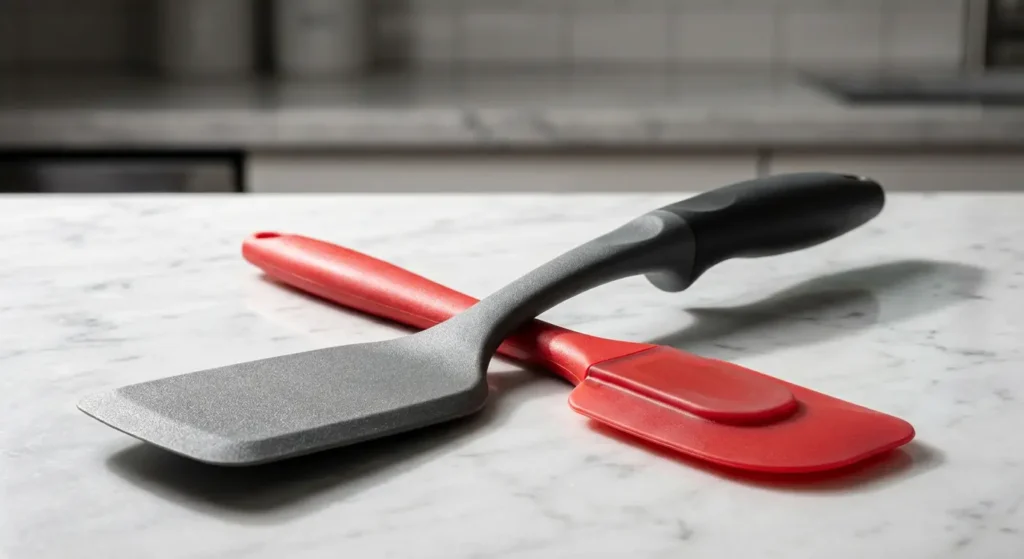
When comparing heat resistant kitchen utensils, silicone clearly wins with its temperature tolerance levels reaching 600°F, while nylon maxes out around 400°F. This makes the silicone vs nylon spatula choice critical for those who regularly cook at high temperatures.
If you frequently sear steaks or work with molten sugar, silicone’s superior heat tolerance prevents melting mishaps. However, for everyday cooking at moderate temperatures, nylon’s 400°F threshold is more than adequate.
Durability and Longevity
In terms of durability under repeated use, both materials offer long lasting kitchen tools potential, but with different failure modes. Nylon can become brittle nylon over time, especially with repeated exposure to high heat, eventually cracking or breaking.
Silicone, conversely, maintains its long-term kitchen investment value by resisting degradation, though lower-quality versions may eventually tear at stress points. The durable kitchen utensils crown goes to high-quality silicone for its consistent performance over years.
Safety and Health Considerations
Both materials can be manufactured as non-toxic cooking utensils that meet rigorous food safety standards. Quality nylon and silicone products are non-toxic and BPA-free, eliminating the risk of chemical leaching when used within their temperature limits.
The key is ensuring you purchase from reputable manufacturers who prioritize environmental impact of kitchen tools and consumer safety. Silicone generally edges ahead slightly due to its stability across a wider temperature range and resistance to degradation.
Non-Stick Cookware Compatibility
Both materials excel at scratch-resistant cookware safety and provide excellent compatibility with Teflon cookware. The silicone vs plastic utensils comparison heavily favors silicone for cookware coating protection, as its softer, more pliable surface minimizes any potential scratching.
However, nylon’s rigid vs flexible spatula design offers better precision for tasks like flipping delicate fish fillets where control matters more than flexibility.
Pros and Cons Summary
Nylon Cooking Utensils
Pros:
- Affordable and widely available as long lasting kitchen tools
- Firm nylon structure provides excellent control for precision tasks
- Suitable for moderate heat cooking tasks and everyday cooking performance
- Available as BPA-free cooking utensils from quality manufacturers
- Lightweight and comfortable for extended use
Cons:
- Lower temperature tolerance levels create heat degradation risks
- Warping and melting under heat when exceeding 400°F
- Can become brittle nylon over time with repeated heat exposure
- May retain odors from pungent ingredients
- Contributes to plastic waste concerns
Silicone Cooking Utensils
Pros:
- Superior heat resistance up to 600°F (315°C) for high heat cooking utensils needs
- Flexible silicone head gentle on all non-stick cookware utensils
- Long-lasting silicone material resistant to wear and staining
- Non-toxic and BPA-free materials with excellent food safety standards
- Better environmental impact of kitchen tools compared to disposable plastics
Cons:
- Higher initial investment than nylon alternatives
- Flexibility vs rigidity in utensils makes some tasks less precise
- Can feel too soft for heavy-duty stirring support in thick mixtures
- Lower-quality silicone may degrade or tear
- May attract lint or dust when stored
Choosing the Right Utensils for Your Kitchen
The silicone vs nylon spatula decision ultimately depends on your cooking style and needs. For those who frequently perform high-temperature cookingtasks, silicone’s heat tolerance makes it the clear winner. If you’re primarily handling moderate heat cooking tasks and value precision control, nylon’s ergonomic kitchen tool design and rigidity offer distinct advantages.
Many professional chefs recommend maintaining both types—using nylon spatula for flipping tasks requiring precision and silicone spatula for baking and high-heat applications. This hybrid approach to professional chef utensils ensures you’re always equipped with the best cooking utensil material for any culinary challenge.
Why Trust Best Eco Kitchen Tools
At Best Eco Kitchen Tools, we’re dedicated to helping you make informed decisions about your kitchen investments. Our team rigorously tests heat resistant kitchen utensils, evaluating everything from abrasion resistance performance to cookware coating protection. We prioritize chemical-free cooking tools and non-toxic cooking utensils in our recommendations, ensuring your family’s safety comes first.
Our comprehensive reviews consider durability under repeated use, environmental impact of kitchen tools, and real-world performance across diverse cooking scenarios, giving you the confidence to invest in long lasting kitchen tools that enhance your culinary experience.
Check Related Posts: What Is the Best Wood for Cutting Boards? | Best Rated Titanium Cutting Boards | Cherry Chopping Board | Maple Wood for Cutting Board | The 6 Best Compact Toasters |
Frequently Asked Questions
Which is better for cooking utensils, nylon or silicone?
Silicone generally offers better overall performance due to its superior heat resistance, durability, and safety profile. However, nylon excels in tasks requiring rigidity and precision at moderate temperatures, making both materials valuable depending on your specific cooking needs.
What is the healthiest material for cooking utensils?
Food-grade silicone ranks among the healthiest materials due to its chemical stability, resistance to leaching, and ability to withstand high temperatures without degrading. Stainless steel and natural wood are also excellent healthy options.
Is silicone healthier than nylon?
Yes, silicone is generally considered healthier because it maintains stability across a wider temperature range and has lower risks of chemical migration into food, especially when exposed to heat approaching or exceeding nylon’s limits.
Is silicone safer than nylon for cooking?
Silicone is safer for high-heat cooking applications due to its superior temperature tolerance. Both materials are safe when used within their recommended temperature ranges and purchased from reputable manufacturers producing BPA-free products.
Which lasts longer, nylon or silicone?
High-quality silicone typically outlasts nylon because it resists heat degradation, cracking, and brittleness better than nylon, especially when regularly exposed to varying cooking temperatures. Proper care extends the life of both materials significantly.