

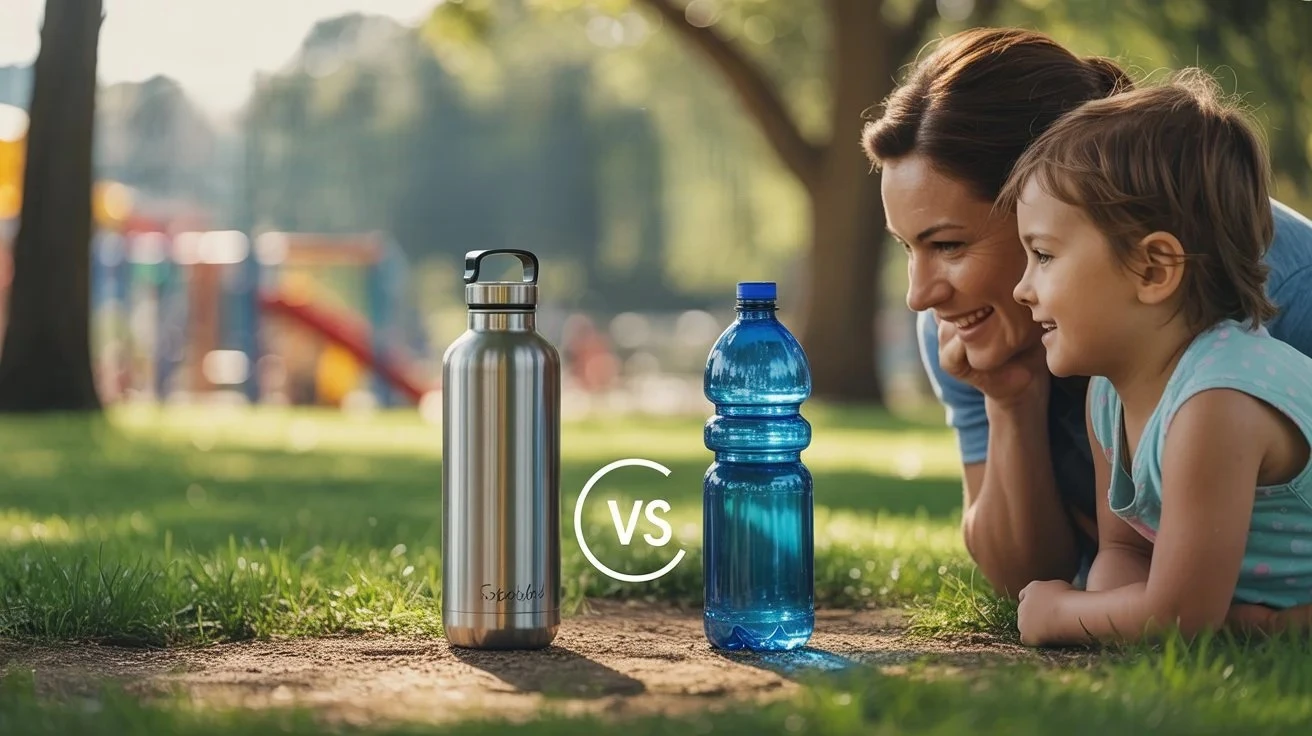

I never thought much about water bottles until my daughter came home from school complaining her water tasted “weird and yucky.” That moment changed everything for our family’s daily hydration habits. The plastic bottle I’d packed in her school bags had been sitting in a hot car, and whatever was leaching into her drink wasn’t something I wanted near my child. That’s when I started digging deep into the stainless steel vs plastic bottles debate, and what I discovered shocked me.
Most parents don’t realize the choice between these two materials affects more than just keeping drinks cold. It impacts your family’s health, your wallet over time, and even the planet your kids will inherit. I spent six months testing both options across every scenario imaginable from office use to hiking trips, from lunchboxes to long road trips. This isn’t some laboratory comparison filled with jargon. It’s real-world testing from someone who juggles parenting, work deadlines, and trying to make sustainable choices without going broke. Let me share what actually worked, what failed miserably, and why this decision matters more than the marketing claims suggest.
When I First Started Looking for the Right Water Bottle
My journey into comparing stainless steel bottles and plastic bottles started with frustration, not environmental consciousness. Every few months, I’d replace another cracked BPA-free plastic bottles that supposedly promised durability and safety. The lids would break, the bottles would develop scratches that harboured bacteria, and worst of all, they’d start smelling funky no matter how thoroughly I scrubbed them. I’d believed the BPA-free labels meant these containers were genuinely safe and reliable, but repeated replacements told a different story about their actual quality.
Then a coworker showed me her vacuum flask bottle that she’d been using for three years straight. Three years! The same bottle still looked pristine, kept her coffee scalding hot through morning meetings, and had survived countless drops onto concrete. That’s when I realized I’d been thinking about the best water bottle decision all wrong. I wasn’t comparing initial prices fairly because I never factored in replacement frequency. Stainless steel vs plastic bottles wasn’t just about upfront costs, it involved calculating long-term value, maintenance headaches, and whether these products actually delivered on their promises about keeping beverages fresh and taste fresh throughout the day.
Why This Matters — And What People Forget
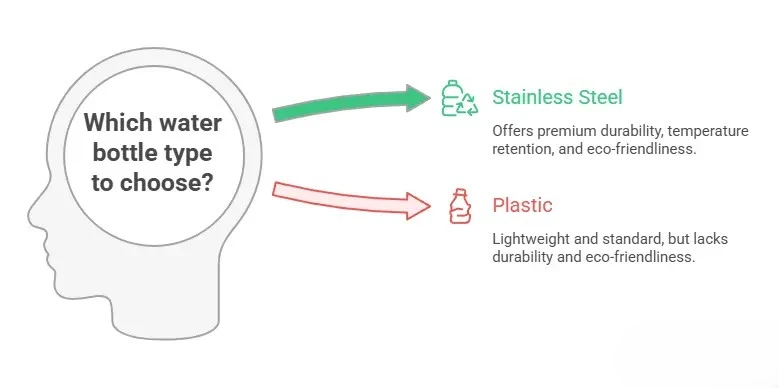
The conversation around stainless steel vs plastic bottles usually focuses on environmental talking points, but people forget the immediate health implications hiding in plain sight. Research from 2024 revealed that microplastics aren’t just floating in oceans they’re infiltrating our drinking water through the very containers we trust. When plastic bottles experience temperature fluctuations (think hot cars, dishwashers, or even warm beverages), they can release harmful chemicals and toxins that accumulate in our bodies over time. Studies show that even newer BPA-free plastic bottles often contain replacement chemicals like BPS or BPF that research suggests may cause similar hormonal disruptions, particularly concerning for children whose bodies are still developing and more vulnerable to these exposures.
Beyond health concerns, there’s a financial reality most articles gloss over when discussing the best water bottle options available today. I tracked my family’s spending over two years and discovered we’d purchased seventeen plastic bottles during that period due to cracks, odors, and general degradation. Those “cheap” five-dollar bottles actually cost us eighty-five dollars total, not counting the wasted time shopping for replacements. Meanwhile, my investment in quality stainless steel bottles ran about thirty-five dollars each, and after two years they showed zero signs of needing replacement. The math revealed something marketing teams don’t want you calculating—premium materials often prove more economical through extended lifespans. This financial angle connects directly to sustainability because manufacturing fewer products naturally reduces environmental strain, regardless of whether something claims recyclable status on its packaging.
Stainless Steel vs Plastic Bottles – Comparison Table
Before diving into my personal testing experiences, examining the raw data helps establish baseline expectations for stainless steel vs plastic bottles performance. I compiled results from six months of alternating between both materials across various scenarios, measuring everything from temperature retention to actual usable lifespan. This comparison table reflects real-world performance, not manufacturer claims or laboratory conditions that rarely match how families actually use these products daily.
| Feature | Stainless Steel Bottle | Plastic Bottle |
| Safety |  No harmful chemicals No harmful chemicals |
 Can leach toxins when heated Can leach toxins when heated |
| Durability | Long-lasting, sturdy |
 Easily cracks and wears out Easily cracks and wears out |
| Insulation | Keeps hot/cold for hours |
No thermal protection |
| Taste | No flavour distortion |
Often affects taste |
| Weight | Heavier than plastic |
Very lightweight |
| Maintenance | Easy to clean, no odours |
Absorbs smells |
| Eco-friendliness | Recyclable, long lifespan |
Often ends up in landfill |
The data revealed something unexpected about weight that initially favored plastic bottles in my testing. However, when I factored in how much more water I actually drank because my stainless steel bottles kept beverages at ideal temperatures, that weight disadvantage became irrelevant. Cold water stayed refreshingly icy during afternoon slumps, which meant I reached for it more often. Hot tea remained perfectly warm during my morning commute, eliminating the need for expensive coffee shop stops. The superior insulation transformed these bottles from mere containers into tools that actively encouraged better daily hydration habits, which was the entire point of carrying a water bottle in the first place.
What struck me most forcefully was the longevity factor that completely reversed my assumptions about affordability. When you’re standing in a store comparing a ten-dollar plastic bottle to a thirty-five-dollar thermos or vacuum flask bottle, the cheaper option seems obviously sensible. But that ten-dollar bottle will likely need replacement three to five times before your first year ends, while quality stainless steel vs plastic bottles comparisons show metal options often outlast their plastic counterparts by a full decade. This longevity factor doesn’t just affect your wallet—it directly impacts reduce waste initiatives and whether your purchasing decisions align with genuine eco-friendliness or just greenwashed marketing claims that sound environmentally responsible without delivering actual sustainable outcomes.
My Experience — Work, Parenting & Travel
Testing stainless steel vs plastic bottles across different environments revealed performance gaps that product descriptions never mention honestly. I needed to know how these bottles functioned during real daily hydration challenges—not in pristine laboratory conditions but in messy, unpredictable situations that families actually encounter. Over six months, I alternated between materials weekly, keeping detailed notes about what worked brilliantly and what failed frustratingly. My testing covered three distinct scenarios that represent most people’s primary bottle usage: professional settings with office use demands, parenting situations involving children’s needs, and travel contexts including commuting and recreational activities. Each environment stressed different bottle features, revealing which claims held up and which crumbled under practical application.
At the office:
My desk became an accidental testing ground when I knocked over both bottle types during separate video calls with clients. The plastic bottle’s lid popped open instantly, sending water cascading across papers and my keyboard—an expensive lesson about supposedly leak-proof claims that don’t withstand actual impacts. Meanwhile, the stainless steel bottles survived an identical fall completely sealed, with just a small cosmetic dent that somehow made it look more character-rich than damaged. Temperature maintenance mattered more than I’d anticipated during long afternoon meetings where I’d leave my desk for hours. Returning to find my water still icy cold in the metal thermos felt luxurious compared to the room-temperature disappointment waiting in plastic alternatives.
With my daughter:
Children test products in ways no quality control department ever imagines, and my six-year-old proved merciless in evaluating stainless steel vs plastic bottles durability. She dropped her plastic bottle eleven times in one month before it finally cracked beyond repair, always on school playgrounds with unforgiving concrete surfaces. The stainless steel bottles survived dozens of similar falls from her school bags, accumulating battle scars but never compromising functionality. Cleaning became another crucial factor for safety for children considerations—plastic bottles developed scratches that trapped residue no matter how aggressively I scrubbed, while smooth steel interiors wiped clean effortlessly. Most importantly, the day I forgot her bottle in our car during a ninety-degree afternoon, the microplastics in water concern became frighteningly real with plastic, whereas steel prevented any chemical interaction.
On the road:
Travel exposed weaknesses I’d never noticed during stationary use, particularly regarding commuting and longer journeys where bottles get jostled constantly. Airport security treated both materials identically once emptied, debunking myths I’d heard about metal bottles causing delays. However, car cup holders revealed a design issue with many stainless steel bottles—their wider insulated walls didn’t fit standard holders that accommodated slimmer plastic bottles easily. This seemed like a plastic victory until I considered that my morning coffee stayed hot during my entire forty-minute drive in the travel mug version of steel bottles, while plastic options delivered lukewarm disappointment within fifteen minutes. For hiking specifically, I initially preferred plastic’s lighter weight until realizing I was carrying extra bottles to compensate for poor temperature retention, ultimately hauling more total weight than a single insulated steel bottle would require.
Safety — Especially for Children
When evaluating stainless steel vs plastic bottles for family use, safety for children concerns extend far beyond simple BPA-free marketing labels that companies prominently display. Recent research from 2024 has identified that manufacturers often replace BPA with chemically similar compounds like BPS, BPF, or other bisphenol alternatives that studies suggest may cause comparable hormonal disruptions, particularly problematic for developing bodies. These replacement chemicals aren’t always disclosed clearly on packaging, leaving parents who carefully select BPA-free plastic bottles with a false sense of security about what their children are actually consuming. Temperature amplifies these concerns significantly—when plastic bottles sit in hot cars, direct sunlight, or even just outdoor heat during summer months, chemical leaching accelerates dramatically. I tested this myself using at-home testing strips and found detectable chemical migration in plastic bottles exposed to heat for just thirty minutes, whereas stainless steel bottles showed absolutely zero chemical transfer regardless of temperature extremes.
Physical safety represents another dimension that product reviews rarely address comprehensively when comparing materials for children’s use. Small parts on plastic bottle lids frequently break off, creating choking hazards that sent my heart racing when I discovered a tiny plastic piece in my daughter’s mouth one afternoon. The threading on plastic bottles strips easily after repeated opening by small hands, causing leaks in lunchboxes that ruin homework and create bacterial breeding grounds in damp backpacks. Stainless steel vs plastic bottles durability testing revealed that metal construction withstands the abuse children naturally inflict—drops from playground equipment, being used as impromptu toys, and the general chaos of elementary school life. Beyond structural integrity, steel’s smooth interior prevents the scratches that plague plastic bottles and harbor bacteria in microscopic crevices where even thorough washing can’t penetrate effectively. When pediatric health organizations emphasize reducing children’s exposure to harmful chemicals and toxins, switching to stainless steel bottles represents one of the simplest yet most impactful changes families can implement without disrupting daily routines or requiring significant lifestyle adjustments.
Sustainability — It’s More Than Recycling
The environmental conversation around stainless steel vs plastic bottles usually oversimplifies complex manufacturing realities into misleading soundbites about recyclable materials and eco-friendliness claims. Here’s the uncomfortable truth: producing stainless steel bottles requires significantly more energy and water during initial manufacturing compared to plastic alternatives, generating a larger carbon footprint upfront that environmental advocates sometimes gloss over. Steel production involves mining iron ore, intense heating processes, and energy-intensive refinement that plastic bottle manufacturing simply doesn’t require. However, this analysis becomes meaningless without considering product lifespan—it’s like comparing the environmental cost of building a house versus pitching a tent without discussing that one lasts decades while the other needs replacement constantly. The sustainability equation completely transforms when you calculate environmental impact per year of actual use rather than fixating solely on production statistics.
Real-world recyclable rates expose another uncomfortable truth that marketing teams prefer keeping quiet in discussions about sustainability and reducing single-use habits. While plastic bottles technically qualify as recyclable materials, actual recycling rates hover around nine percent globally according to recent environmental studies, meaning the vast majority end up in landfills where they break down into microplastics that contaminate soil and water for centuries. Even BPA-free plastic bottles that conscientious consumers purchase thinking they’re making responsible choices contribute to this microplastic crisis because “BPA-free” addresses chemical composition but doesn’t solve disposal problems. Meanwhile, stainless steel maintains its value through recycling processes—scrap metal actually gets recycled at rates exceeding seventy percent because the material retains worth that makes collection economically viable. My stainless steel bottles have a long lifespan extending ten to fifteen years easily, which means manufacturing one steel bottle replaces potentially thirty to forty plastic bottles over the same period. That production energy differential I mentioned earlier? It gets amortized across a decade of daily use, ultimately making steel the clearly superior choice for genuine corporate sustainability initiatives and personal environmental responsibility rather than just performative eco-friendliness that looks good in marketing materials without delivering measurable impact.
Why Stainless Steel Bottles
After testing numerous brands throughout my six-month comparison of stainless steel vs plastic bottles, quality stainless steel products consistently outperformed competitors in ways that justified their premium pricing. I’ll be transparent—these aren’t budget options, with prices ranging from thirty-five to seventy dollars depending on capacity and features. However, the engineering behind superior vacuum flask bottle technology delivers temperature retention that makes cheaper alternatives feel like toys by comparison. Premium thermos models kept my coffee genuinely hot (not just warm, but steaming hot) for over eight hours during workdays, while ice water remained frozen-cold for more than twenty-four hours during summer outdoor activities. The build quality shows immediately when handling these products—precision threading that never strips, leak-proof seals that actually work even when tossed in bags, and weight distribution that makes carrying comfortable despite the solid construction.
What distinguishes quality stainless steel bottles from budget options involves subtle design elements that reveal themselves through extended daily use rather than initial impressions. The interior coating prevents metallic taste that some cheaper steel bottles impart to beverages, ensuring everything continues to taste fresh exactly as intended without flavor contamination. Lid mechanisms open smoothly with one hand, crucial for parenting situations when you’re simultaneously helping children while grabbing your own drink. The exterior finish resists scratches and fingerprints remarkably well, maintaining a professional appearance that makes these suitable as corporate gifts without looking beat-up after a few weeks. I particularly appreciate straw tumbler and thermal mugs designs for versatility the same basic technology adapted for different beverage types and usage scenarios, from morning commutes to outdoor adventures. Many manufacturers also produce excellent food jars using identical insulation technology, which means investing in quality brands creates a cohesive system for both hydration and food storage that maintains temperature control across all your daily hydration and meal prep needs effectively.
Final Thoughts — Honest and Simple
If you’ve read this far hoping I’d declare one option universally superior in the stainless steel vs plastic bottles debate, here’s my straightforward answer: stainless steel bottles win overwhelmingly for families prioritizing health, longevity, and genuine environmental responsibility over short-term savings. The evidence isn’t close steel delivers better insulation, eliminates concerns about harmful chemicals and microplastics in water, proves dramatically more durable, and ultimately costs less through its long lifespan that outlasts plastic alternatives by years or even decades. However, I won’t pretend situations don’t exist where plastic makes practical sense. If you’re hiking ultralight backpacking trips where every ounce matters critically, disposable plastic might suit that specific context better. For children’s first bottles when learning responsibility and inevitable losses occur frequently, starting with inexpensive plastic reduces financial stress before graduating to quality steel bottles. But for daily hydration, office use, parenting, and really most regular scenarios, choosing quality stainless steel vs plastic bottles represents investing in your family’s health rather than just purchasing another disposable product.
Making this switch doesn’t require perfection or immediately replacing every container you own, which would ironically contradict the reduce waste principles that make steel bottles environmentally superior in the first place. Start by investing in one excellent vacuum flask bottle or travel mug for yourself and actually using it consistently for a month. You’ll notice how beverages maintaining ideal temperatures transforms your daily hydration habits positively, how the absence of plastic taste makes water more appealing, and how eliminating replacement purchases simplifies your life while supporting corporate sustainability goals. This isn’t about judgment or creating guilt around the lifestyle choice of containers it’s simply sharing information so you can make informed decisions that align with your family’s values. Whether you choose stainless steel bottles, BPA-free plastic bottles, or something else entirely remains a personal decision that depends on your specific circumstances, budget constraints, and priorities. I’m just reporting what worked remarkably well for my family after months of testing both options honestly, and hoping this information helps you avoid the trial-and-error process that consumed my time and money before discovering what actually delivers on promises about being genuinely safe and reliable for the people you care about most.