

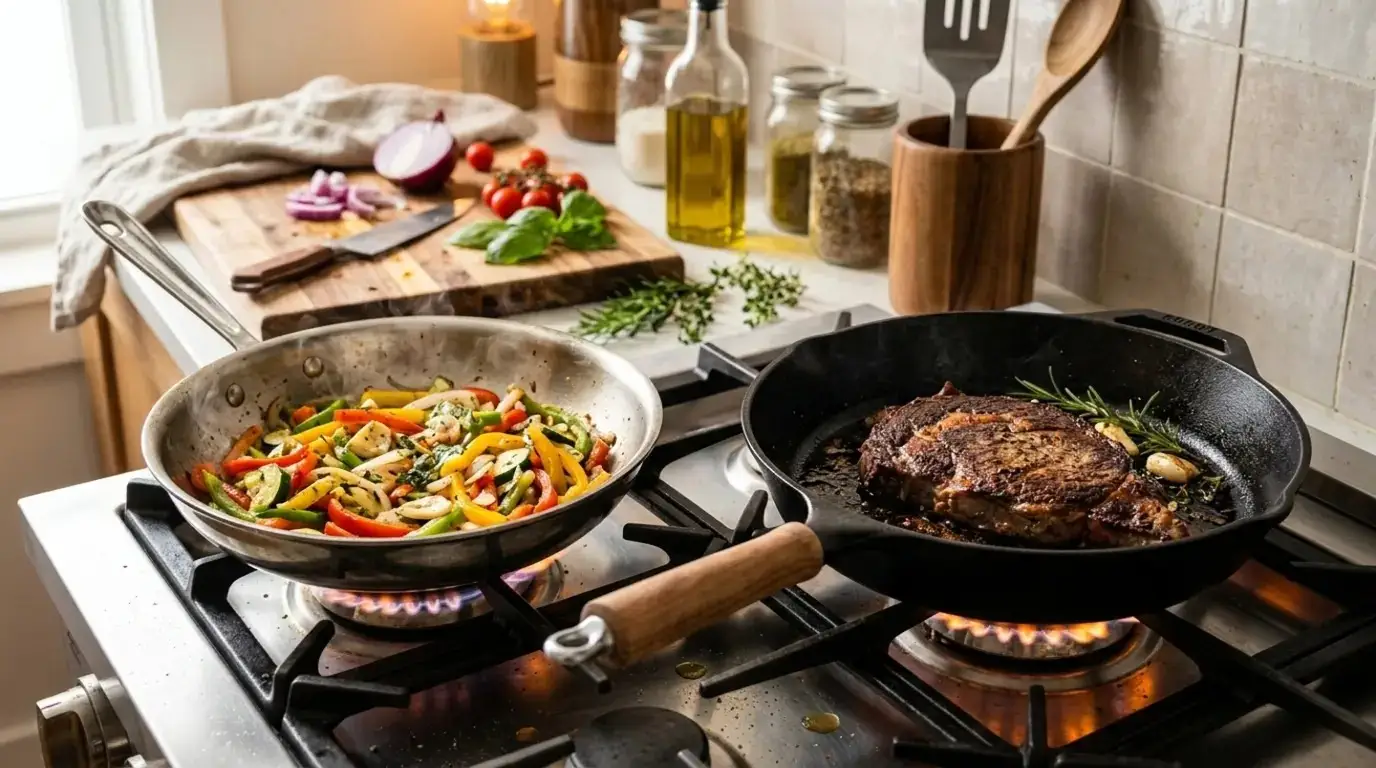

Choosing the right cookware can make or break your cooking. When it comes to stainless vs cast iron, both have unique strengths that cater to different cooking styles. Stainless steel cookware excels at cooking acidic foods, creating delicate sauces, and offering easy maintenance. On the other hand, cast iron cookware shines in high heat cooking, slow cooking, and searing meats, thanks to its unmatched heat retention and naturally seasoned stick surface.
For the home cook, understanding the differences between cast iron pans, cast iron skillets, and stainless steel pans is key to choosing the right tool for each cooking method. In this guide, we’ll break down the pros and cons, compare stainless steel and cast iron for grills and stovetops, and explore when to use each type to maximize flavor, durability, and convenience. By the end, you’ll know exactly which cookware fits your kitchen and cooking style.
What is Stainless Steel Cookware?
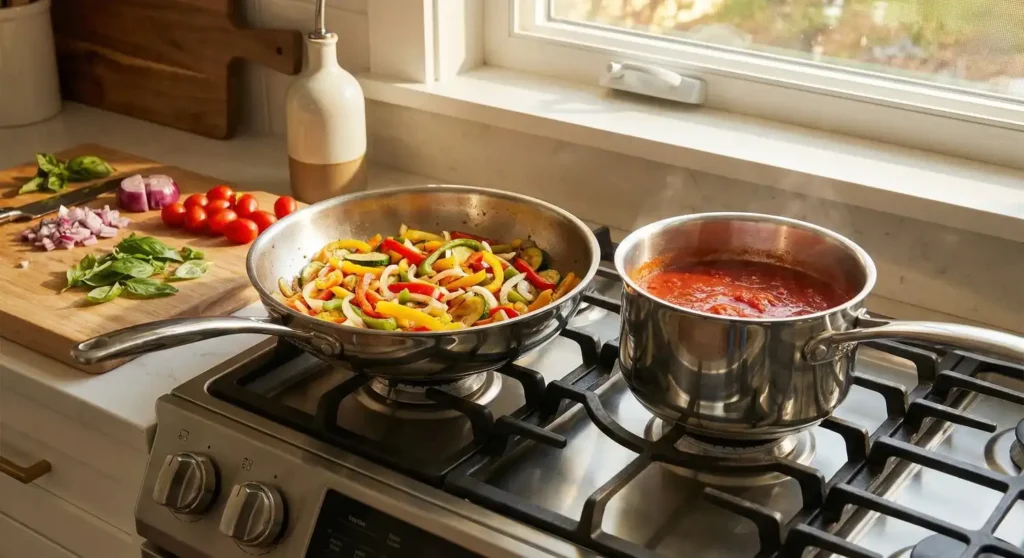
Stainless steel cookware is a staple in modern kitchens because it combines durability with versatility. Most pieces are made with layers of stainless steel and an aluminum or copper core to ensure even heat distribution. This material is non-reactive, meaning it won’t alter the flavor of acidic foods, and it resists rust, scratches, and corrosion. Stainless steel pans and skillets are perfect for sauces, sautéing, and everyday cooking tasks.
The advantages of stainless steel cookware include being lightweight, easy to clean, and often dishwasher safe, making it ideal for home cooks who value convenience. However, stainless steel can have lower heat retention than cast iron pans, and food may stick on the surface if the pan isn’t properly preheated. Despite this, its versatility and resistance to cooking acidic ingredients make it a kitchen essential.
Here we’ve talked about The 5 Best Stainless Steel Pans.
and also a complete begginer guide How to Cook with Stainless Steel Pans.
What is Cast Iron Cookware?
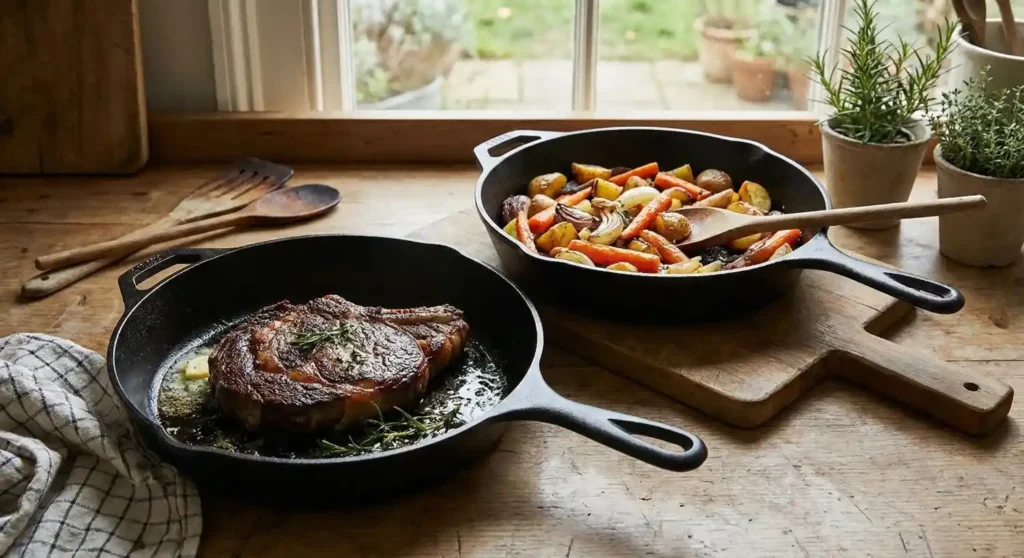
Cast iron cookware is prized for its unmatched heat retention and long-lasting durability. Made from solid iron, it comes in bare or enameled cast iron varieties, making it suitable for a wide range of cooking methods. Cast iron skillets and pans excel at high heat cooking, slow cooking, and searing meats, giving dishes a rich, evenly cooked flavor. You can use them on the stovetop, in the oven, on a grill, or even over a campfire.
The benefits of cast iron cookware include excellent heat retention, naturally non-stick surfaces with proper seasoning, and a lifespan that can last generations. On the downside, cast iron pans are heavy, require regular maintenance, and bare iron may react with acidic foods, though enameled cast iron solves this issue. For home cooks, understanding when to use stainless steel and cast iron ensures every meal is cooked to perfection.
If you are worried about Are Cast Iron Cookware Safe? Then see this.
You can also see the complete guide of Cast Iron Cookware.
Also we have discussed about 6 Best Cast Iron Cookware Set.
Heat & Cooking Performance
When comparing cast iron vs stainless steel, understanding heat retention and responsiveness is key. Cast iron cookware excels in holding heat evenly, making it perfect for searing meats, slow cooking, and recipes that require consistent high temperatures. Its ability to maintain heat ensures that steaks, roasts, and baked dishes cook thoroughly and develop rich flavors.
In contrast, stainless steel cookware heats up quickly and responds instantly to temperature changes, making it ideal for delicate cooking tasks like sauces or sautéing vegetables. However, it has lower heat retention than cast iron pans, so it requires careful attention during high-heat cooking.
Regarding stick surfaces, cast iron skillets develop a naturally seasoned, non-stick surface over time. Stainless steel pans, on the other hand, need proper preheating and a light coating of oil to prevent food from sticking. Knowing these differences helps home cooks choose the right pan for each cooking method.
Food Compatibility
When it comes to cooking acidic ingredients, choosing between stainless steel and cast iron makes a big difference. Stainless steel cookware is non-reactive, making it perfect for acidic foods like tomatoes, wine reductions, and citrus-based sauces. It preserves the flavor and color of dishes without altering taste.
Cast iron cookware, however, can react with acidic foods if it’s bare, sometimes imparting a metallic taste. To avoid this, enameled cast iron provides a safe, non-reactive surface while maintaining the signature heat retention and stick surface benefits of traditional cast iron.
Regarding ideal cooking methods, cast iron skillets and pans excel at searing meats, braising, baking, roasting, and slow cooking, thanks to their consistent heat. Stainless steel pans, on the other hand, shine in sautéing, boiling, making pan sauces, and other everyday cooking tasks. Understanding these differences helps home cooks use the right pan for each cooking method.
Cast Iron vs Stainless Steel on Grills
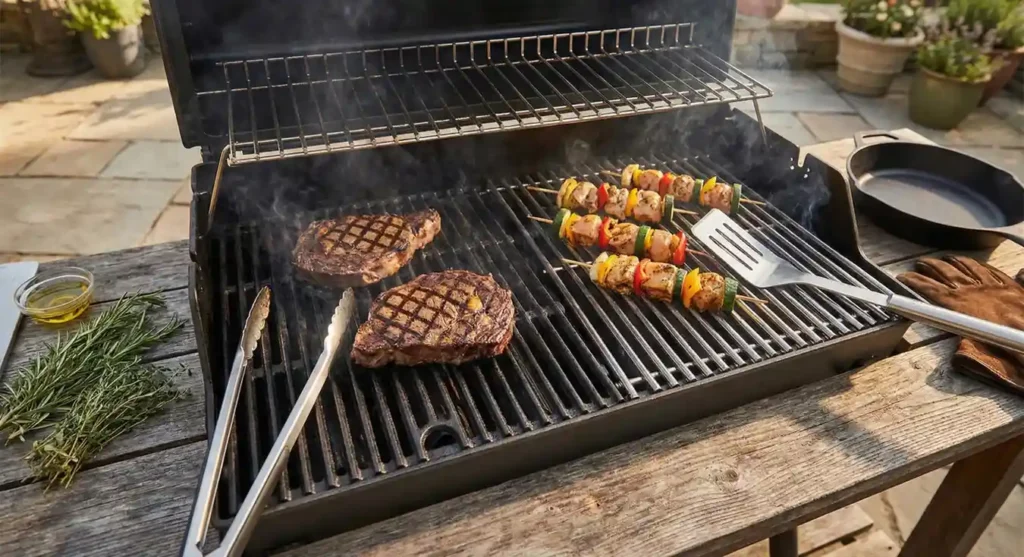
When it comes to grilling, choosing between cast iron vs stainless steel grates can dramatically impact your results. Cast iron grill grates are known for their excellent heat retention, which allows them to maintain consistent high temperatures even when adding cold ingredients. This makes them perfect for searing meats and creating those signature grill marks that enhance both flavor and presentation. Over time, properly seasoned cast iron grates also develop a naturally stick surface, which helps prevent food from sticking while adding depth to the flavor.
On the other hand, stainless steel grill grates heat up quickly and are rust-resistant, making them easier to maintain and clean after every use. They are ideal for cooking acidic foods or marinated items since they won’t react with ingredients, unlike bare cast iron. Stainless steel grates are lightweight and more durable in outdoor conditions, providing convenience for home cooks who grill frequently.
Whether you choose cast iron grill vs stainless steel, understanding the benefits of each material ensures perfect grilling results every time. For maximum versatility, many home cooks keep both types of grates in their arsenal.
Durability & Maintenance
Lifespan
Cast iron cookware can last for generations with proper care and regular seasoning, making it a long-term investment for any kitchen. Its heat retention and durability ensure it performs exceptionally for years. Stainless steel cookware, meanwhile, is highly rust-resistant and long-lasting with minimal upkeep, making it ideal for home cooks who prefer low maintenance cookware. Both materials are durable, but the choice depends on how much care you are willing to invest.
Cleaning Tips
For cast iron pans, always hand wash, dry immediately, and apply a light layer of oil to maintain the naturally seasoned stick surface. Stainless steel pans are usually dishwasher safe, but hand washing helps preserve their shine and prevents water spots. Understanding these care methods ensures that your stainless steel and cast iron cookware remains in top condition for years of cooking.
Price & Value Comparison
When evaluating cast iron vs stainless steel cookware, price and long-term value play a major role. Cast iron pans and skillets are often cheaper initially, making them an affordable option for home cooks. Their exceptional heat retention, durability, and ability to last generations provide outstanding long-term value despite the heavier maintenance required.
Stainless steel cookware, on the other hand, typically falls in the mid to high price range. While the upfront cost may be higher, it is an investment in durable, low-maintenance cookware that resists rust, reacts minimally with acidic foods, and cleans easily. For those who prefer convenience and versatility, stainless steel cookware vs cast iron offers a practical solution for everyday cooking.
Choosing between the two often comes down to your cooking style, willingness to maintain cast iron, and whether you prioritize initial cost or long-term convenience.
When to Use Cast Iron vs Stainless Steel
Knowing when to use cast iron vs stainless steel can elevate your cooking and help you achieve perfect results every time. Cast iron cookware excels at high-heat cooking, making it ideal for searing meats, baking, roasting, and slow cooking dishes that require consistent heat retention. Its naturally seasoned stick surface adds flavor and enhances browning, making it a favorite for hearty meals.
Stainless steel cookware, in contrast, is perfect for acidic foods, delicate sauces, and sautéing vegetables or proteins. Its non-reactive surface ensures that cooking acidic ingredients won’t alter the taste or color of your food. Home cooks often rely on stainless steel pans for everyday cooking tasks because they are lightweight, durable, and easy to maintain.
By understanding the strengths of stainless steel and cast iron, you can select the right pan for each cooking method and maximize flavor, texture, and convenience in your kitchen.
Cast Iron vs Stainless Steel vs Carbon Steel
For home cooks seeking versatility, carbon steel cookware offers a unique blend of benefits from both cast iron and stainless steel. Like stainless steel pans, carbon steel heats quickly and responds well to temperature changes. At the same time, it can develop a naturally seasoned stick surface similar to cast iron skillets, providing excellent browning and searing meats.
Here’s a quick comparison of cast iron vs stainless steel vs carbon steel to help you choose the right pan for your cooking style:
| Feature | Cast Iron | Stainless Steel | Carbon Steel |
| Heat Retention | Excellent | Moderate | Moderate-High |
| Preheating | Slow | Fast | Fast |
| Stick Surface | Naturally non-stick with seasoning | Needs oil to prevent sticking | Develops natural non-stick with seasoning |
| Weight | Heavy | Lightweight | Medium |
| Acidic Foods | Bare reacts; enameled safe | Perfect | Bare reacts; needs seasoning |
| Maintenance | Requires care | Low maintenance | Moderate; needs seasoning |
| Ideal Cooking Methods | Searing, slow cooking, baking | Sautéing, sauces, everyday cooking | Searing, stir-fry, roasting |
Carbon steel pans are a great middle ground for home cooks who want the heat retention of cast iron without the heavy weight and the quick responsiveness of stainless steel.
Recommended Products — Cast Iron vs Stainless Steel
Enhance your kitchen with the right cookware for every cooking method. Here are top recommendations for home cooks balancing stainless vs cast iron:
Cast Iron:
- Cast iron skillets – Perfect for searing meats, baking, and high-heat cooking.
- Cast iron grill grates – Ideal for consistent heat retention and signature grill marks.
- Enameled cast iron – Safe for cooking acidic foods while maintaining excellent heat retention.
Stainless Steel:
- Stainless steel frying pans – Lightweight, non-reactive, and great for sautéing and everyday cooking.
- Stainless steel cookware sets – Durable, low-maintenance, and versatile for multiple cooking methods.
Combo Recommendations:
For the ultimate kitchen setup, pair stainless steel and cast iron. This combination covers everything from delicate sauces to hearty, high-heat dishes, ensuring home cooks have the right pan for every recipe.
Check all the products on Amazon!
Conclusion
Both stainless steel and cast iron are essential in any kitchen, and the choice depends on what you cook most. Cast iron cookware excels at high-heat cooking, searing meats, and slow cooking, while stainless steel cookware shines for acidic foods, sauces, and everyday home cook tasks. For a truly versatile kitchen, pairing stainless steel and cast iron ensures you have the right pan for every cooking method, maximizing flavor, convenience, and durability.
Frequently Ask Question
Which is better cast iron or stainless steel?
Both cookware types have advantages. Cast Iron retains heat extremely well and is great for searing and slow cooking, while Stainless Steel heats quickly and is easier to maintain. Cast iron is ideal for high-heat cooking, but stainless steel is more versatile for everyday use. The better option depends on your cooking style and maintenance preference.
Is cast iron healthier than stainless steel?
Cooking with Cast Iron can add small amounts of dietary iron to food, which may benefit people with iron deficiency. Stainless Steel does not add nutrients but is non-reactive and safe for most foods. Both are considered safe and healthy cookware when used properly.
Which cookware is 100% non-toxic?
Cookware made from Cast Iron, Stainless Steel, glass, and ceramic is generally considered non-toxic when manufactured properly. These materials do not contain harmful chemical coatings and are stable at high temperatures. Choosing high-quality brands ensures better safety and durability.
What is the healthiest pan to cook in?
Many experts consider Cast Iron and Stainless Steel among the healthiest cookware options. Cast iron naturally enriches food with iron, while stainless steel is durable and non-reactive. Both allow cooking without harmful coatings when used correctly.
Why do chefs use stainless steel instead of cast iron?
Professional chefs often prefer Stainless Steel because it heats quickly, responds fast to temperature changes, and is lighter than Cast Iron. It is also easier to clean and works well for sauces, sautéing, and acidic foods. This flexibility makes it common in commercial kitchens.
What is a disadvantage of cast iron?
A major drawback of Cast Iron is its heavy weight and the need for regular seasoning to prevent rust. It also takes longer to heat up compared to Stainless Steel. Without proper care, it can rust or develop uneven seasoning.