

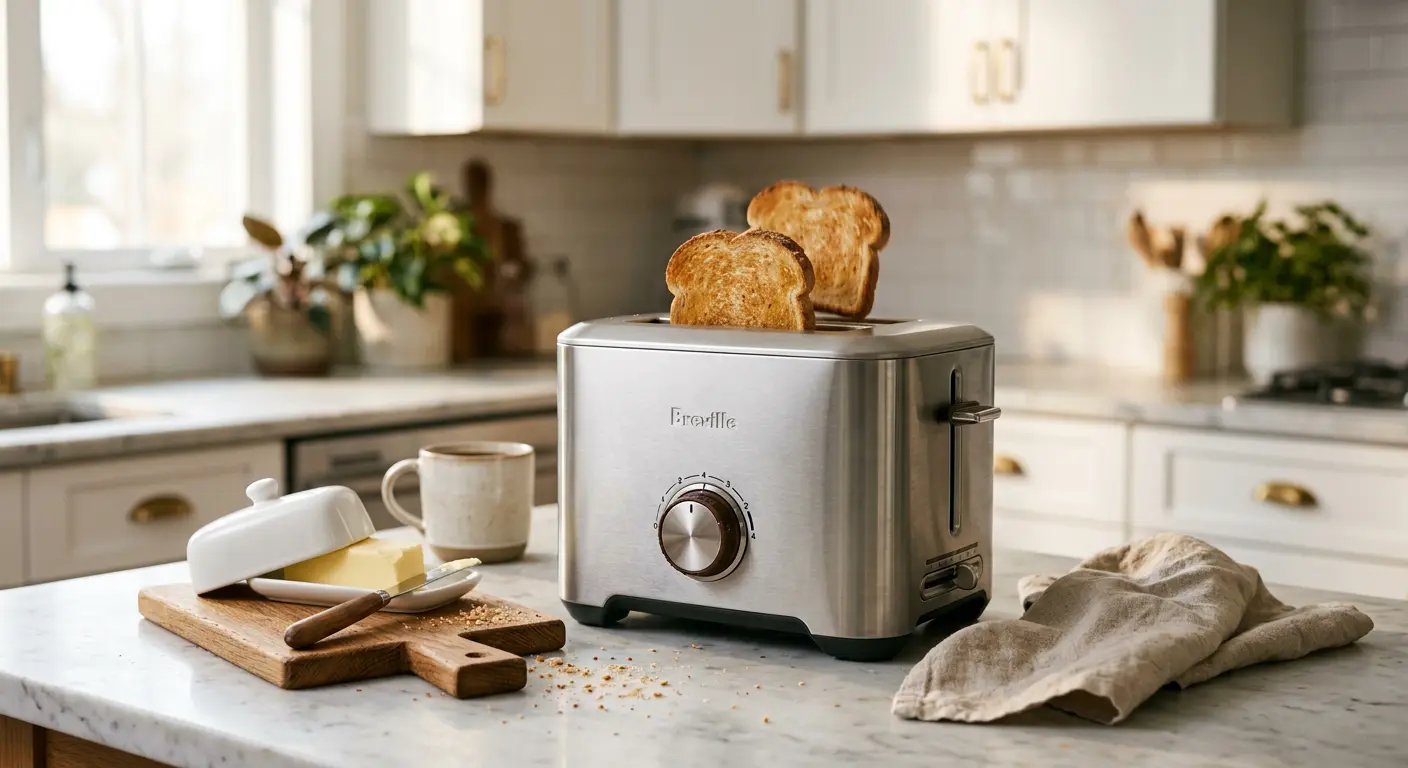

I replaced three toasters in four years before I figured out what I was actually looking for. The first one burned everything on setting 3. The second one couldn’t fit a bagel without squishing it. The third looked great on the counter but died eight months in. Embarrassing, honestly.
Here’s the thing: a toaster seems like the simplest kitchen appliance you can buy. Plug it in, drop in some bread, done. But once you’ve had a bad one, you realize how much a good one actually matters to your morning. This toaster buying guide walks you through everything — types of toasters, key features, budget tiers, materials, safety, cleaning, and the mistakes that’ll cost you money. By the end, you’ll know exactly what to look for.
Table of Contents
ToggleTypes of Toasters Explained
Not all toasters are built for the same kitchen or the same person. The type you choose affects your counter space, your toasting speed, and whether your sourdough actually fits.
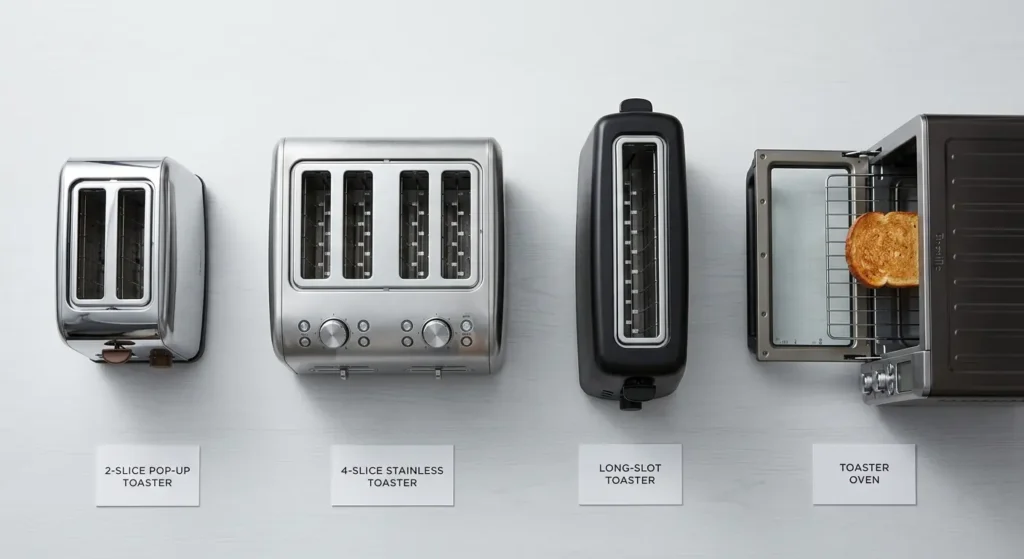
2-Slice Toasters
A 2 slice toaster is what most people picture when they think of a toaster. It’s compact, uses less energy, and gets the job done for one or two people. I used a 2 slice bread toaster for years living alone and never needed anything more. If you’re not feeding a crowd every morning, this is probably your answer.
The footprint is small, the price is usually lower, and cleanup is easy. The best 2-slice toaster options on the market right now — like the Breville A Bit More Toaster 2 Slice or the GE 2 Slice Stainless Steel Toaster — come with wide slots and solid browning controls without taking up half your counter.
4-Slice Toasters
Got a family? Toast takes forever when you’re doing two rounds every morning. A long 4 slice toaster solves that. The better models have dual independent controls, so one side can toast lighter for the kids while the other side goes darker for you. That feature alone is worth the upgrade.
They’re bigger, obviously. But if breakfast is a daily operation involving multiple people and multiple toast preferences, the best long slot toasters in the 4-slice category are worth the counter space.
Long-Slot Toasters
This is the one most people don’t think about until they need it. A wide slot toaster or toaster for long slices handles artisan bread, baguette slices, and homemade loaves that simply won’t fit in a standard slot. I tried cramming a thick sourdough slice into a standard 2-slice once. It got stuck. I panicked. Save yourself that experience.
If you bake your own bread or shop at a bakery regularly, a wide slot toaster 2 slice or a long-slot model is a better fit than a standard-width machine.
Toaster Ovens
A toaster oven is a different category entirely. It toasts, but it also bakes, broils, and reheats. Yes, you can make toast in a toaster oven — it just takes longer than a pop-up toaster. The tradeoff is versatility versus speed and counter space.
Best countertop toaster oven options like the Zojirushi toaster oven or models you’d find through toaster oven consumer reports tend to run $80 and up. If you’re in a small apartment without a full oven, a toaster oven might replace multiple appliances. If you just want toast, it’s probably overkill.
Type | Best for | Footprint | Price range |
2-slice | Singles, couples | Small | $20–$60 |
4-slice | Families | Medium | $40–$100 |
Long-slot | Artisan bread lovers | Small-medium | $40–$120 |
Toaster oven | Small kitchens, versatility | Large | $80–$300+ |
Key Features to Look for in a Toaster
This is where most people go wrong. They look at the slot count and the color and call it done. Here’s what actually matters:
Slot width. A wide slot toaster accommodates thick bread, english muffins, and toasted bagel halves properly. Standard slots are fine for regular sandwich bread, but if you eat anything thicker, you’ll regret going narrow. Most budget models have slots around 1 inch wide. Good ones go up to 1.5 inches.
Browning settings. More settings mean more control. Look for at least 5-6 shade levels. Anything with only 3 settings is going to leave you stuck between pale and burnt.
Bagel setting. A real bagel setting toasts the cut side more aggressively while barely warming the outer crust. Without it, you either get an underdone cut side or a tough, dried-out outside. If you eat bagels more than twice a week, this isn’t optional.
Defrost and reheat functions. Defrost lets you go straight from frozen bread to perfect toast without thawing first. Reheat warms up toast that’s gone cold without toasting it further. Both are genuinely useful and missing from most cheap models.
High-lift lever. This raises small items — like a half-slice or a crumpet — high enough to grab safely without burning your fingers. Sounds minor until you’ve fished a small piece of bread out of a hot toaster with your fingernails.
Removable crumb tray. Non-negotiable. A toaster without a removable crumb tray is a cleaning nightmare and a minor fire hazard. Removable crumb trays slide out, dump easily, and rinse clean in seconds. Don’t skip this.
Self-centering guides. These little wire guides center your bread in the slot so it toasts evenly on both sides. Cheap toasters skip them. The result is toast that’s dark on one side and pale on the other. Annoying every single morning.
Build Quality & Materials
Stainless steel is the right call for most people. It’s durable, doesn’t discolor over time, and handles daily use without cracking or warping. A stainless steel toaster also looks clean on a counter for years. The downside is fingerprints, but a quick wipe handles that.
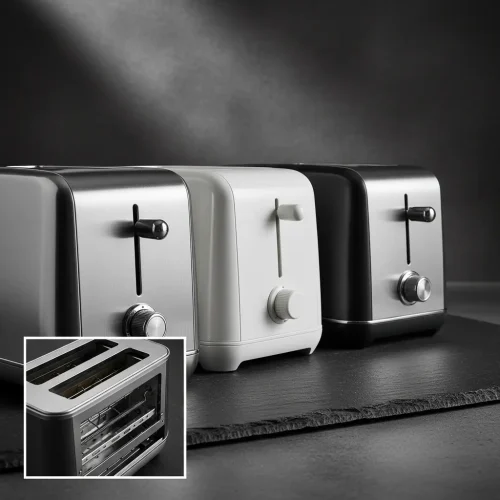
Plastic models are lighter and usually cheaper, but they don’t hold up as well. I had a plastic toaster start discoloring around the vents after about a year of heavy use. Not dangerous, just ugly and cheap-feeling.
Mixed-material toasters give you some of both — usually a stainless exterior with plastic accents or an internal plastic chassis. They can look great (a matte black toaster with brushed steel accents, for example) but check that the plastic isn’t near the heating elements.
When assessing build quality in reviews or in-store, press the lever. It should feel solid and return smoothly. Rattle it a bit. A well-built toaster shouldn’t flex or feel hollow. Cheap construction announces itself.
Safety Features to Prioritize
This section doesn’t exist in most good toaster reviews, which is a shame because it matters — especially if you have kids.
Auto shut-off is the big one. A toaster that automatically cuts power if it overheats is worth the extra few dollars. It’s not something you think about until something goes wrong.
Cool-touch exterior means the outside of the toaster stays safe to touch even while it’s running. If small hands are anywhere near your kitchen appliances in the morning, this matters.
Cord storage keeps the cable tidy and reduces the chance of it getting near heating elements or getting tangled. Some models — often called a retractable cord toaster — let you wind the cord underneath. Surprisingly useful in tight spaces.
A cancel button lets you stop a toasting cycle immediately if something goes wrong. It’s basic, but I’ve been surprised how many budget models skip it.
How to Choose a Toaster by Budget
Budget: Under $30–$40
You’ll get a basic slice toaster, probably plastic, with limited browning settings and a simple crumb tray. Models like the Black Decker 2 Slice Toaster T2569B, the Bella 2 Slice Slim Toaster, or the Amazon Basics 2 Slice Toaster live in this range. They work. They’re not exciting, and they probably won’t last five years, but if you’re outfitting a first apartment or need something temporary, they’re fine.
The one feature I’d never skip even at this price: removable crumb tray. If the model you’re looking at doesn’t have one, spend $5 more and get one that does.
Mid-Range: $40–$80
This is the sweet spot. You start getting stainless steel builds, wider slots, proper bagel settings, defrost functions, and more shade levels. The Cuisinart Classic 2 Slice Toaster, Cuisinart CPT-142, and the Sunbeam Automatic Toaster all sit here. Four-slice options open up in this range too, including the Cuisinart Compact 4 Slice Toaster.
If you’re buying a toaster for regular daily use and you want it to last, this is where I’d spend.
Premium: $80+
At this level you’re paying for materials, precision, and brand quality. KitchenAid toasters, Smeg models, and Breville like the Breville A Bit More Toaster all sit here. The “A Bit More” button on the Breville — which adds a few extra seconds of toasting — sounds gimmicky until you use it every day and realize it actually solves a real problem.
Wolf toasters sit at the very top of the premium range. Built like tanks. But unless you’re really serious about your breakfast, the KitchenAid or Breville options are the best toasters on the market for most households.
Size & Counter Space Considerations
A standard toaster size for a 2-slice model is roughly 7–8 inches wide and 6–7 inches deep. A 4-slice runs closer to 12–13 inches wide. That might not sound like a lot until you’re standing in a small kitchen figuring out where it fits between the coffee maker and the microwave.
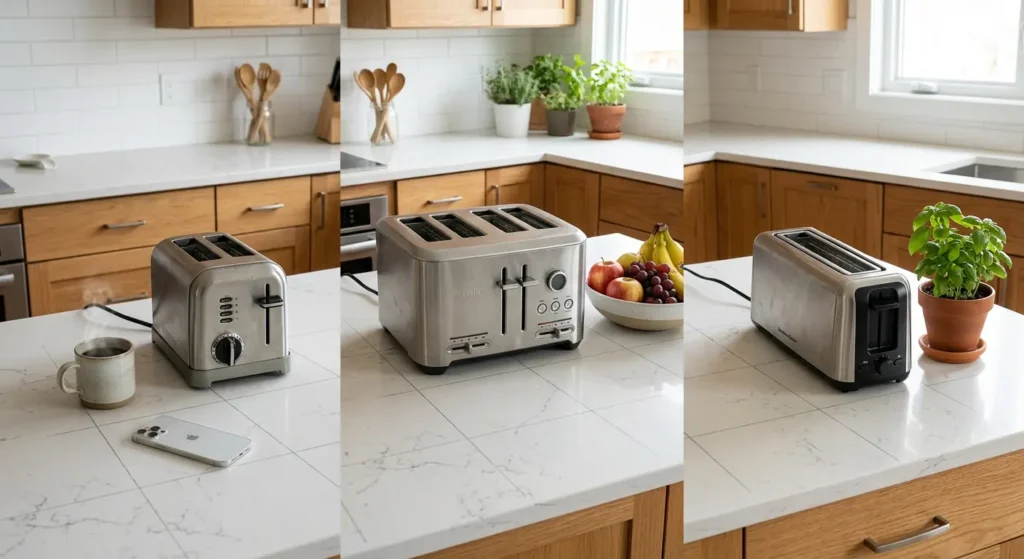
If counter space is tight, go 2-slice and look specifically for best compact toasters — the Bella 2 Slice Slim Toaster is a good example of a model designed to be genuinely narrow. Some models also offer cord storage underneath, which keeps things neater.
Color and finish matter more than people admit. A red toaster pops in a neutral kitchen. A matte black toaster looks sharp in a modern setup. A yellow toaster is a commitment. If your other appliances are already stainless, matching with a stainless steel toaster keeps things cohesive. Totally personal, but it’s your counter, so pick something you actually want to look at.
Toaster Cleaning & Maintenance Tips
Nobody talks about this and it’s actually important. Crumb buildup inside a toaster is a fire risk. Not a dramatic one, but a real one. Empty your crumb tray at least once a week if you use it daily. Take it out, tap it over the trash, rinse it if needed, dry it completely before putting it back.
For the exterior, unplug the toaster first, always, and wipe it down with a damp cloth. Stainless steel can handle a bit of mild dish soap on the outside. Dry it immediately so it doesn’t spot.
What you should never do: turn it upside down and shake it over the sink while it’s plugged in. Also, don’t stick a knife or fork in there to fish out stuck bread. I know it’s obvious. People still do it. Use the high-lift lever or wait for it to cool and tilt it gently. Nothing metal in the slots.
A well-maintained toaster with a clean tray and occasional wipe-down will last years longer than one that’s neglected. That’s really all there is to it.
Common Toaster Buying Mistakes to Avoid
Buying for slot count without checking slot width. Four slots sound great until you realize the slots are too narrow for your bread and you’re back to squishing. Check the slot width in millimeters before buying. Anything under 28mm is going to be frustrating with anything thicker than standard sandwich bread.
Ignoring wattage. Higher wattage means faster, more even toasting. Most decent toasters run 850–1,500 watts. Below 800 watts and you’re looking at slow, patchy results. It’s a spec most people skip, and it explains why cheap toasters always seem to take twice as long.
Overlooking the crumb tray design. Not all removable crumb trays are equal. Some barely catch anything and require you to tip the whole toaster to get crumbs out. Read a review or two specifically about cleaning before buying. It gets old fast.
Choosing purely on aesthetics. That Beautiful 2 Slice Toaster in the mint green finish looks incredible on a shelf. But if it has three browning settings and no bagel mode, you’re going to be annoyed by it every morning while admiring how it looks. Functionality first.
Not checking the warranty. A good toaster should come with at least a 1-year warranty. Brands like KitchenAid and Breville offer 2 years on some models. If a company isn’t standing behind it for at least a year, that tells you something about how long they expect it to last.
Conclusion
Using this toaster buying guide comes down to a simple chain: figure out your household size to pick the right toaster type, then match the features to what you actually eat for breakfast, then set your budget and find the best build quality you can afford in that range.
If I had to make one recommendation right now: for most people, a mid-range stainless steel toaster in the 2 slice or 4 slice category with wide slots, a bagel setting, and a removable crumb tray is all you need. You don’t need to spend $150, but don’t go below $35 either unless it’s truly temporary.
Browse our top-rated toaster picks to find the right model for your kitchen — and stop settling for uneven toast.
Frequently Asked Questions
What is the best type of toaster for a small kitchen?
A 2 slice toaster — ideally one of the best compact toasters on the market. Look for one with cord storage to keep the counter tidy.
How many slots do I need in a toaster?
Two slots work for one or two people. If you’re regularly making toast for three or more, get a 4-slice and save yourself the second round.
How do you pick a good toaster?
Start with slot width (make sure your bread fits), then check for browning settings, a bagel mode, and a removable crumb tray. Everything else is secondary.
What to know when buying a toaster?
Wattage matters for speed, slot width matters for versatility, and build material matters for longevity. Don’t buy based on color alone — though there’s nothing wrong with wanting a red toaster.
How many watts for a good toaster?
At least 850 watts for a 2-slice, and 1,200–1,500 watts for a 4-slice. Anything below that and you’ll be waiting longer and getting patchier results.
Which are the best toasters to buy?
The Breville A Bit More Toaster 2 Slice, KitchenAid 4-slice, and Cuisinart CPT-142 are consistently among the top rated toasters. For budget picks, the Amazon Basics 2 Slice Toaster and Black Decker 2 Slice Toaster T2569B are solid starting points.