
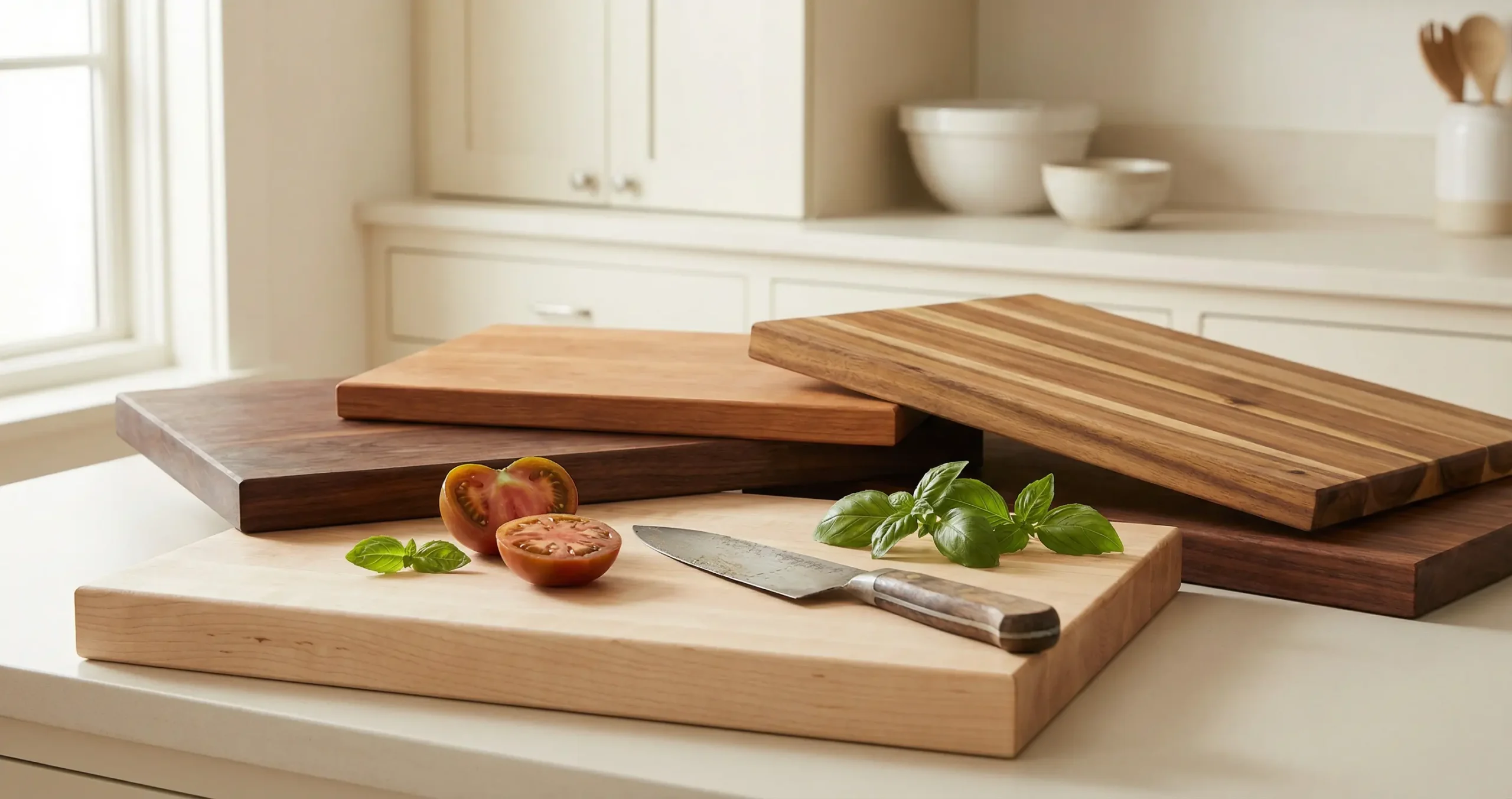

Choosing the right cutting board can transform your cooking experience, but with so many chopping board wood types available, what is the best wood for cutting boards? The answer isn’t one-size-fits-all—it depends on your budget, cooking habits, and maintenance preferences. Let’s dive into everything you need to know about selecting the best wood for chopping boards that will last for years.
What Is the Best Wood for Cutting Boards?
Hard maple stands out as the best wood for kitchen cutting boards for most home cooks. It offers exceptional durability, excellent dimensional stability, and proper hardness that’s gentle on knife blades while resisting warping, cracking, and splintering. For those seeking premium aesthetics, walnut provides a beautiful dark grain with similar performance. Budget-conscious buyers should consider acacia chopping board options, which deliver solid quality without breaking the bank.
What Makes a Wood Good for Cutting Boards?
Not all woods are created equal when it comes to cutting surface performance. The ideal wood must strike a delicate balance between hardness and being knife-friendly. Too soft, and it will show wear quickly with coarse pores that harbor bacteria. Too hard, and it will dull your knife sharpness faster than you can say “julienne.”
Dimensional stability is crucial—your board shouldn’t warp after water exposure or crack when temperatures fluctuate. Look for dense wood with tight grain that resists moisture absorption while maintaining surface smoothness. The wood should also be non-toxic, as it will contact your food daily. Proper oil content helps some woods naturally resist moisture, while others require more diligent care instructions and gentle handling to maintain their integrity over time.
Best Types of Wood for Cutting Boards
1. Hard Maple (Best Overall)
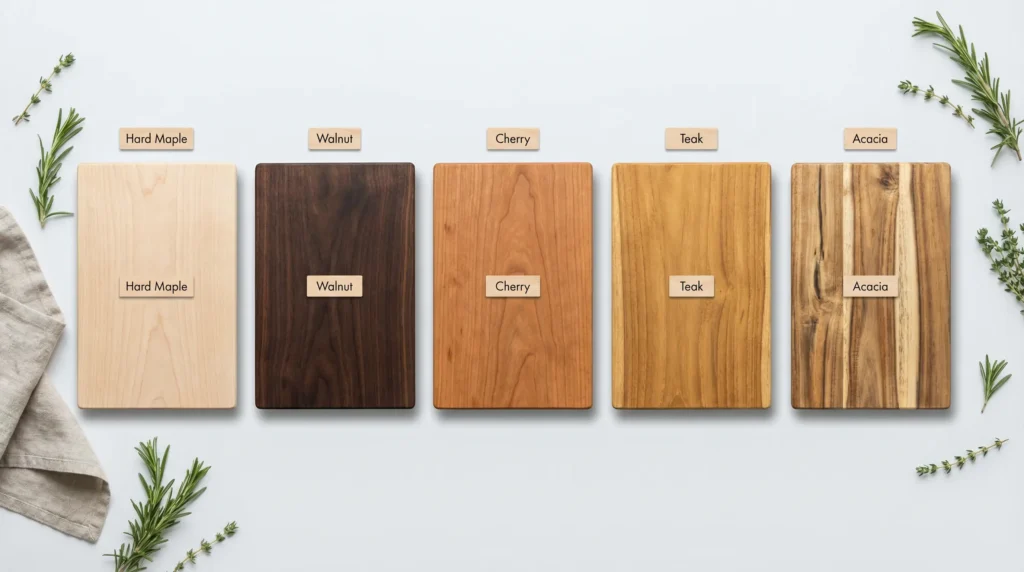
Hard maple dominates professional kitchens for good reason. This durable chopping board wood offers a Janka hardness rating around 1,450, providing the perfect balance for blade longevity without excessive wear on your knives. Its tight grain structure prevents shrinkage and resists bacterial growth naturally. As the most common mass market chopping board wood, maple remains surprisingly affordable despite its professional-grade performance. It’s light in color, showing a clean, classic appearance that suits any kitchen aesthetic.
The only downside? It can look plain compared to more exotic options, but its reliability makes it the gold standard for high-quality wooden chopping boards.
2. Walnut (Premium Option)
If you’re willing to invest in premium chopping board wood, walnut delivers stunning visual appeal alongside excellent performance. Its rich, chocolate-brown color and beautiful grain patterns make it a showpiece on any countertop. Slightly softer than maple at around 1,010 on the Janka scale, walnut is exceptionally gentle on knife blades, helping maintain knife sharpness longer.
This premium wood naturally contains oils that provide some moisture resistance, though it still requires regular oiling. Walnut represents the intersection of form and function—a true precious wood for those who appreciate culinary craftsmanship.
3. Cherry (Aesthetic Choice)
Cherry wood offers middle-ground pricing with distinctive beauty that develops character over time. Starting as a light pinkish-tan, cherry darkens to a rich reddish-brown with age and light exposure, creating a unique patina. Its hardness sits between maple and walnut, providing good durability while remaining knife-friendly.
This European hardwood choice works beautifully for those wanting visual interest without walnut’s price tag, though it shows knife marks more readily than harder woods.
4. Teak (Moisture Resistant)
Teak chopping board options excel in moisture resistance thanks to natural oils that make them virtually warp-resistant wood for cutting boards. This makes teak ideal for humid climates or near sinks where water exposure is frequent.
However, its higher hardness can be tougher on knife edges, and responsible sourcing is essential given environmental concerns. Teak represents a specialized choice for specific environmental challenges rather than everyday use.
5. Acacia (Budget Option)
Acacia, including false acacia wood (Robinia), provides an excellent entry point for quality wooden boards. Often confused with false acacia (Robinia wood), true acacia offers attractive grain patterns with natural dimensional stability at budget-friendly prices. It’s harder than walnut but softer than maple, making it a reasonable cheap alternative to premium chopping board wood. The varied grain creates visual interest, though it requires regular oiling to prevent drying and cracking.
End Grain vs Edge Grain vs Face Grain
End Grain (Best for Knife Longevity)
End grain construction involves arranging wood pieces so the cut exposes the end of the wood fibers, creating a self-healing cutting surface. This configuration is exceptionally gentle on knife blades because knife edges slip between fibers rather than cutting across them. The technical production process requires expert wood processing techniques, making these boards more expensive, but they deliver superior blade longevity and durability.
Edge Grain (Most Common)
Edge grain boards stand wood pieces on their edge, creating the most common and cost-effective construction. They balance affordability with good durability, offering excellent surface smoothness and attractive grain patterns. This style works well for mass market suitability while maintaining professional quality standards.
Face Grain (Least Durable)
Face grain exposes the broadest wood surface, creating beautiful grain displays but the least durable cutting surface. These boards show wear quickly and are more prone to warping and cracking, making them better suited as serving boards rather than active chopping surfaces.
How to Choose the Right Wood for Your Needs
Consider your cooking frequency first. Daily cooks benefit from maple’s resilience, while occasional users might prefer walnut’s beauty. Bamboo cutting board options, made from glued bamboo material, offer sustainability but require understanding they’re technically grass, not hardwood for cutting boards.
Your maintenance commitment matters too—some woods demand more gentle handling and regular care instructions than others. Budget plays a role, but remember that quality boards last decades, making them worthwhile investments.
Why Trust Best Eco Kitchen Tools?
At Best Eco Kitchen Tools, we’ve spent years testing high-quality chopping boards to help you make informed, sustainable choices. Our hands-on reviews consider durability, environmental impact, and real-world performance—not manufacturer claims. We prioritize eco-friendly materials and transparent recommendations, ensuring you get honest advice for choosing wood for kitchen cutting boards that align with both your cooking needs and environmental values. Our commitment to sustainability means we evaluate sourcing, longevity, and the complete lifecycle of every product we recommend.
Check Related Posts: Best Rated Titanium Cutting Boards | Cherry Chopping Board | Maple Wood for Cutting Board | The 6 Best Compact Toasters | Homemade Beeswax Wraps | The 6 Best Kitchen Utensil Sets