
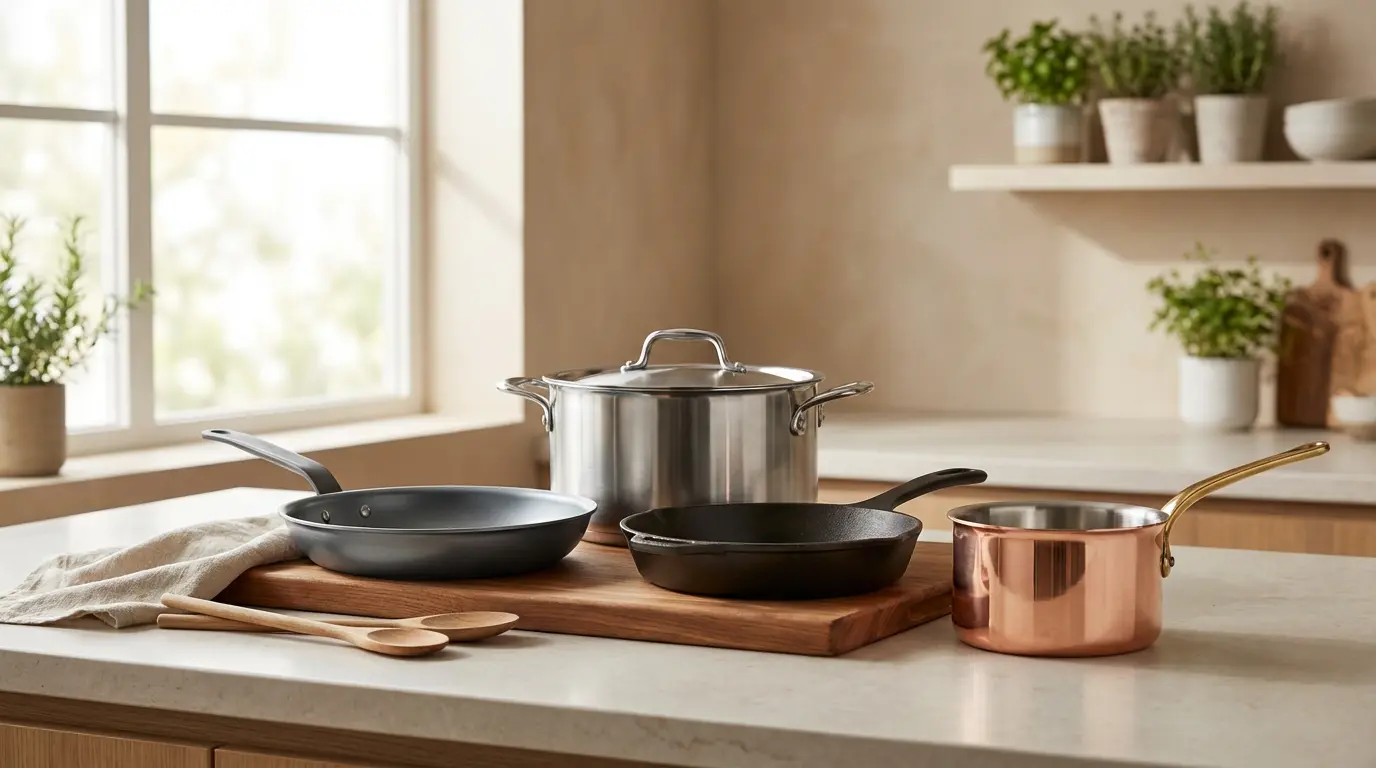

The wrong metal can leach into your food, alter its taste, and cause health problems over time. With so many options available — stainless steel, cast iron, copper, aluminium, and brass — knowing which metal is best for cooking for health is not just a performance question. It is a health and safety decision that affects every meal you prepare.
This guide covers everything you need to know: heat conductivity, food safety, health risks, and the best metal for cooking utensils. Whether you cook Indian food daily or prepare Western recipes on induction, this guide gives you a clear, honest verdict.
Table of Contents
ToggleWhat You Will Learn in This Guide
- Which metal is the safest and healthiest for everyday cooking
- How each metal performs in terms of heat conductivity and reactivity
- Which material vessel is good for cooking food specifically
- Which metals to avoid — and why
- How to match the right metal to your cooktop and cooking style
Why the Metal You Cook With Actually Matters
Not all metals behave the same way under heat or when they come into contact with food. Three properties define a metal’s performance in the kitchen: heat conductivity, reactivity with food, and leaching risk. Understanding what property makes a metal pot good for cooking helps you make smarter decisions at every price point.
Heat conductivity determines how quickly and evenly a metal distributes heat across the cooking surface. Poor conductivity creates hot spots that burn food unevenly.
Reactivity refers to whether a metal interacts chemically with acidic or alkaline foods like tomatoes, citrus, or vinegar. Reactive metals transfer metallic compounds into food, altering its flavour and, in some cases, posing health risks.
Metal leaching happens when small amounts of a metal dissolve into food during cooking. Some leaching — like iron from cast iron — is actually beneficial. Other types, like unlined copper or raw aluminium, can be harmful at high levels.
Note: A non-reactive metal does not chemically interact with food, regardless of acidity. Stainless steel and anodised aluminium are the gold standard for non-reactive, food-safe cooking — making them the best material for cooking utensils for most households.
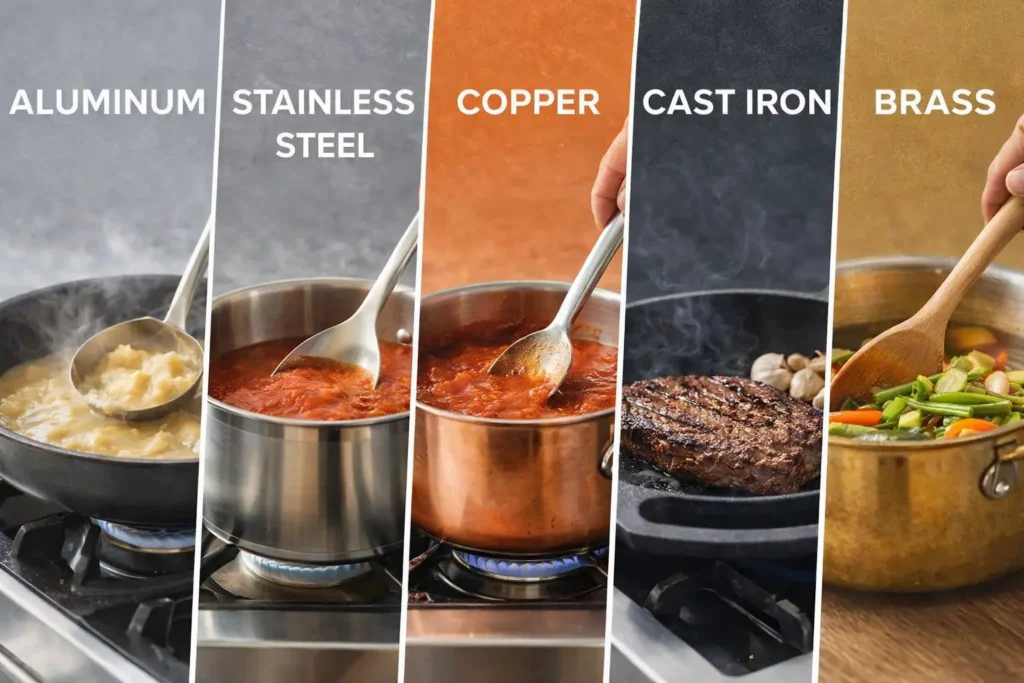
Quick Comparison: All 5 Metals at a Glance
Metal | Heat Conductivity | Reactivity | Safe for Acidic Food? | Health Risk | Best For |
Stainless Steel | Medium | Non-reactive | Yes | Very low | All-round everyday cooking |
Cast Iron | Low (high retention) | Slightly reactive | With seasoning | Very low | Searing, frying, baking |
Aluminium | High | Reactive (raw) | Only if anodised | Low (if anodised) | Quick cooking, boiling |
Copper | Very high | Highly reactive | Only if lined | High (if unlined) | Sauces, precision cooking |
Brass | High | Low reactivity | Yes | Very low | Traditional, Indian cooking |
This table covers the most common types of cookware material and cookware material types so you can compare at a glance before reading further.
Stainless Steel: The Best All-Round Metal for Most Kitchens
Stainless steel is the most practical and versatile choice for everyday cooking. It is durable, non-reactive, and safe for virtually every type of food — including acidic ingredients like tomatoes and lemon-based sauces. For anyone asking what is the best material for cookware, stainless steel is almost always the starting point.
What makes stainless steel non-reactive is its chromium content. It must contain at least 10.5% chromium, which forms an invisible oxide layer on the surface. This layer prevents chemical interaction with food and gives stainless steel its characteristic corrosion resistance and rust-resistant qualities — key reasons why stainless steel is the best metal for cooking pans in modern kitchens.
Stainless Steel Grades: 18/8 vs 18/10 — What the Numbers Mean
You will often see metallic cookware labelled as 18/8 or 18/10. These numbers refer to the percentage of chromium and nickel in the alloy.
- 18/8 = 18% chromium, 8% nickel — good quality, standard for most cookware
- 18/10 = 18% chromium, 10% nickel — higher quality, greater resistance to rust and staining, the safest option for health-conscious buyers
For the best metal kitchen utensils that balance safety, durability, and value, always choose 18/10 stainless steel. It is also the top answer when buyers ask what is the best material for kitchen utensils used at high heat.
What About Triply Stainless Steel?
Pure stainless steel conducts heat poorly, which creates hot spots. Triply cookware — also called tri-ply or encapsulated base cookware — solves this by sandwiching an aluminium or copper core between two layers of stainless steel. The result is the safety of stainless steel combined with the heat distribution of aluminium or copper.
This is why triply stainless steel is widely considered the best cookware material for everyday use. It is fully induction-compatible and works on all cooktop types, making it one of the most flexible pots and pans best material options available.
Is Stainless Steel Safe for Acidic Foods?
Yes. Stainless steel is completely safe for acidic foods such as tomatoes, tamarind, citrus, and vinegar-based sauces. Its non-reactive surface means no metallic taste transfers to food and no chemical leaching occurs under normal cooking temperatures. This is a core reason stainless steel or copper comparisons almost always end with stainless steel recommended for family cooking.
Cast Iron: Best for Heat Retention and Flavour Development
Cast iron cookware has been trusted for centuries, and for good reason. Once heated, it retains heat exceptionally well and distributes it evenly — making it ideal for searing, frying, baking, and slow cooking. Anyone asking what are pans made of for heavy-duty performance will consistently find cast iron near the top.
Cast iron contains a high carbon content (between 2% and 5%), which gives it exceptional thermal mass. When you place food on cast iron, the surface temperature does not drop sharply — it stays consistent, which produces the Maillard reaction (the browning process) far more effectively than thinner metals. This also makes it a standout answer to what is the best material to cook with for high-heat applications.
Is cast iron metallic? Yes — cast iron is a metal alloy, specifically an iron-carbon alloy. It is classified as ferrous (iron-containing), which also makes it fully compatible with induction cooktops.
Cast Iron vs Enameled Cast Iron: Which Should You Choose?
Standard cast iron requires regular seasoning to maintain its natural non-stick surface and prevent rust. Enameled cast iron is coated with a layer of porcelain enamel that eliminates the need for seasoning and makes it fully non-reactive — safe for acidic foods even without a seasoning layer.
- Choose standard cast iron if you want a long-lasting, naturally non-stick surface that improves over time and adds dietary iron to food
- Choose enameled cast iron if you prefer low maintenance and plan to cook acidic dishes regularly
The heavy stew pot typically made of cast iron or aluminum that you see in traditional and professional kitchens alike earns its reputation here — cast iron’s heat retention is unmatched for slow, deep cooking.
Health Benefit: Dietary Iron From Cast Iron
Cooking in cast iron transfers small amounts of dietary iron into food. This is actually beneficial — particularly for people with iron deficiency. Studies show that cooking acidic foods like tomato sauce in cast iron measurably increases the iron content of the dish.
However, if the seasoning layer is damaged or absent, cast iron becomes slightly reactive with highly acidic foods. Keep the seasoning well-maintained to preserve both performance and food safety. This combination of durability and dietary benefit makes cast iron one of the best utensils for healthy cooking available at any price point.
Aluminium: Affordable and Fast — But Is It Safe?
Aluminium utensils for cooking are widely used across South Asia and globally because aluminium heats up rapidly, conducts heat evenly, and costs significantly less than stainless steel or cast iron. It is one of the most common answers to what are cooking pots made of at the budget end of the market.
The safety concern with aluminium is reactivity with food. Raw aluminium reacts with acidic and alkaline foods, causing oxidation that can transfer a metallic taste into food and, with prolonged use, increase aluminium ingestion. This is why aluminium is used for making cooking utensils in its anodised form — it has become the preferred modern standard precisely because anodising eliminates this risk and makes aluminium for food contact safe.
Anodised vs Non-Anodised Aluminium: The Safety Difference Explained
Anodised aluminium undergoes an electrochemical process that hardens the surface, creating a non-reactive, scratch-resistant layer. This makes anodised aluminium completely food safe aluminium and eliminates leaching concerns — answering the common question of why is aluminium used for making cooking utensils in contemporary kitchenware.
- Raw aluminium: reactive, can leach into acidic food, not recommended for daily cooking
- Anodised aluminium: non-reactive, food safe, durable — the correct choice for health-conscious buyers
For anyone asking is aluminium good for cooking — the answer is yes, provided you use anodised versions. Avoid raw, uncoated aluminium pots — especially for curries, tamarind-based dishes, or chutneys.
Aluminium or Stainless Steel: Which Is Better for Everyday Cooking?
This is the most common question buyers ask, and the answer to which is better aluminium or stainless steel for cooking depends on your priorities.
- Aluminium: heats faster, costs less, lighter to handle — but requires anodising for food safety
- Stainless steel: non-reactive from the start, more durable, requires no coating — but conducts heat less efficiently without a triply base
People also frequently ask about the aluminum stainless steel reaction or stainless steel aluminum reaction — specifically whether the two metals interact when used together. The answer is no: when aluminium is fully enclosed inside a triply stainless steel base, there is no food contact and therefore no reactivity risk.
For the best material for pots and pans for most households, stainless steel (18/10 or triply) is the safer long-term investment. Anodised aluminium is the best material for pots on a budget. Never use plain, uncoated aluminium for daily cooking.
Copper: The Chef’s Choice for Precision Cooking
Copper cookware offers the highest thermal conductivity of any cooking metal. It heats up and cools down almost instantly, giving the cook precise, responsive control over temperature. This is why professional chefs use copper cooking tools for delicate tasks like emulsified sauces, hollandaise, soufflés, and candy-making. If most of your cooking equipment is copper, you are working with the most thermally responsive material available.
Copper also has a unique culinary property: it chemically stabilises egg whites and cream, helping them hold volume and structure during cooking.
Is Unlined Copper Cookware Safe to Use?
No. Unlined copper reacts strongly with acidic food and can release toxic copper compounds into food at high temperatures. This is why all utensils made from copper meant for direct food contact must be lined with either stainless steel or tin.
- Stainless steel-lined copper: durable, non-reactive, long-lasting — the premium choice among copper or stainless steel pots
- Tin-lined copper: traditional, softer surface — requires re-tinning every few years
For anyone asking is it good to cook in copper utensils — yes, but only when they are properly lined. Unlined copper vessels should never be used for cooking acidic food. Copper for cooking is safe only when the interior is fully lined. When people ask is copper good to cook with, the answer depends entirely on whether the vessel is correctly lined.
Brass: Traditional, Antimicrobial, and Eco-Friendly
Brass cookware and brass utensils have been used in Indian food cooking utensils traditions, as well as Middle Eastern and South Asian kitchens, for thousands of years. Despite being less common in modern Western kitchens, brass offers a unique combination of performance, hygiene, and sustainability that deserves serious consideration.
Is brass food safe? Yes — brass is considered food safe for most cooking applications. The copper content in brass gives it natural antimicrobial properties, meaning it actively kills bacteria and other pathogens on contact. This makes brass inherently more hygienic than many other metals, which is a key reason is brass safe for food is such a common question among health-focused buyers.
Brass vs Stainless Steel: Which Is Better for Indian Cooking?
For traditional Indian food utensils — kadhais, serving vessels, and storage containers — brass has specific advantages that stainless steel does not offer.
- Brass: antimicrobial, enhances mineral content of water and food, culturally preferred for storing water and serving food, eco-friendly and fully recyclable
- Stainless steel: more versatile, induction compatible, easier to clean and maintain at high heat
For those asking brass or steel which is good for cooking — use brass for traditional serving vessels, water storage, and slow-cooked dishes. Use stainless steel for high-heat cooking on modern cooktops.
For those asking which bartan is best for cooking — brass bartans are ideal for dal, kheer, and slow-cooked gravies. For tawa, kadhai, and pressure cooking, cast iron or stainless steel performs better.
Which Metals to Avoid for Cooking — And Why
Not every metal kitchenware option belongs in the kitchen. Some metals release toxic compounds under heat. Others degrade your food’s quality. Here is what to avoid when choosing kitchenware materials.
Galvanized Steel for Cooking: Never Do It
Galvanized steel is coated with zinc to prevent rust. When heated, zinc oxide fumes are released — and they are toxic. Anyone who attempts to cook on galvanized steel risks metal fume fever, nausea, and respiratory issues. Never use galvanized steel for cooking or food storage, regardless of how it is finished.
Is Tin Safe for Cooking?
Is tin safe for cooking as a standalone material? No. Tin is too soft and too low-melting for direct cooking use — particularly relevant when comparing steel vs tin for cookware decisions. However, tin plays a valuable role as a lining material inside copper cookware, where it creates a safe, non-reactive cooking surface at normal temperatures. Do not use standalone tin vessels on high heat.
Unlined Copper: High Risk
As covered above, unlined copper reacts with acidic food and releases toxic compounds. Never cook acidic food in unlined copper vessels, regardless of tradition or aesthetics.
Low-Grade Raw Aluminium: Use With Caution
Cheap, uncoated aluminium pots — particularly thin ones — warp easily, degrade over time, and leach into acidic food. When comparing nonstick vs aluminum pans, bare aluminium performs worse on both safety and durability. Always choose anodised aluminium over raw aluminium for daily cooking.
Best Metal Utensils by Cooktop Type
The metal you choose must be compatible with your cooktop. Using the wrong material damages both the cookware and the cooking surface — particularly on induction and ceramic hobs. This is especially important when selecting the best pans for gas cooking versus induction.
Cooktop Type | Compatible Metals | Not Compatible |
Gas | All metals | None |
Induction | Stainless steel, cast iron, triply | Pure copper, plain aluminium |
Electric coil | Stainless steel, cast iron, aluminium | Thin copper |
Ceramic / halogen | Stainless steel, anodised aluminium | Rough cast iron (scratches surface) |
Oven | Stainless steel, cast iron, lined copper | Non-lined aluminium (warps) |
Which Metal Utensils Work on Induction Cooktops?
Induction cooktops generate a magnetic field. Only metals with magnetic (ferrous) properties heat up on induction. Stainless steel and cast iron work natively. Pure aluminium and copper do not — unless they have a magnetic stainless steel base, as found in triply cookware.
Quick test: Hold a magnet to the base of any pot. If it sticks, the pot works on induction.
Tip: For any induction utensils set or induction cookware purchase, always check for the induction-compatible symbol (a coil icon) printed on the base of the product.
How to Choose the Best Material for Cookware for Your Kitchen
Your Priority | Best Metal Choice | Why |
Safest for health | Stainless steel (18/10) | Non-reactive, zero leaching |
Best heat retention | Cast iron | Retains heat for hours |
Fastest heating | Copper or aluminium | Highest thermal conductivity |
Budget-friendly | Anodised aluminium | Affordable + safe coating |
Indian / traditional cooking | Brass or cast iron | Antimicrobial, flavour-enhancing |
Induction cooktop | Stainless steel or triply | Magnetic base required |
Eco-friendly | Brass or cast iron | Recyclable, long-lasting |
Precision cooking | Copper (lined) | Unmatched temperature control |
The single most important factor is your cooktop type. If you cook on induction, your choice immediately narrows to stainless steel, cast iron, or triply cookware. Everything else — budget, cooking style, health priorities — guides your final selection within that shortlist. This framework applies whether you are evaluating different types of cookware materials or simply asking what the best pan material is for your home.
Our Top Picks: Best Metal Utensils for Cooking in 2026
Best for Everyday Use: Triply Stainless Steel Cookware Set
The best metal for pots and pans for most households. A triply stainless steel set combines the safety of 18/10 stainless steel with the heat distribution of an aluminium core. Works on all cooktops including induction, dishwasher-safe, and virtually maintenance-free. This is the definitive answer to what is the best material for cooking utensils for daily family cooking.
Best Budget Pick: Anodised Aluminium Saucepan
The most affordable entry into food-safe cooking. Anodised aluminium heats fast, weighs little, and performs reliably for boiling, simmering, and sauce-making. The ideal choice for student kitchens and everyday family cooking — and the best answer to aluminium or stainless steel cookware debates when budget is the primary concern.
Best for Indian Cooking: Cast Iron Kadhai
For those asking which utensil is good for cooking curries and deep-fried snacks — a well-seasoned cast iron kadhai delivers unmatched heat retention and adds dietary iron to food. It improves with every use and is a centrepiece of any serious Indian food utensils collection.
Best for Precision Cooking: Lined Copper Saucepan
When temperature precision matters — for hollandaise, toffee, or delicate reductions — a stainless-steel-lined copper saucepan gives you faster, more responsive heat control than any other material. This is the top choice when stainless steel or copper is the debate and performance is the priority.
Best Eco-Friendly Pick: Brass Serving and Cooking Vessels
For those who value sustainability and tradition, brass vessels are fully recyclable, naturally antimicrobial, and long-lasting. The ideal choice as best chemical free cooking utensils for slow cooking, serving, and water storage.
Best Tool Set: Stainless Steel Ladle, Spatula, and Skimmer Set
For utensils metal tools that go directly into pots and pans, the best metal cooking utensils are stainless steel. They are heat-resistant, hygienic, non-reactive, and safe to use on most cooking surfaces — and the clearest answer to what are metal utensils made of when safety is the priority.
How to Care for Metal Cooking Utensils
Stainless Steel
- Wash with mild detergent and a soft cloth — avoid steel wool
- Remove white mineral deposits with diluted white vinegar
- Dry immediately to prevent water spots — especially in hard-water areas
- Dishwasher safe, but hand-washing preserves shine longer
Cast Iron
- Rinse with hot water after use — avoid soap as it strips seasoning
- Dry completely on the stovetop over low heat to prevent rust
- Apply a thin layer of vegetable oil while still warm to maintain seasoning
- Never soak in water or place in a dishwasher
Anodised Aluminium
- Hand-wash only — dishwasher detergent degrades the anodised layer over time
- Avoid metal scouring pads that scratch the protective coating
- Replace if the coating shows deep scratches or flaking
Copper
- Polish regularly with a copper cleaner or a paste of salt and lemon juice
- Inspect the tin lining annually — re-tin when it wears through
- Never use abrasive cleaners on the interior lining
Brass
- Polish occasionally with a brass-specific cleaner or tamarind paste
- Avoid prolonged soaking — brass tarnishes if left wet
- Check for signs of verdigris (green patina) — clean immediately if spotted
Final Verdict: Which Cooking Utensils Are Best for Health?
- For most households: triply stainless steel is the best all-round choice — safe, durable, and compatible with all cooktops
- For budget cooking: anodised aluminium delivers food-safe performance at the lowest cost
- For precision and professional cooking: lined copper gives you temperature control that no other material approaches
- For health-first buyers: 18/10 stainless steel or enameled cast iron is the safest choice available
The best utensil material for cooking is not a single answer — it is the right metal for your specific cooktop, cooking style, health priorities, and budget. Use this guide to make a confident, informed decision.
At Best Eco Kitchen Tools, we only recommend cookware that meets food safety standards and supports sustainable kitchen practices. Our picks are based on kitchenware types, material quality, long-term value, and real cooking performance.
Check Related Posts: What Is the Best Cooking Utensil Material | Nylon vs Silicone Cooking Utensils | What Is the Best Wood for Cutting Boards | Best Rated Titanium Cutting Boards | Cherry Chopping Board | Maple Wood for Cutting Board | The 6 Best Compact Toasters
Frequently Asked Questions
Which metal is best for cooking for health?
Stainless steel (18/10 grade) is the healthiest option for everyday cooking. It is completely non-reactive, releases no harmful compounds, and requires no coating or seasoning to maintain food safety. Anodised aluminium is the best budget alternative. Avoid raw, uncoated aluminium and unlined copper for health-sensitive cooking.
Which material vessel is good for cooking?
For daily cooking, stainless steel and anodised aluminium vessels are the best choice. For traditional Indian cooking — dal, biryani, kheer — brass or cast iron vessels offer superior flavour development and added health benefits. For high-heat cooking like deep frying, cast iron delivers the best performance.
Is aluminium or stainless steel better for cooking?
Stainless steel is the better long-term choice for health and durability. Aluminium heats faster and costs less, but requires anodising to be food safe. For most households, a triply stainless steel pot — which uses an aluminium core for heat distribution with stainless steel surfaces — gives you the benefits of aluminium or stainless steel pans combined in one.
What is the safest metal for cooking?
Stainless steel (18/10) is the safest metal for cooking. It is non-reactive, does not leach into food, and is safe for all food types including acidic dishes. Enameled cast iron and anodised aluminium are equally safe alternatives. This is also the best answer to what material is best for pots and pans from a pure safety standpoint.
Can you use metal on ceramic cookware?
No. Metal utensils scratch and damage ceramic non-stick coatings, reducing their effectiveness and lifespan. Use silicone, wood, or nylon utensils on ceramic surfaces. Switch to full stainless steel cookware if you prefer to use metal dishware material tools without restriction.
Which bartan (vessel) is best for cooking Indian food?
For Indian cooking, the answer depends on the dish. Cast iron kadhais are best for deep frying and bhuna-style dishes. Stainless steel pressure cookers and saucepans are ideal for everyday dal and rice. Brass vessels suit traditional slow cooking and serving. Anodised aluminium handles everything from boiling to simmering with ease and affordability. These cover the full range of kitchenware materials used across Indian home kitchens.
What property makes a metal pot good for cooking?
Three properties define a good cooking metal pot: high thermal conductivity (fast, even heating), low reactivity with food (no leaching), and structural durability (resistance to warping and corrosion). No single metal excels in all three — which is why triply cookware, combining the conductivity of aluminium with the safety of stainless steel, is widely regarded as the best all-round solution and the top answer to what is the best cooking utensil material.
Is silver good for cooking?
Is a silver pot safe for cooking? Silver is not practical for everyday cooking. It is extremely expensive, soft, and scratches easily. While silver has antimicrobial properties, its cost and maintenance make it impractical as daily cookware. Brass offers similar antimicrobial benefits at a fraction of the cost.
What’s the metal things when you order food called?
The serving vessels and tools used when food is presented or served are generally called metal dishware or serving utensils — including ladles, tongs, serving spoons, and chafing dishes. In professional catering, stainless steel is the dominant material for these items due to its hygiene, durability, and ease of cleaning.
An item most often used for boiling water — what metal is best?
Stainless steel kettles and pots are the best choice for boiling water. They are non-reactive, durable, and easy to clean. Anodised aluminium is a lightweight, affordable alternative. Avoid uncoated aluminium and copper for boiling water regularly.
At Best Eco Kitchen Tools, we only recommend cookware that meets food safety standards and supports sustainable kitchen practices. Our picks are based on material quality, long-term value, and real cooking performance.