
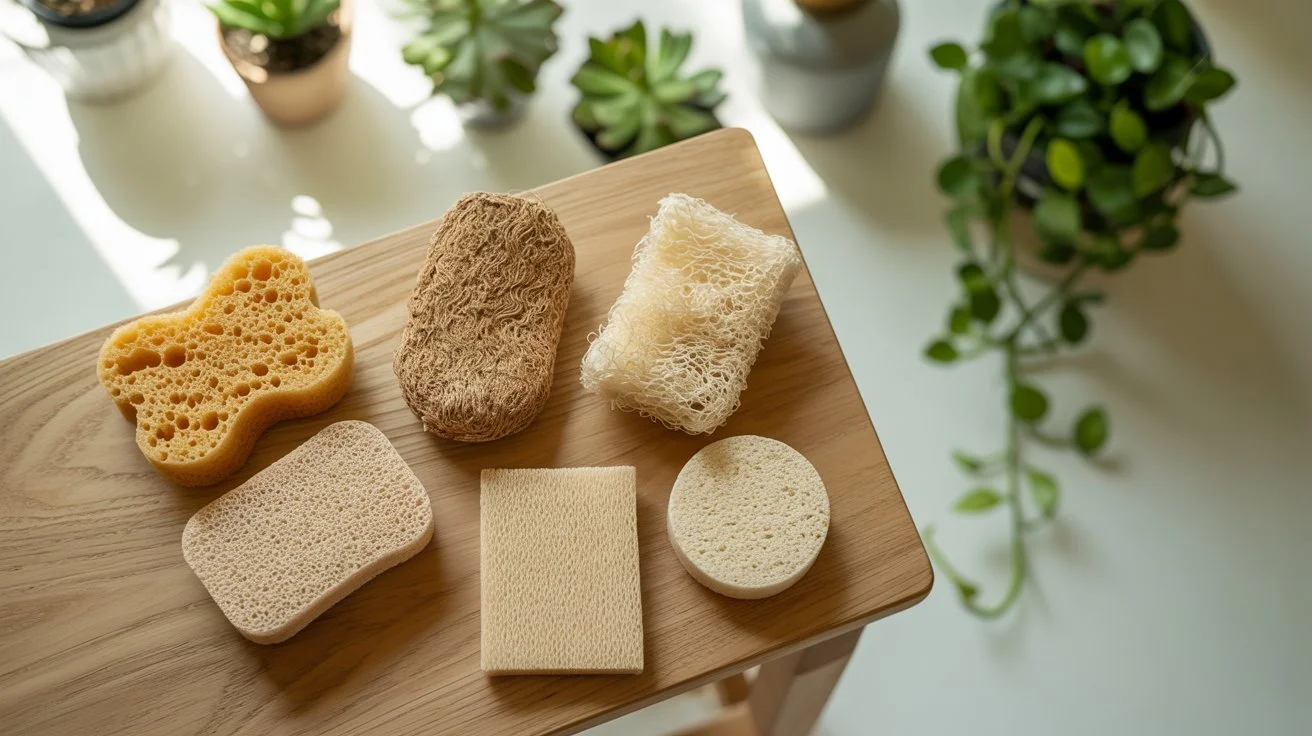

In today’s world, where environmental consciousness is at an all‑time high, the choices we make in our daily lives are more important than ever. From the products we use to the food we consume, each decision plays a part in shaping a more sustainable future. One such choice that often goes unnoticed is the cleaning tools we use in our kitchens and homes. Traditional sponges, while effective at cleaning, contribute to plastic waste and environmental harm. With growing awareness, more people are turning to eco‑friendly sponges made from biodegradable materials and renewable resources, offering a more responsible alternative. This article explores the 5 best eco‑friendly sponges that not only help keep the kitchen spotless but also promote a green lifestyle.
As the demand for plastic‑free alternatives rises, many brands are stepping up to provide sustainable sponges designed to be biodegradable, chemical‑free, and made from natural materials. These sponges are a simple yet impactful way to reduce your carbon footprint and take a small step towards a zero waste kitchen. In the following sections, we will take a closer look at the top 5 eco‑friendly sponges, their benefits, and how they can contribute to a sustainable future.
Table of Contents
ToggleWhy Choose Eco‑Friendly Sponges?
What Makes Sponges Eco‑Friendly?
When it comes to cleaning, many people are unaware of the environmental impact of the products they use. Traditional sponges are often made from synthetic materials like plastic and foam, which take hundreds of years to decompose. In contrast, eco‑friendly sponges are made from natural fibers, such as plant‑based materials, cellulose, and renewable resources. These sponges are not only biodegradable but also compostable, meaning they break down naturally without causing long‑term harm to the environment.
By choosing eco‑friendly sponges, one opts for cleaning tools that are free from toxic chemicals and harmful additives. Many of these sponges are also non‑toxic and safe for use around food, ensuring that you’re making a chemical‑free cleaning choice for your home. It’s a step toward serious eco‑conscious cleaning and aligns with a broader sustainable living ethos.
Environmental Impact
The environmental impact of sponges is significant, especially when you consider that millions of traditional synthetic sponges are used and thrown away every year. These sponges often end up in landfills, where they persist for centuries, contributing to plastic pollution and microplastics in waterways. Switching to biodegradable sponges helps reduce plastic waste and supports the circular economy by allowing materials to return to the earth rather than linger in landfills.
Beyond disposal, the production of synthetic sponges also uses non‑renewable resources, involves heavy chemical treatment, and results in a higher carbon footprint. By contrast, cleaning tools made from organic materials, plant fibre sponges, or renewable fibers often have a lower environmental burden. The shift is small at first glance—but when adopted at scale, it contributes to reducing waste, promoting sustainable consumption, and creating a healthier home environment.
How to Choose the Best Eco‑Friendly Sponge
Key Features to Look For
When selecting an eco‑friendly sponge, there are a few essential features to evaluate to ensure you make a truly environmentally conscious choice. First, consider the material composition: look for sponges made from plant‑based sponges, cellulose sponges, coconut sponges, bamboo sponges, or natural fibers, rather than synthetic foams. Studies show that cellulose sponges made from wood pulp, for example, are far more biodegradable than traditional sponges.
Next, assess durability and absorbency. A good eco alternative should be durable, long‑lasting, and highly absorbent, enabling effective cleaning without frequent replacement. While some biodegradable sponges may not match the ruggedness of heavy‑duty synthetic scrubs, many perform very well, especially when cared for properly.
Also check for eco‑certifications, sustainable sourcing, and minimal‑waste packaging, as these speak to the brand’s overall commitment to sustainable business and ethical manufacturing. Proper disposal is also key some compostable sponges require industrial composting conditions to break down efficiently.
What to Avoid
Avoid sponges made from synthetic materials like polyurethane or polyester, which often shed microplastics and accumulate in landfills. Avoid products that claim “biodegradable” without specifying conditions for decomposition transparency matters. Also, steer clear of sponges with heavy chemical treatments or plastic‑based scrubbing sides, since those undermine the principle of natural cleaning tools and zero-waste kitchen habits.
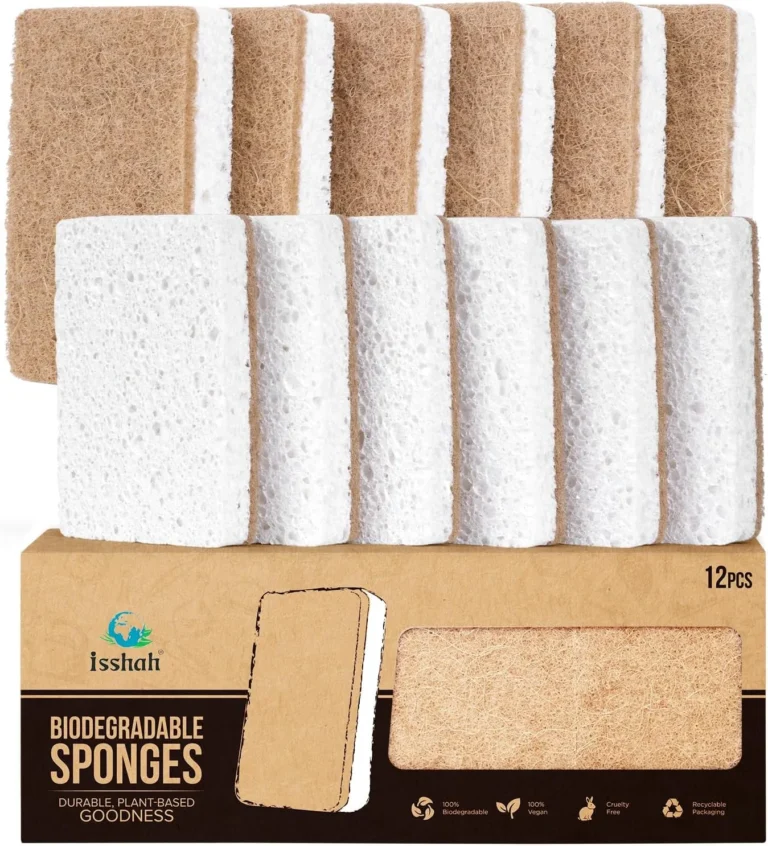
1. Isshah Plant‑Based Kitchen Sponges (Biodegradable)
Overview
The Isshah Plant‑Based Kitchen Sponges are among the top choices for sustainable sponges for mindful home cleaning. These sponges are crafted from plant‑based materials and advertised as fully biodegradable, aligning with the ethos of eco‑friendly kitchen tools. Being made from natural fibers, they deliver excellent performance for everyday use while maintaining a smaller environmental footprint.
Pros:
- Made from plant‑based and biodegradable materials.
- Absorbent and effective for general kitchen cleaning.
- Compostable and eco‑friendly.
- Gentle on surfaces.
Cons:
- Might not be as durable as synthetic sponges for heavy‑duty scrubbing.
- Tends to wear down faster with very harsh use.
These sponges work well for routine countertop wiping, dishwashing, and other general chores. They offer an effective, non‑toxic sponge option for households seeking sustainable living and minimal waste. The product is available here: Isshah Plant‑Based Kitchen Sponges.
Performance and Value
In real-world use, these sponges have been reported to be highly absorbent and easy to clean. Given their natural composition, they provide a reliable clean without relying on synthetic materials or plastic packaging. For consumers committed to environmentally responsible cleaning habits, this is a meaningful shift.
Best For: Routine cleaning tasks, such as wiping counters and dishwashing.
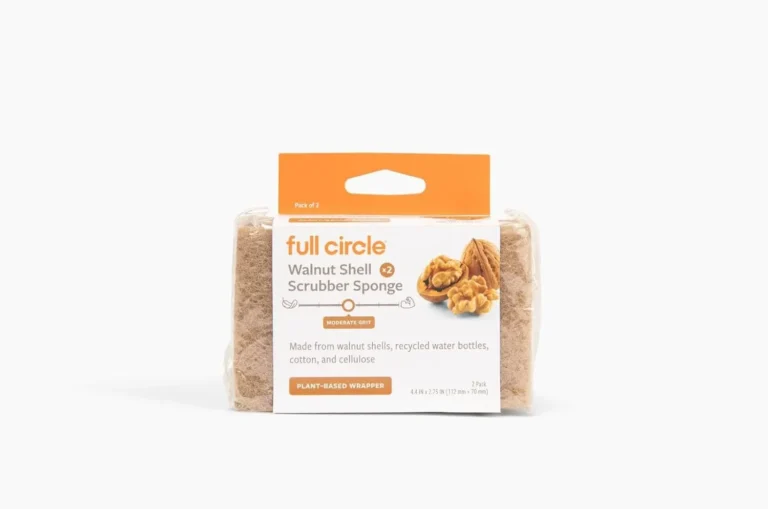
2. Full Circle Non‑Scratch Scrubbies Household Sponges
Overview
Full Circle’s Non‑Scratch Scrubbies are designed for households seeking eco alternatives that can handle tougher tasks without damaging delicate surfaces. These sponges merge recycled materials with plant‑based fibers, offering a hybrid model of sustainability and performance.
Pros:
- Non‑scratch and safe for cookware and delicate surfaces.
- Durable and longer‑lasting than many natural‑fibre sponges.
- Made partly from recycled materials and plant fibers.
- Aligned with eco‑friendly and sustainable product commitments.
Cons:
- Slightly more expensive than basic biodegradable alternatives.
- Durability may still lag behind heavy‑duty synthetic scrubs for very rough tasks.
For households with non‑stick pans, stainless steel and other surfaces requiring gentler care, these sponges present a smart choice among eco‑cleaning supplies. You can find this option here: Full Circle Non‑Scratch Scrubbies Household.
Why It Stands Out
The blend of recycled content and plant‑based fibers underscores the brand’s involvement in sustainable business practices. It’s a demonstration of how green technology can meet everyday cleaning needs, rather than being a compromise between sustainability and functionality.
Best For: Cleaning delicate cookware and non-stick surfaces.
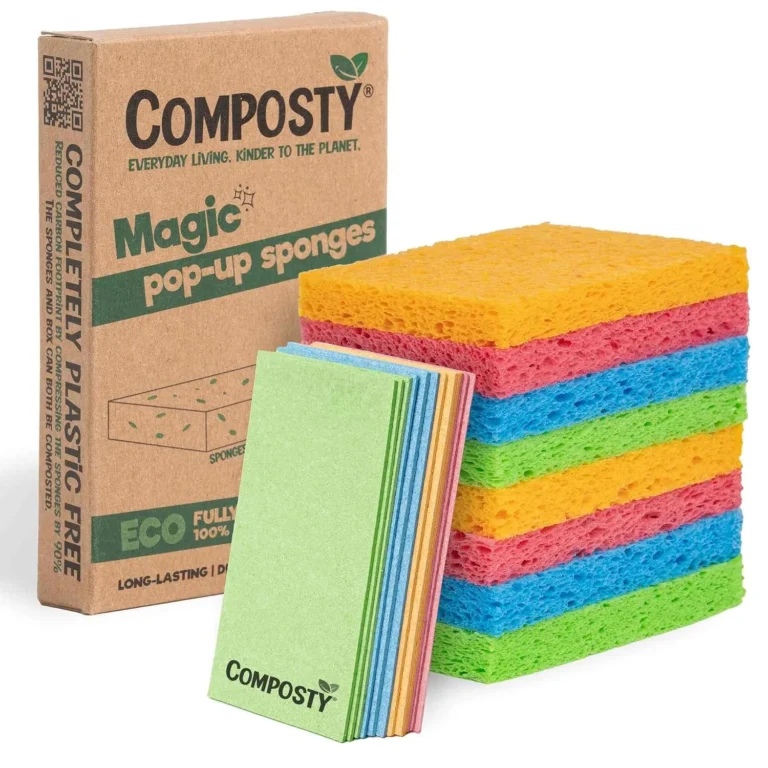
3. Composty® Compressed Cellulose Sponges (Pack of 4)
Overview
Composty® offers compressed‑cellulose sponges that are ideal for the eco‑conscious consumer seeking both efficiency and low environmental impact. These sponges expand when wet, making shipping and storage more efficient—a plus for households seeking to minimize waste.
Pros:
- Made from recycled wood pulp and natural cellulose—biodegradable.
- Compostable under appropriate conditions.
- Offers good value in a pack of four.
- Efficient for everyday cleaning and light scrubbing tasks.
Cons:
- Not as abrasive as some heavy‑duty scrubs for tough grime.
- Under extremely rough use, may need more frequent replacement than synthetic alternatives.
Find this pack here: Composty® Compressed Cellulose Sponges.
Sustainability Features
These sponges embody key traits of renewable resources: sourced wood pulp, minimal packaging, and compostability. Their lifecycle approach aligns with principles of a circular economy, and they serve as strong examples of how cleaning supplies can be part of environmental stewardship.
Best For: Everyday kitchen cleaning and light scrubbing.
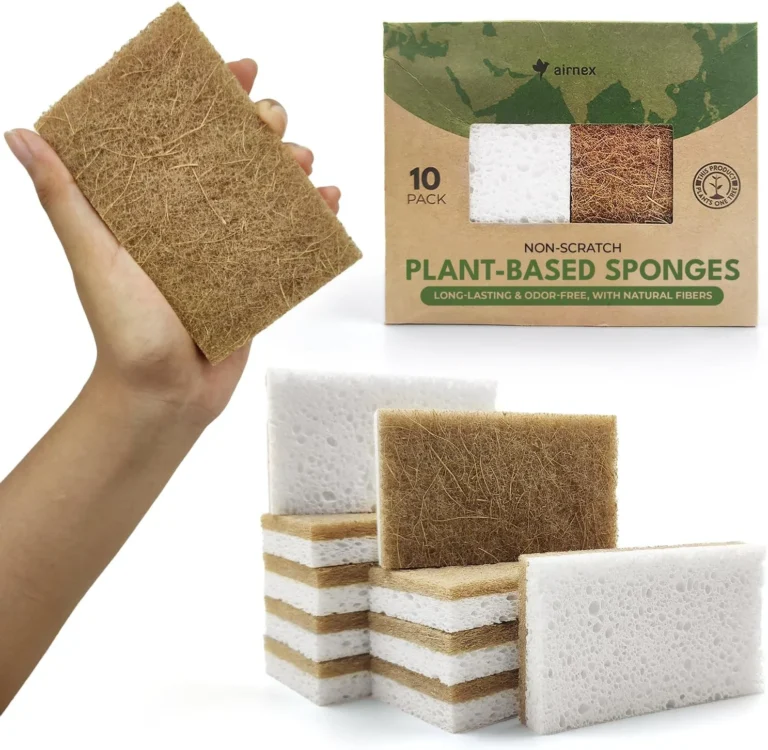
4. Eco‑Bell 10 Pack Biodegradable Natural Kitchen Sponges
Overview
Eco‑Bell’s biodegradable kitchen sponges are made from 100% natural fibers and plant‑based materials, offering an excellent option for households aiming to reduce synthetic waste and engage in ethical products consumption. They’re designed for general cleaning tasks with a focus on sustainable choices.
Pros:
- Produced from natural fibers and renewable materials.
- Fully biodegradable and compostable.
- Suitable for everyday kitchen cleaning and dishwashing.
Cons:
- May not perform as well on the toughest scrubbing jobs.
Slightly rougher texture might not suit ultra‑delicate surfaces.
You can check them here: Eco‑Bell Biodegradable Natural Kitchen Sponges.
Why Choose It
For those committed to a green lifestyle, this sponge underscores how even modest swaps like choosing biodegradable cleaning tools can reflect bigger values. It supports the aim of reducing plastic waste and choosing eco‑certified products where possible.
Best For: General kitchen cleaning and dishwashing.
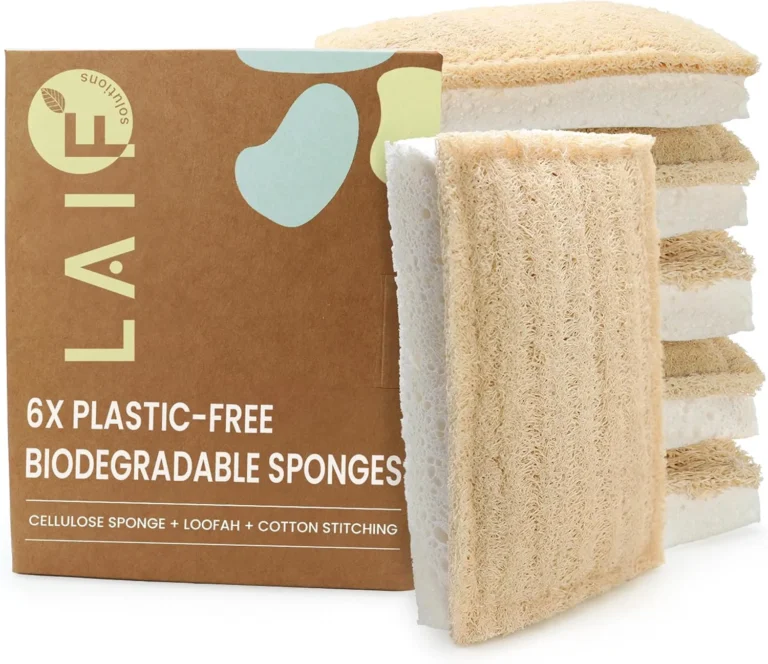
5. Natural Eco‑Friendly Biodegradable Kitchen Sponges
Overview
This option emphasizes 100% cellulose, delivering a truly plant-fibre sponge experience with natural absorbency, mold-resistance, and no synthetic blend. It’s designed for people looking for the most natural approach to kitchen cleaning tools.
Pros:
- Crafted from genuine natural cellulose fibers.
- Highly absorbent, mold‑resistant, and biodegradable.
- Perfect for dishwashing and light cleaning tasks.
Cons:
- Higher price point compared to conventional sponges.
- Might require replacement more often when used for very heavy tasks.
Find them here: Natural Eco‑Friendly Biodegradable Kitchen Sponges.
Performance Highlights
These sponges reflect a pure approach to eco‑innovation in household cleaning supplies. By aligning materials, performance, and waste reduction, they fit smoothly into a broader ethos of sustainable consumption.
Best For: Dishwashing and light cleaning tasks.
Conclusion
Switching to eco‑friendly sponges is one of the easiest and most effective ways to reduce your carbon footprint and embrace a more sustainable lifestyle. Whether you go with sponges made from natural fibers, renewable resources, or biodegradable materials, each choice contributes to a cleaner, greener future. The 5 best eco‑friendly sponges featured here combine effectiveness with responsibility. It’s time to make a sustainable choice in your cleaning routine and support the sustainable future we all want.
For those looking to expand their sustainable home habits, check out this blog on sustainable kitchen which delves deeper into making eco‑conscious choices in every part of your kitchen.
By swapping your regular sponge for one of these smarter options, you are engaging in waste reduction, opting for environmentally friendly products, and supporting sustainable brands committed to a greener planet.
FAQ's
Sponges made from natural fibers like cellulose, coconut, bamboo, and loofah are plastic-free. These biodegradable sponges are ideal for eco-conscious consumers looking to reduce plastic waste.
Natural eco sponges are made from renewable materials like plant-based fibers, sea sponges, and coconut fibers. These sponges are biodegradable and free from toxic chemicals, making them perfect for eco-friendly cleaning.
Yes, bacteria can grow on a soapy sponge due to moisture and food residue. Regularly washing and drying the sponge, or using eco-friendly antimicrobial sponges, helps reduce bacteria buildup.
Eco sponges typically last 2–4 weeks with proper care. The durability depends on the material, with some biodegradable sponges needing more frequent replacement due to wear from heavy use.