

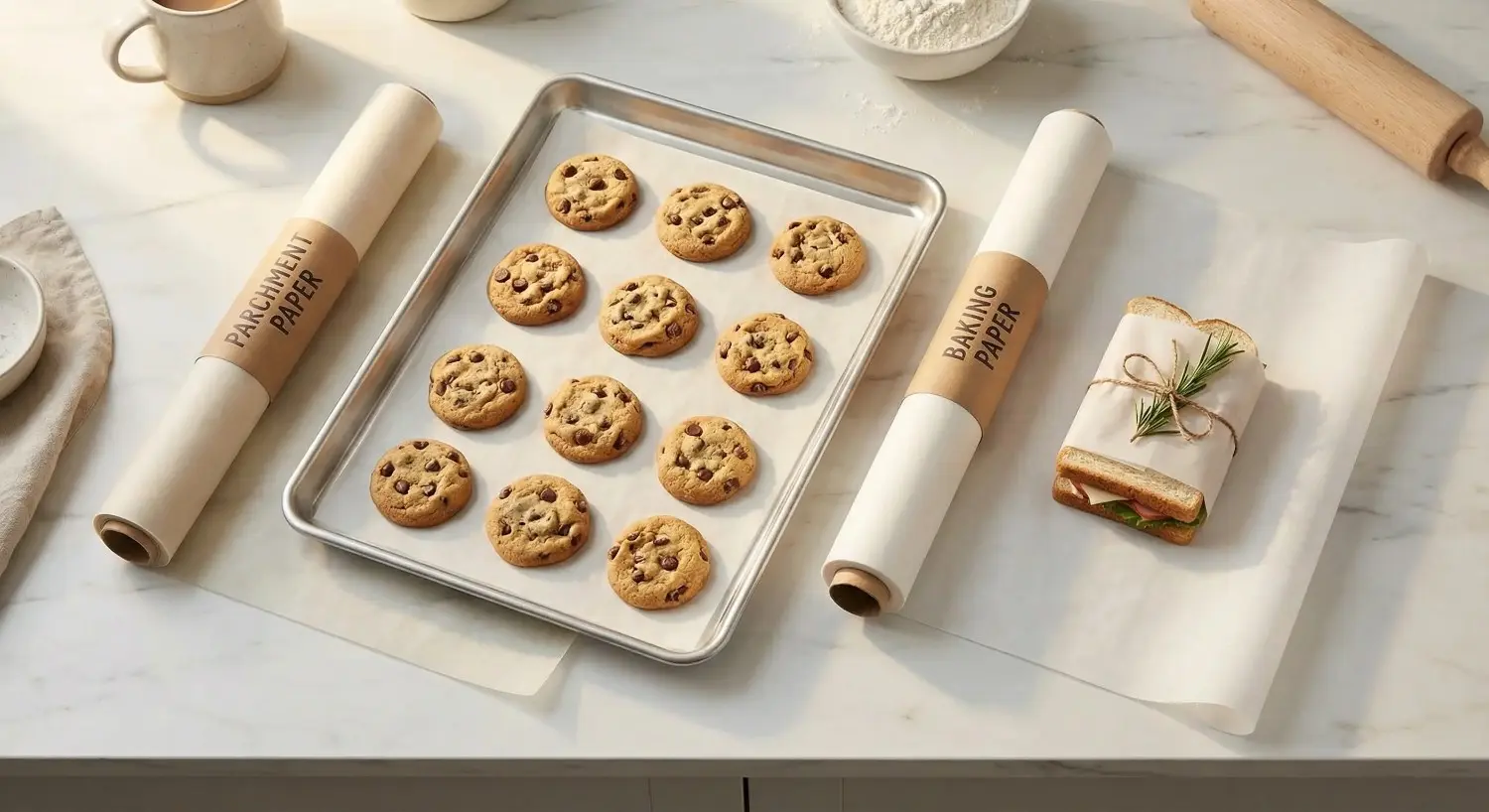

I’ve grabbed the wrong roll more times than I want to admit. You’re mid-recipe, oven already preheating, and you just assume the paper in your drawer is fine. Sometimes it is. Sometimes your cookies fuse to the tray like cement. The difference between baking paper vs parchment paper isn’t just a naming technicality — it actually changes how your food comes out. I’m going to break down exactly what each one is, where they overlap, and which one you should actually be buying.
Table of Contents
ToggleStop Mixing These Up — Here’s the Truth About Baking Paper vs Parchment Paper
Here’s the short answer most articles bury at the bottom: baking paper vs parchment paper are not always the same thing, but they’re often sold under each other’s name depending on where you live. In the US, “parchment paper” usually means a silicone-coated, non-stick, oven-safe sheet. In the UK and Australia, the same product is called baking paper. So if you’re asking “is baking paper the same as parchment paper” — usually yes, but not always.
The confusion gets worse because greaseproof paper gets thrown into the mix too. That one’s different. It resists grease but it doesn’t have a non-stick coating, and it’ll absolutely let your muffins stick if you try to bake on it bare.
So before anything else: check what you’re actually holding. The coating matters more than the name on the box.
What Is Baking Paper? (And How It’s Made)
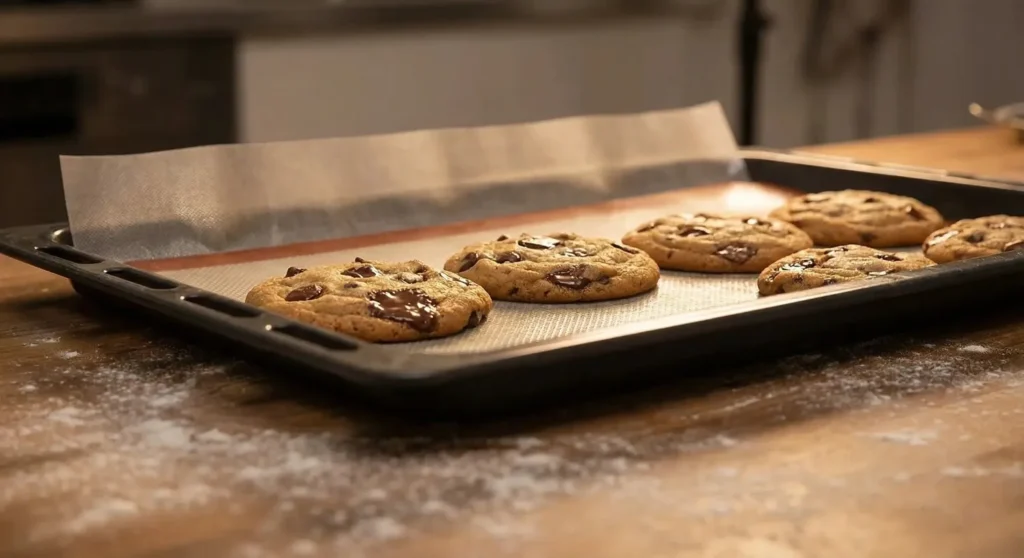
Baking paper is a cellulose-based sheet that’s been coated with silicone on one or both sides. That silicone coating is what makes it non-stick and heat-resistant. It’s the stuff you line a cake tin with, slide under your cookies, or lay across a roasting tray so nothing welds itself to the metal.
What is baking paper made of? At its core, it’s paper pulp that’s been treated or coated to handle high heat and grease. The silicone layer is thin — you can’t see it — but it’s doing all the work.
It comes in rolls, flat baking parchment paper sheets, or pre-cut sizes for specific cake tins. I personally prefer the pre-cut sheets for round tins. Using scissors at 6am is not something I enjoy.
Cooking baking paper works in conventional ovens, fan ovens, and most microwaves. It handles heat well — typically up to 220–230°C (about 428–446°F) before it starts to brown and get brittle.
What Is Parchment Paper? (And How Is It Different?)
What is parchment paper? Depends on who’s selling it and where. In the US, parchment paper for baking almost always means that same silicone-coated sheet. Same product, different label.
But there’s an older, stricter definition. Traditional parchment paper — what is parchment paper made from in the technical sense — is paper that’s been treated with sulfuric acid, which restructures the cellulose and makes it naturally grease-resistant without any coating. This type is sometimes called greaseproof paper or baking parchment, and it behaves differently from the silicone-coated version.
Is parchment paper non-stick? The silicone-coated kind, yes. The acid-treated greaseproof kind, not really. That’s the distinction that actually matters in the kitchen.
What does parchment paper look like? Usually slightly translucent, with a faint sheen if it’s silicone-coated. Greaseproof paper looks more matte and plain.
If you’re in the US buying from a standard grocery store, you’re almost certainly getting the non-stick, oven-safe version. Kirkland Signature non-stick parchment paper and Great Value non-stick parchment paper are both silicone-coated and work exactly the same as branded baking paper.
Baking Paper vs Parchment Paper: Side-by-Side Comparison
Heat Resistance
This is where the real difference between parchment paper and baking paper can show up — if you’re comparing silicone-coated baking paper against non-coated greaseproof parchment.
Silicone-coated baking paper handles up to around 220–230°C (430–446°F). Go above that and it starts to darken at the edges. It won’t burst into flames immediately, but you’ll notice it crisping up. I once set my oven to 250°C for a pizza base and came back to paper that looked like it had a bad sunburn. Not dangerous, but not ideal.
Non-coated greaseproof paper is less heat-tolerant. Keep it under 180°C if you’re using it in the oven at all — and honestly, that’s not really what it’s for.
For anything above 220°C, I’d skip paper entirely and use a silicone mat or a lightly oiled tray.
Non-Stick Performance
Silicone-coated baking paper wins this easily. Cookies slide off. Cakes lift cleanly. Even sticky caramel situations come away without too much drama.
Do you need to spray parchment paper when baking? No. That’s the whole point. If you’re greasing your parchment, something’s gone wrong — either you’ve got the wrong paper or it’s already been used too many times.
Do I have to grease parchment paper? Same answer. You don’t. The coating handles it.
Greaseproof paper has no non-stick properties. It will stick. Don’t try to bake on it the same way.
Moisture Retention
One underrated thing about baking paper: it actually helps trap a bit of steam during the first stage of baking, which can improve rise and keep the bottom crust from drying out too fast. I noticed this most when baking sourdough in a Dutch oven. The paper helps lift the dough in and creates a little steam pocket early on.
Greaseproof paper doesn’t do this particularly well. It’s denser and less breathable.
Reusability
A good quality baking paper sheet can usually go 2–4 times before it starts to degrade. Depends on temperature and what you’re baking. After roasting vegetables with olive oil at high heat, I wouldn’t reuse it. After baking plain shortbread at 170°C, it can often go another round.
Can you use baking paper more than once? Yes, but use your judgment. If it’s stained, greasy, or tearing, bin it.
Greaseproof paper gets soft and falls apart faster. I wouldn’t push it past one use.
Cost Comparison
Baking paper generally costs more than plain greaseproof paper — you’re paying for the silicone coating. But given that you can reuse it and it actually prevents food from sticking, it works out cheaper per bake. Cheap greaseproof paper that ruins a batch of brownies because they fuse to the sheet isn’t saving you anything.
When to Use Baking Paper (Best Use Cases)
Baking paper is my default for anything that goes in the oven. Cookies, brownies, tray bakes, roasted veg, fish in a parcel, bread rolls. It’s the reliable one.
Can I bake on parchment paper? Yes — if it’s the silicone-coated kind, absolutely. That’s exactly what it’s made for. Line your tin, lay it flat on a tray, fold it into a parcel. It handles all of it.
For cookies specifically, it’s hard to beat. Even brown-bottom cookies that overcook slightly still come away cleanly. I’ve started double-layering for thinner cookies at high heat, which sounds excessive but genuinely helps with even browning.
It also works in the microwave, which surprises people. Cover a bowl with it, line a microwave-safe dish. It handles the heat fine.
Can you use baking paper in a panini press? I’ve done it. Works well for anything sticky, and it makes cleanup so much faster. Just make sure it’s silicone-coated and you’re not cranking the heat to maximum.
Cooking paper vs baking paper — they’re the same thing in most contexts. Cooking paper, oven paper, bake sheets, food sheets. All pointing at the same product.
When to Use Parchment Paper (Best Use Cases)
If you’re talking about the traditional, non-coated greaseproof paper version: use it for wrapping food, not baking it.
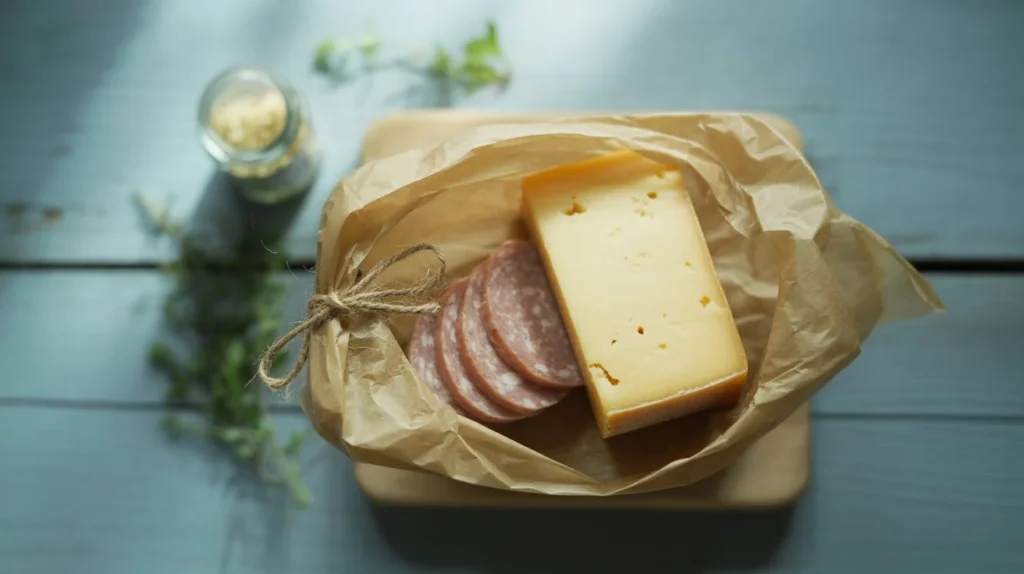
It’s excellent for wrapping sandwiches, deli items, cheese, and cooked meat. The reason delis use it is that it resists grease without adding any off-taste. Is delicatessen paper the same as parchment paper? In the non-coated sense, often yes.
What is parchment paper used for beyond food? It’s a decent tracing paper for crafts, drawing, and even basic packaging. Can you print on baking paper? Usually not — ink doesn’t adhere well to the silicone surface. But traditional parchment or greaseproof paper takes a print better.
What do you use parchment paper for when it’s the silicone kind? Everything in the oven. Pastry baking sheets, cake mold paper, liners for loaf tins, roasting trays, en papillote cooking.
Can You Substitute One for the Other? (And What Else Can You Use?)
What if you don’t have parchment paper? You’ve got options. Aluminum foil, lightly greased, works for most things. A well-oiled tray does fine for roasting. A silicone baking mat is actually my preferred alternative long-term — reusable, non-stick, easy to clean.
Can you use tracing paper as baking paper? Hard no. Tracing paper isn’t food-safe and it’s not heat-treated. Don’t put it anywhere near food.
Alternative to parchment paper for baking: Silicone mat is the best swap. Greased foil works in a pinch. A bare greased tin for cakes. What you can’t really replicate is the lift and slide that a proper coated sheet gives you.
Is parchment paper and butter paper the same? Not quite. Butter paper (also called wax paper in some regions) has a wax coating, not silicone, and it’s not oven-safe. It’ll melt. Don’t bake with it.
Are Baking Paper and Parchment Paper Eco-Friendly?
Somewhat. Better than plastic wrap, certainly. Most baking paper is compostable in industrial composting facilities — but not necessarily in your home compost bin, because the silicone coating can interfere with the process.
Does parchment paper contain PFAS? Some older or cheaper versions might. PFAS (per- and polyfluoroalkyl substances) were used as coatings in some food papers. Reputable brands now explicitly label their products as PFAS-free, and if that matters to you — it should — look for it on the box.
Bleached vs unbleached baking paper: unbleached is the browner, slightly rougher version. It hasn’t been treated with chlorine to whiten it. Neither performs dramatically differently in the oven, but if you’re trying to reduce chemical exposure, unbleached is the cleaner choice.
Reusing your sheets helps too. Every extra use is one less sheet in the bin.
Which Should You Buy? Our Final Verdict
For 95% of home baking, buy silicone-coated baking paper — whether the box says “baking paper,” “parchment paper,” or “non-stick parchment paper.” They’re the same. Get a roll or a bulk pack of sheets, look for PFAS-free on the label, and you’re set.
If you do a lot of food wrapping, deli prep, or crafts, keep a roll of greaseproof paper separately. It’s cheaper and better suited for cold-use applications.
Don’t overthink it. Parchment paper vs baking sheet: parchment goes on top of the baking sheet. They’re not competitors — one is the liner, one is the pan.
Task | Use This |
Baking cookies | Silicone-coated baking paper |
Baking cakes | Silicone-coated baking paper |
Roasting vegetables | Silicone-coated baking paper |
Food wrapping / deli | Greaseproof / parchment |
Microwave use | Silicone-coated baking paper |
Crafts / tracing | Greaseproof / parchment |
Air fryer | Silicone-coated (check size) |
Buying tips: Look for “PFAS-free,” “silicone-coated,” and a stated temperature rating on the box. If it doesn’t list a max temperature, that’s a red flag.
Frequently Asked Questions
Is baking paper the same as parchment paper?
Usually yes, especially in the US and UK for store-bought products. The silicone-coated version is sold under both names. The only time they differ is when “parchment” refers to the older acid-treated greaseproof variety, which doesn’t have a non-stick coating.
Why did people stop using parchment?
Traditional parchment — made from animal skin — got replaced by cheaper paper alternatives in the 20th century. The word stuck around, but the product changed completely. Nobody’s scraping sheepskin for their baking tray anymore.
When should you not use parchment paper for baking?
Above 230°C (446°F), it starts to degrade and can scorch at the edges. Also skip it if you want a very crispy bottom on something like a pizza — direct contact with a hot stone or steel gives you a better result than paper between the dough and the heat.
Can I substitute for parchment paper?
Yes. Greased aluminum foil, a silicone mat, or a well-oiled tin all work. Wax paper does not — it’s not oven-safe.
Which paper is more heat resistant?
Silicone-coated baking paper handles higher temperatures than plain greaseproof paper. Between branded versions of the same silicone-coated product, there’s not much difference. Check the temperature rating on the box and don’t push past it.