

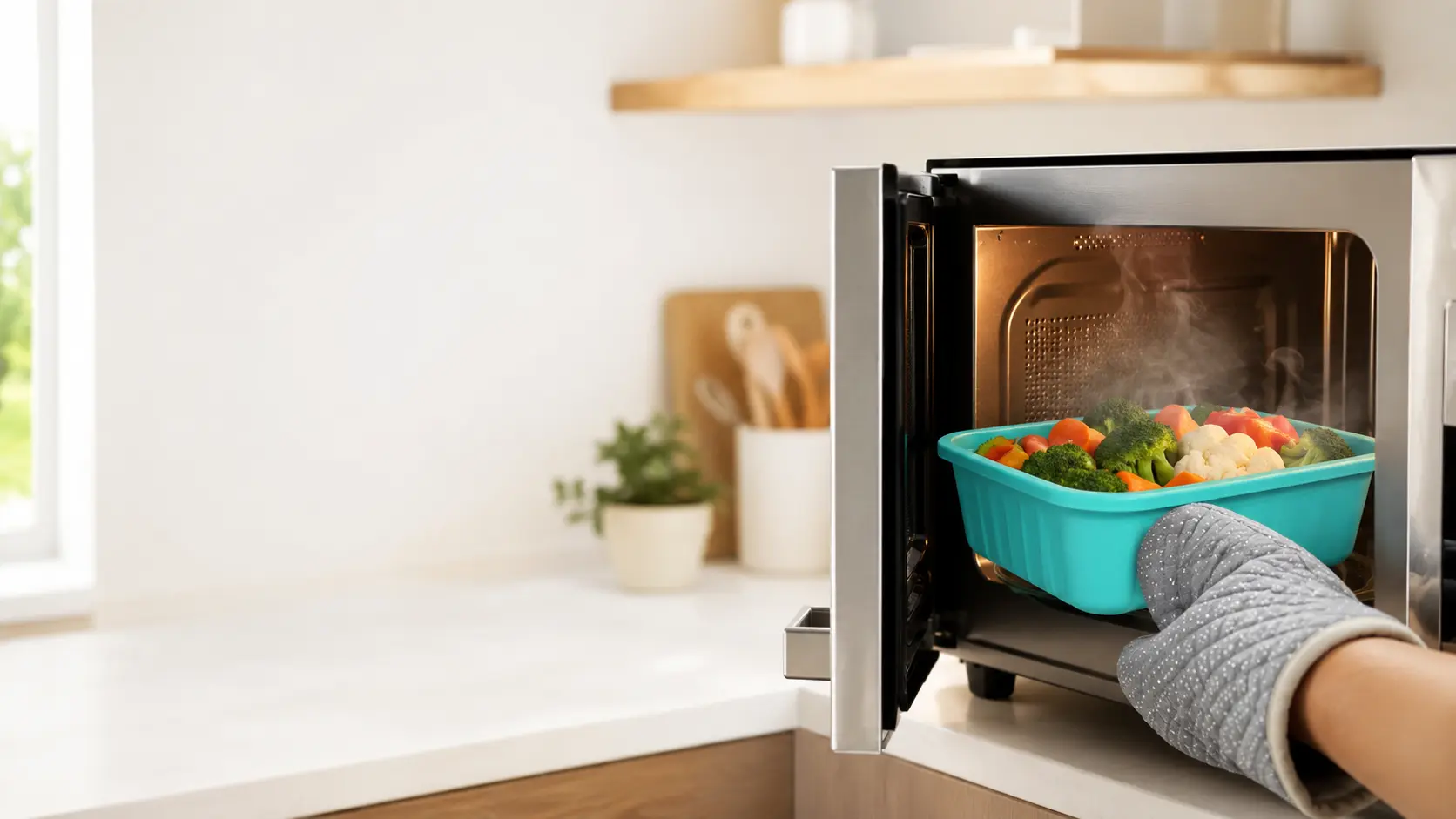

Yes, food-grade silicone can generally go in the microwave and is considered safe for reheating and cooking food. Unlike metal, silicone doesn’t spark or block microwave energy. Instead, microwaves heat the food first, and the heat is then transferred to the silicone container or mold. That’s why silicone may feel hot when you remove it, even though it isn’t what the microwave directly heats.
That said, not all silicone products are made for microwave use. Always check that the item is labeled microwave-safe or food-grade, and follow the manufacturer’s temperature guidelines. Avoid using damaged silicone, products with metal parts, or items that aren’t designed for food contact.
When used correctly, silicone bakeware, storage containers, baby food trays, and microwave-safe lids are all practical choices for everyday cooking and reheating.
Is Silicone Microwave Safe? Here’s What You Need to Know
The short answer is yes—most food-grade silicone products are microwave safe. Silicone has become one of the most popular materials for kitchen tools because it’s flexible, durable, and able to handle both high and low temperatures. You’ll find it in baking molds, reusable food storage containers, steamer baskets, spatulas, and baby feeding products.
One of the biggest misconceptions is that silicone gets “microwaved.” In reality, it doesn’t.
Microwaves work by exciting water molecules inside food. As those molecules move, they create heat that cooks or reheats the food. Silicone doesn’t absorb microwave energy the same way food does, so it isn’t heated directly. Instead, the hot food transfers heat to the silicone container, which is why it can become warm or even hot to the touch.
This is also why many people notice that an empty silicone container stays relatively cool in the microwave, while the same container holding soup or leftovers becomes much hotter. The food—not the silicone—is doing most of the heating.
Another reason silicone is trusted in kitchens is its impressive temperature resistance. Most quality food-grade silicone products are designed to withstand temperatures from around -40°F to 450°F (-40°C to 230°C). This allows many silicone items to move from the freezer to the microwave or even the oven without being damaged. However, temperature limits vary by manufacturer, so it’s always best to follow the instructions that come with your product.
Not every silicone product is created equally, though. High-quality, food-grade silicone is manufactured specifically for cooking and food storage, while some inexpensive or unknown products may not meet the same safety standards. If you’re buying new silicone kitchenware, look for products that clearly state they are food-grade, microwave-safe, or comply with recognized food safety standards. Choosing reputable brands also reduces the risk of poor-quality materials.
If you’ve ever noticed a strong chemical smell when heating silicone, that’s often a sign of a lower-quality product. Good-quality silicone should remain stable during normal microwave use and shouldn’t produce unusual odors or leave any taste in your food.
Silicone also offers several practical advantages over many plastic containers. It doesn’t become brittle over time, it’s less likely to warp under normal microwave temperatures, and it’s flexible enough to make removing baked goods or frozen foods much easier. For many households, it’s a convenient alternative for everyday reheating.
Even though silicone is microwave safe, it’s still important to handle it carefully. A silicone bowl filled with hot soup can become just as hot as a ceramic bowl because the heat from the food transfers to the container. Always use oven mitts or allow hot containers to cool for a minute before handling them.
Used properly, food-grade silicone is a reliable, reusable, and microwave-friendly material that makes everyday cooking simpler and safer.
When You Shouldn’t Put Silicone in the Microwave
Although silicone is generally safe for microwave use, there are a few situations where you should avoid putting it in the microwave.
First, don’t assume every silicone product is microwave-safe. Decorative silicone items, craft molds, or products not intended for food use should never be used to heat meals. If the packaging doesn’t mention microwave safety or food-grade silicone, it’s better to choose another container.
You should also avoid using silicone that’s damaged. Deep cuts, tears, cracks, or signs of wear can reduce the product’s performance over time. While minor discoloration from regular use isn’t usually a problem, heavily damaged silicone should be replaced.
If your silicone cookware contains metal components, such as reinforced handles or decorative metal trim, it should never go in the microwave. Metal can cause sparks and may damage both the cookware and your microwave.
Another mistake is overheating an empty silicone container. Since microwaves are designed to heat food, running an empty silicone item for extended periods serves no purpose and may shorten its lifespan.
Finally, always follow the manufacturer’s care instructions. Different products are designed for different temperature ranges, and exceeding those limits can reduce their durability.
When in doubt, remember this simple rule: if it’s labeled food-grade and microwave-safe, is in good condition, and doesn’t contain metal, you can confidently use it in the microwave.
Frequently Asked Questions
Can silicone melt in the microwave?
No, quality food-grade silicone doesn’t normally melt in a microwave. It is designed to withstand temperatures much higher than those reached during typical microwave cooking.
Can silicone lids go in the microwave?
Yes, most microwave-safe silicone lids can be used to cover food while reheating. Leave a small vent if recommended by the manufacturer to allow steam to escape.
Can silicone go from the freezer to the microwave?
Yes, many food-grade silicone products are designed to handle both freezing and microwave heating. Always check the manufacturer’s instructions to confirm your specific product supports this temperature transition.