

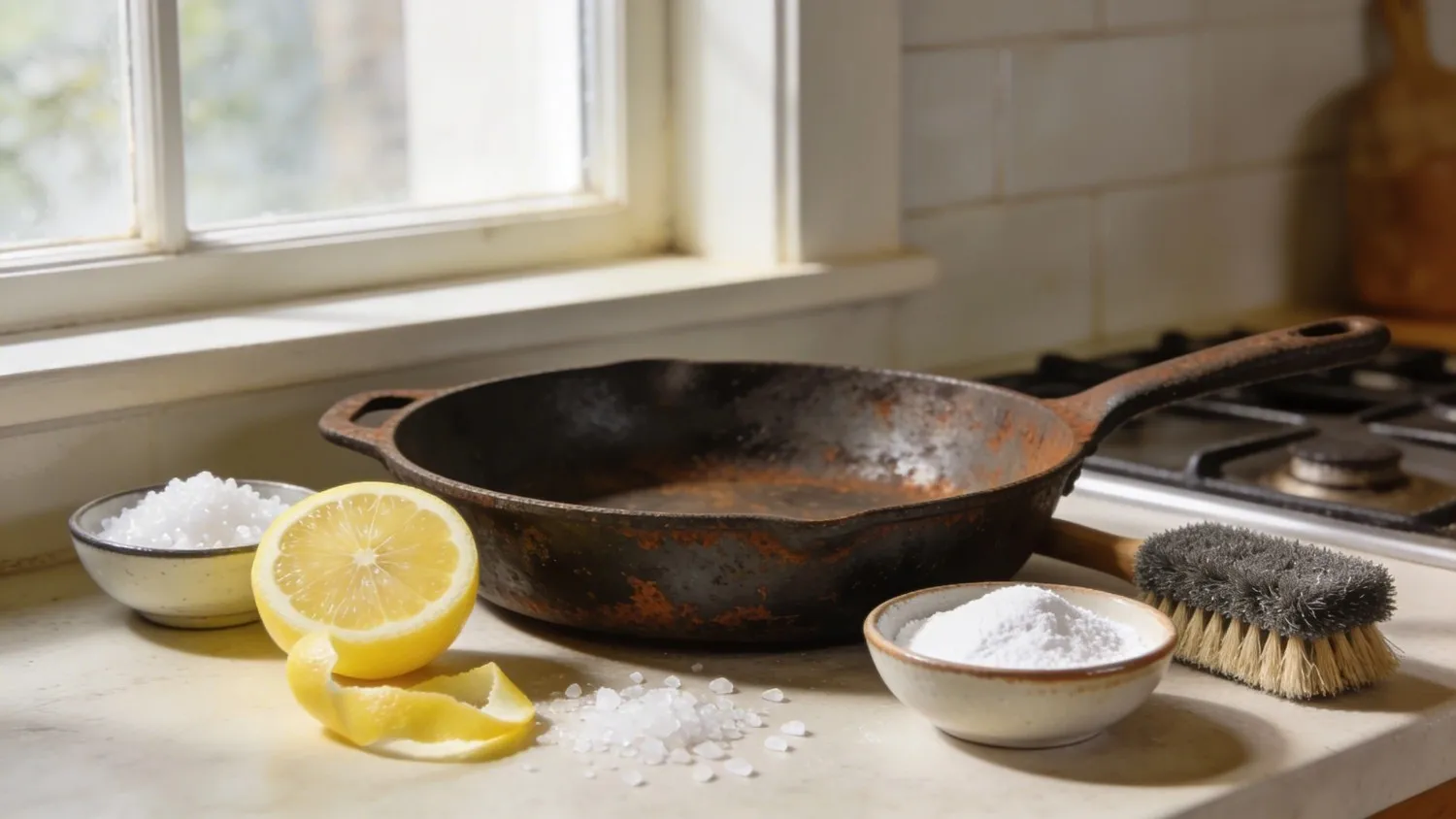

You pull out a favorite wrench, cast iron pan, or garden tool and notice it — that familiar reddish-brown coating spreading across the surface. Before you toss it in the trash, stop. Rust doesn’t mean it’s ruined. Whether you’re dealing with rusted metal, a rusty metal surface, rust stains, or fully corroded hardware, the right method will bring almost any metal item back to life.
Rust — technically iron oxide — forms when iron or steel reacts with oxygen and moisture. Left untreated, rust on metal spreads deeper, weakens the structure, and makes tools harder or impossible to use. If you’ve ever wondered how to get rid of rust, what removes rust, or what takes rust off metal, you’re in the right place.
In this guide, you will find 7 tested and ranked methods to remove rust from metal, a clear severity guide so you choose the right fix the first time, surface-specific solutions for tools, cast iron, stainless steel, bikes, and more, and practical tips to stop rust from ever coming back.
Table of Contents
ToggleHow to Know How Bad Your Rust Is (Rust Severity Guide)
Before you pick a method, assess your rust. Not all surface rust is the same — treating deep structural pitting with lemon juice is like using a Band-Aid on a broken bone. Understanding rust severity is the fastest way to figure out what can remove rust from your specific situation, and how much effort you’ll need to put in.
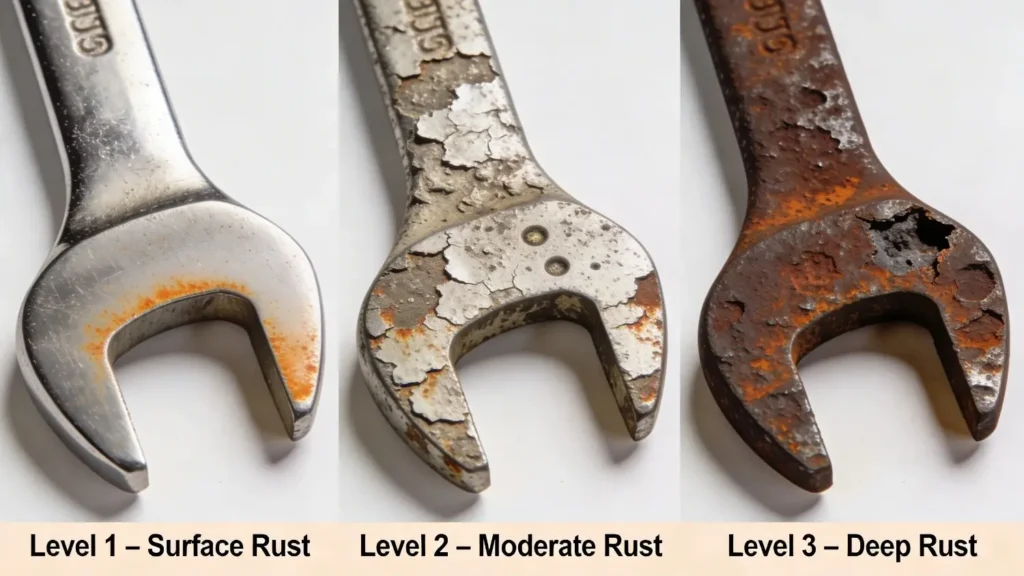
Level 1 — Surface Rust
A light orange tint or discoloration on the metal surface. No flaking, no rough texture — just a thin oxide layer sitting on top. This is the easiest stage to treat. Most home remedies to remove rust handle Level 1 with ease, and you can usually clean rust off metal in under 15 minutes.
Level 2 — Moderate Rust
The metal surface is flaking, and you can see early pitting beginning to form. The rust has moved beyond the surface and is starting to eat into the metal. You need stronger methods here — an acid soak or vigorous scrubbing. This is where removing rust from metal requires a little more patience.
Level 3 — Deep Rust
Significant scaling, deep pitting, and possibly structural damage. Corroded metal at this level may crumble or flake off in chunks. A commercial rust remover for metal or professional intervention is often needed. In some cases, replacement is safer than repair — more on that in “When to Replace instead of repair” Part.
Rust Level | What It Looks Like | Recommended Method | Time Needed |
Level 1 — Surface Rust | Light orange tint, no pitting | Lemon + salt / Baking soda | 5–15 mins |
Level 2 — Moderate Rust | Flaking, early pitting | Vinegar soak / Citric acid | Overnight |
Level 3 — Deep Rust | Scaling, structural pitting | Naval jelly / Professional | 30–60 mins+ |
Tools and Supplies You Will Need
Before you start, gather your materials. Having everything ready saves time and gives you better results when cleaning rusty metal of any kind.
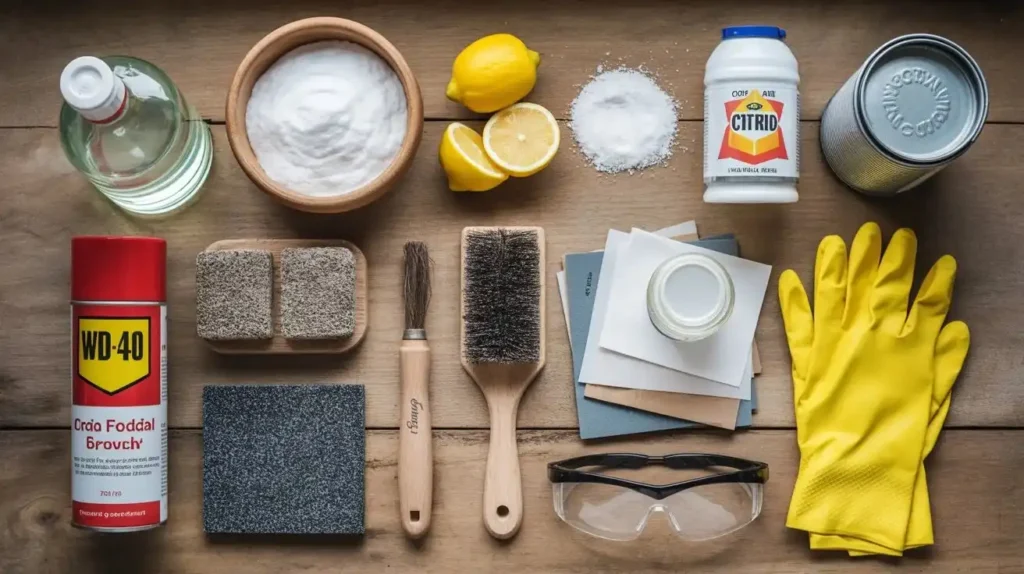
Before you start, gather your materials. Having everything ready saves time and gives you better results when cleaning rusty metal of any kind.
Abrasive Tools:
- Steel wool (fine #0000 for delicate surfaces, coarse for heavy rust)
- Wire brush or wire scratch brush
- Sandpaper (80 to 400 grit — start coarse, finish fine)
- Scouring pad (for flat surfaces like baking pans)
DIY Household Ingredients:
- White vinegar (the most versatile rust remover you already own)
- Baking soda (for scrubbing paste — great for baking soda clean rust applications)
- Lemon juice and salt for rust stains (coarse salt gives better results)
- Citric acid powder
- Dish soap and potato (budget hack method)
Commercial Options:
- WD-40 Multi-Use Product (spot treatment and protection)
- Naval jelly (gel-based acid — strong and effective for deep rust)
- Rust stabilizer or rust converter spray (for large or outdoor metal surfaces)
- Corrosion remover or auto rust neutralizer (for vehicle applications)
Safety Equipment:
- Rubber or nitrile gloves
- Safety glasses or eye protection
- Proper ventilation when using acidic commercial products
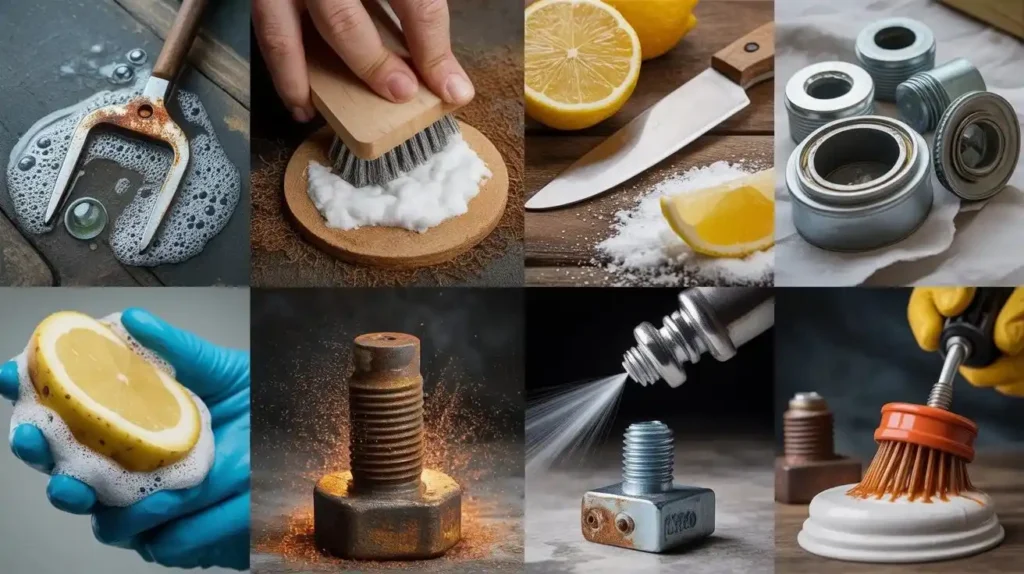
7 Methods to Remove Rust (Ranked by Effort and Effectiveness)
Each method below has been evaluated for effectiveness, time, and effort. Use the severity guide above to match your rust level to the right approach. If you’ve been asking yourself what gets rust off metal or what will remove rust from a specific item, one of these seven methods is your answer.
Method 1: White Vinegar Soak — The Best All-Rounder
Best for: Tools, small hardware, nails, and screws with moderate to heavy rust
Time: Overnight (8–12 hours)
Effort: Low — mostly hands-off
Warning: Do not use on painted surfaces or items with rubber components — vinegar will damage them.
White vinegar for rust stains works because the acetic acid it contains dissolves iron oxide without requiring much scrubbing. This is the best way to remove rust from metal when you want a hands-off, low-effort approach. People searching for white vinegar rust removal consistently find this method delivers reliable results — and it does.
Can vinegar dissolve rust? Yes — completely. Given enough time, the acetic acid in white vinegar breaks the iron oxide bond and lifts rust away from the metal surface below.
How to do it:
- Submerge the rusty item fully in undiluted white vinegar in a container.
- Leave it to soak overnight — at least 8 hours for heavy rust.
- Remove the item and scrub off loosened rust with a wire brush or steel wool.
- Rinse thoroughly with water and dry immediately.
- Apply a thin coat of oil or WD-40 to protect the surface.
Pro tip: If the item is too large to submerge, wrap it in rags soaked in cleaning rust vinegar and leave overnight. This method of removing rust with vinegar is trusted for a reason — it genuinely works on everything from old keys to garden tools. Rust remove vinegar style is also completely chemical-free, making it one of the safest options available.
Method 2: Baking Soda and Steel Wool — Best for Precision Scrubbing
Best for: Controlled rust removal on specific areas — baking pans, light to moderate rust on tools
Time: 1 hour (including soak time)
Effort: Medium — requires active scrubbing
Warning: Have plenty of elbow grease ready. This method rewards effort.
Removing rust baking soda style means making a thick paste that clings to rust and lets you scrub precisely where you want. It is ideal for flat surfaces like baking pans and for items you cannot submerge. When people ask what cleans rusty metal without chemicals, baking soda is always the first answer.
How to do it:
- Dampen the metal surface lightly with water.
- Coat the rusted area generously with baking soda — it will stick to the damp surface.
- Leave it to sit for 1 hour.
- Scrub vigorously with steel wool or a scouring pad, working in circular motions.
- Rinse clean and dry immediately.
Does baking soda remove rust? Yes — especially when paired with steel wool. For extra power on stubborn spots, try baking soda and vinegar for rust stains: apply the baking soda paste first, then splash white vinegar on top and let the fizzing reaction help lift the rust before you scrub. This rust removal baking soda vinegar combination is one of the most effective DIY rust remover approaches for moderate rust. Remove rust with vinegar and baking soda together and you have a two-stage attack that handles most Level 1 and Level 2 situations.
Method 3: Lemon Juice and Salt — Fastest DIY Fix
Best for: Knives, cutlery, small rust spots — anything you cannot submerge
Time: 30 minutes to 2 hours
Effort: Low to medium
Warning: Not effective on Level 2 or 3 rust. Use only for mild surface rust.
Lemon juice and salt for rust stains is one of the most satisfying pantry fixes — fast, food-safe, and effective on mild rust. The citric acid in lemon juice for rust stains dissolves iron oxide while the salt acts as a natural abrasive that physically scrubs rust spots away as you work. This is the go-to home remedy to remove rust when you need results fast and want to avoid any harsh chemicals.
How to do it:
- Coat the rusted area heavily with salt (coarse sea salt gives better results than table salt).
- Squeeze fresh lemon juice over the salt — or use bottled lemon juice directly on the rust stain.
- Let the mixture sit for 30 minutes (up to 2 hours for more stubborn rust).
- Scrub with the lemon rind itself, the rough side of a sponge, or steel wool.
- Rinse and dry thoroughly.
This is the go-to method for how to get rust off of metal when you need a quick fix with no special supplies. It also works brilliantly for how to get rust off an old key — just coat the key, leave for an hour, and scrub clean.
Method 4: Citric Acid Bath — Strongest DIY Acid Soak
Best for: Heavily rusted tools and hardware — rust removal from metal at Level 2
Time: 30 minutes to 1 hour (up to overnight for severe rust)
Effort: Medium — mainly wait time, light scrubbing after
Warning: Citric acid will strip paint. Do not use on items with painted surfaces or rubber seals.
Citric acid is one of the most powerful rust removal solutions available in powder form from any grocery or health store. It is stronger than vinegar and often faster, dissolving rust from metal without aggressive scrubbing. If you’ve tried vinegar and still have rust remaining, citric acid is your next step before reaching for commercial products.
How to do it:
- Add 2 to 3 tablespoons of citric acid powder to a bowl of hot water.
- Submerge the rusty item completely.
- Let it soak for 30 minutes to 1 hour.
- Remove, scrub off any remaining rust with a brush.
- Rinse thoroughly and dry immediately — then oil to protect.
Method 5: Potato and Dish Soap — The Budget Pantry Hack
Best for: Light rust spots on tools, handles, and small items
Time: 10–15 minutes
Effort: Low to medium
Warning: Only effective on Level 1 surface rust. Messy — work over a sink.
Potatoes contain oxalic acid, which reacts with rust when combined with dish soap’s surfactants to help clean rust off metal surfaces. It is not the most powerful DIY rust remover, but it uses supplies everyone already has and works well when you just need to get rid of rust on a small spot quickly.
How to do it:
- Cut a potato in half.
- Apply a generous layer of dish soap to the cut surface.
- Rub the potato firmly over the rusted area in circular motions.
- Rinse and dry the metal item thoroughly.
Method 6: WD-40 — Best for Spot Treatment and Protection
Best for: Spot rust, lubrication after removal, protecting metal from future rust
Time: 5–10 minutes
Effort: Low
Warning: WD-40 is best used as a finisher and protector, not a primary rust remover for heavy rust.
Does WD-40 remove rust? Yes — for light surface rust. WD-40 penetrates and loosens the bond between rust and metal, making it easier to clean rust off metal with a wire brush. It is most powerful as a final step after other methods: spray it on cleaned metal and wipe away residue to leave a protective barrier that prevents rust from returning.
How to do it:
- Spray WD-40 directly onto the rusted area.
- Let it settle for 5 to 10 minutes.
- Scrub with a wire brush, moving from the heaviest rust to lighter areas.
- Wipe away excess product and loosened rust with a cloth.
- Reapply a light coat to protect the clean metal surface.
Method 7: Commercial Rust Remover / Naval Jelly — For Deep Rust
Best for: Level 3 deep rust, structural pitting, large metal surfaces
Time: 30 minutes to 1 hour
Effort: High — follow product instructions carefully
Warning: Strong acids — wear gloves and eye protection. May damage certain finishes and coatings.
When DIY methods are not enough, the best rust remover for metal or naval jelly is the answer. These phosphoric-acid-based gels convert rust into a stable compound or dissolve it entirely — making them the most powerful option for how to dissolve rust and how to strip rust at the structural level. A quality corrosion remover or auto rust neutralizer falls into this category as well, especially for vehicle applications.
How to do it:
- Apply the commercial rust remover or naval jelly generously to the rusted area with a brush.
- Leave it to work for the time specified on the product label (typically 30 minutes).
- Scrub off the treated rust with a wire brush.
- Rinse the metal thoroughly and dry completely.
- Apply a rust-resistant primer or protective coating immediately.
Laser rust removal is another professional-level option worth mentioning — it uses focused light to vaporize rust without touching the metal beneath. It is expensive and not a DIY option, but worth knowing about for antiques, precision tools, or large industrial surfaces where scratching must be avoided entirely.
Full Methods Comparison Table
Method | Best For | Time | Effort | Warning |
White Vinegar Soak | Tools, small hardware | Overnight | Low | Don’t use on painted surfaces |
Baking Soda + Steel Wool | Precision scrubbing | 10–15 mins | Medium | Requires elbow grease |
Lemon + Salt | Knives, cutlery, mild rust | 30 mins–2 hrs | Low | Not for deep rust |
Citric Acid Bath | Heavily rusted tools | 30–60 mins | Medium | Removes paint — use caution |
Potato + Dish Soap | Very light surface spots | 10–15 mins | Low | Only for light rust |
WD-40 | Spot treatment, lubrication | 5–10 mins | Low | Not a soaker — a finisher |
Naval Jelly / Commercial | Deep, structural rust | 30–60 mins | High | May damage certain finishes |
How to Remove Rust by Surface Type
Different metal surfaces need different approaches. Below are targeted solutions for the most common surface types — because how to clean rust off metal on a cast iron pan is very different from how to clean rust off stainless steel or how you’d treat rust on a bike chain.
Rust on Tools (Wrenches, Hammers, Screwdrivers)
Tools are the most common victim of rust on metal. For hand tools with moderate to heavy rust, the vinegar soak overnight is the most effective and lowest-effort approach. For spot rust on individual areas, use baking soda and steel wool for precision. Knowing how to remove rust from tools properly extends their life by years.
- Soak overnight in white vinegar
- Scrub with a wire brush and rinse
- Dry completely and oil with WD-40 before storing
This is also the best answer to how to clean rusted metal in a workshop or garage setting — simple, cheap, and repeatable.
Rust on Cast Iron Pans
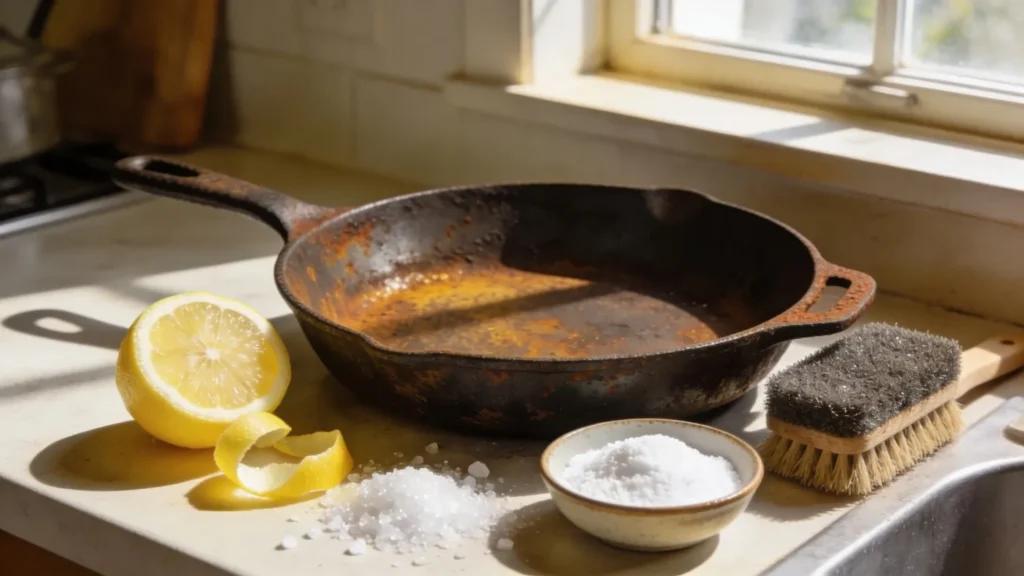
Cast iron requires a food-safe approach and always needs re-seasoning after rust removal. Never use vinegar on cast iron for more than 30 minutes — extended soaking will damage the metal.
- Scrub the pan under warm water with a stiff brush to remove loose rust.
- Make a thick baking soda paste and apply it to all rusted areas.
- Scrub with steel wool until the rust is gone.
- Rinse and dry the pan on the stovetop over low heat.
- Re-season: coat lightly with flaxseed or vegetable oil and bake at 450°F (230°C) for 1 hour.
Is it safe to use rusty cast iron? No — not before treating it. Once you have removed all rust and re-seasoned properly, your cast iron is completely safe to cook with. Clean rust from iron the right way and it will last another generation.
Rust on a Car
Car rust falls into two categories: surface rust (paint-level) and body rust (metal penetration). Surface rust is a DIY fix. Body rust — where metal is bubbling, flaking, or has holes — needs a professional. An auto rust neutralizer is useful here before priming and painting.
For surface rust removal:
- Sand the rusted area with 80-grit sandpaper until bare metal shows
- Apply an auto rust neutralizer or rust converter
- Apply primer, then touch-up paint matched to your car’s color
If you can push a screwdriver through the rusted metal, the rust has gone too deep for a DIY fix — take it to an auto body shop.
Rust on Knives and Kitchen Cutlery
Always use food-safe methods on knives. The lemon juice and salt method is the safest and most effective option for removing rust from stainless steel kitchen knives and for anyone wondering how to remove rust from metal without scratching a blade’s finish.
- Apply lemon juice and salt to the rusted blade
- Let sit for 10 minutes, then scrub gently with the lemon rind or a soft cloth
- Rinse and dry completely
- For persistent rust, use a baking soda paste and a soft cloth rather than steel wool
How to remove rust spots from stainless steel cutlery specifically: a paste of baking soda and a few drops of dish soap, left for 20 minutes and scrubbed gently, removes most rust spots on stainless steel without leaving scratches.
Rust Stains on Clothes and Fabric
To remove rust stains from fabric, avoid the dryer until the stain is fully gone — heat sets rust stains permanently, making them nearly impossible to clean rust stains out afterward.
- Apply lemon juice directly to the rust stain and cover with salt.
- Leave in sunlight for 1 to 2 hours — UV and heat amplify the reaction.
- Rinse with cold water.
- If the stain remains, apply a commercial rust stain remover and follow the label instructions.
- Wash as normal — air dry, then inspect before putting in the dryer.
Vinegar on rust stains on fabric also works: soak the stained area in white vinegar for 30 minutes before washing. This is one of the most effective home remedies to remove rust from clothing.
Rust on Bike Chains
A rusty metal bike chain reduces performance and can break under load. Clean rust off the chain before it becomes a safety issue.
- Remove the chain from the bike if possible.
- Soak in white vinegar for 30 minutes.
- Scrub with a wire brush and rinse thoroughly.
- Dry completely — shake out water from every link.
- Apply a dedicated bicycle chain lubricant — never use WD-40 as a long-term lubricant on chains, as it attracts dirt.
Rust on Stainless Steel
Stainless steel is rust-resistant, not rust-proof. Rust from stainless steel typically appears as small rust spots or streaks caused by cross-contamination from other metals or prolonged moisture exposure.
To remove rust from stainless steel and clean rust off stainless steel surfaces:
- Apply a baking soda paste and scrub in the direction of the grain — never against it
- For stubborn spots, use white vinegar: apply, leave for 10 minutes, scrub and rinse
- For how to clean rust spots on stainless steel appliances, a commercial stainless steel cleaner followed by a dry polish works best
- Always dry stainless steel immediately after cleaning to prevent rust spots from returning
Getting rust off stainless steel without scratching requires patience and a soft cloth — avoid steel wool on stainless surfaces.
Rust on Garden Furniture and Metal Rails
Outdoor metal faces constant moisture exposure, making it one of the hardest surfaces to keep rust off metal long term. Cleaning rusty steel furniture requires a more layered approach than indoor metal.
- Use a wire brush to scrub off loose and flaking rust
- Apply a rust stabilizer or rust converter product to any deep rust spots — it chemically neutralizes the rust and prepares the surface for painting
- Sand smooth, then apply a rustproof primer
- Finish with outdoor rustproof paint rated for metal surfaces
- Inspect every season and touch up before rust has a chance to spread
Rust on Aluminum
Remove rust from aluminum — actually, aluminum doesn’t rust in the traditional sense, but it does oxidize and can develop white, chalky corrosion. To clean off corrosion on aluminum:
- Mix cream of tartar with water to make a paste
- Apply to the affected area and scrub with a soft cloth
- Rinse and dry thoroughly
- Apply a protective wax or sealant to prevent future oxidation
How to Prevent Rust From Coming Back
Knowing how to remove rust is only half the battle. Prevention stops you from repeating this process next year. Here is how to treat rust before it starts — or how to stop it from returning after you have already dealt with it.
1. Dry Metal Thoroughly After Every Use
Moisture is the number one trigger for rust. After washing tools, pans, or any metal item, dry them completely before storing. A quick wipe with a dry cloth takes seconds and adds years to the life of your metal. This single habit eliminates most rust on metal before it ever starts.
2. Store Tools in Dry Conditions
Humidity in garages and sheds accelerates rust on metal dramatically. Store metal tools in a dry cabinet, sealed toolbox, or hanging rack. Toss a few silica gel packets into your toolbox to absorb residual moisture — this is especially important if you live in a humid climate.
3. Apply a Protective Coating
After cleaning and drying any metal item, apply a thin protective layer. A light coat of machine oil, paste wax, or WD-40 creates a barrier between iron and oxygen. For cast iron, re-seasoning with oil after every use provides ongoing protection. Think of it as a rust stabilizer you apply yourself.
4. Use Rustproof Paint on Outdoor Metal
Garden furniture, metal fences, railings, and outdoor structures need a rustproof primer and topcoat. Reapply every 2 to 3 years, or at the first sign of chipping, to keep surface rust from getting a foothold. Using baking soda for battery corrosion on car battery terminals — applying a paste and rinsing — also neutralizes acid buildup before it causes terminal corrosion.
5. Inspect Regularly
Catch surface rust early and you deal with a 10-minute job. Ignore it and you face a weekend project. Build a quick seasonal check into your routine — especially for outdoor metal, tools stored in humid areas, and vehicle bodywork. Getting rid of rust marks and rust spots early keeps small problems from becoming expensive ones.
When to Replace Instead of Repair
Not every piece of rusted metal is worth saving. Here is how to tell when rust on metal has gone too far to make repair practical or safe.
Signs the Metal Is Structurally Compromised
- The metal crumbles or flakes when you apply light pressure
- You can see holes or deep pitting through the full thickness of the metal
- Tools have lost significant mass to rust and no longer hold their original shape
- The item can no longer hold load, thread, or perform its intended function
- Rusted iron components show cracks or breaks along the rust line
Cosmetic Rust vs. Structural Rust
Cosmetic rust sits on the surface — it looks bad but the metal underneath is solid. Structural rust has eaten into the metal itself, reducing its strength and load-bearing capacity. A rusty decorative bracket is cosmetic. A rusted load-bearing beam or vehicle chassis rail is structural — and dangerous. Knowing the difference is the most important judgment call you will make when dealing with rust on metal.
Safety-Critical Items — Replace, Don’t Repair
- Rusted brake components on a vehicle — replace immediately, do not attempt rust removal
- Rusted structural bolts or load-bearing fasteners
- Rusted gas line fittings or water pipes
- Rusted knife blades that have lost structural integrity
- Any corroded electrical connection carrying significant current
If safety is in question, the cost of replacement is always lower than the cost of failure.
Conclusion
Rust is frustrating, but it is rarely the end of the road for a metal item. With the right method matched to your rust level and surface type, you can get rust off metal, eliminate rust completely, and restore full function to tools, cookware, bikes, and more.
For the best all-round approach: use a white vinegar soak overnight for hands-off, low-effort rust removal on most tools and hardware. For precision and control, baking soda and steel wool deliver excellent results with a little more effort. For the fastest fix on mild rust, lemon juice and salt gets the job done in under an hour.
Whatever method you choose, always finish by drying the metal completely and applying a protective coating. How to get rust out of your life for good comes down to two things: removing it properly and preventing it from coming back. Prevention is always faster than rust removal.
Found this guide useful? Share it with someone dealing with rusty metal or corroded tools, and explore our related guides on home improvement, cleaning, and metal maintenance.
Check Related Posts: Top-Rated GIR Silicone Utensils | Top 8 Best Glass Food Storage Containers | Top 5 Best Wooden Spoons | JoyJolt Glass Containers | Best Kitchen Utensils sets
Frequently Asked Questions
Does WD-40 remove rust?
Yes — WD-40 removes light surface rust by penetrating and loosening the bond between rust and metal. Spray it on, leave for 5 to 10 minutes, then scrub with a wire brush. It works best as a spot treatment and protective finish rather than a heavy-duty rust remover for deep corrosion.
How long does vinegar take to remove rust?
White vinegar for rust stains typically requires 8 to 12 hours of soaking for moderate rust. Light rust may lift in 2 to 3 hours. For very heavy rust, leave the item submerged overnight and scrub in the morning. Rust removal using vinegar is one of the most reliable and chemical-free methods available. Vinegar removing rust works because acetic acid reacts directly with iron oxide and dissolves it.
Can Coca-Cola remove rust?
Does Coca-Cola remove rust? Yes, to a degree. The phosphoric acid in Coca-Cola can loosen light rust over several hours of soaking. However, it is less effective than white vinegar and leaves a sticky residue that requires thorough rinsing. Use it only if vinegar is not available — it is more of a curiosity than a serious rust removal solution.
Is it safe to use rusty cast iron?
No — you should not cook on a rusty cast iron pan before treating it. Once you have removed rust using the baking soda method and re-seasoned the pan properly, it is completely safe to cook with. Ingesting small amounts of iron oxide is generally not harmful to healthy adults, but cooking on a rusty surface affects food flavor and means the pan’s seasoning has broken down.
Does rust spread if left untreated?
Yes. Rust on metal spreads through oxidation — as rust forms, it creates a porous surface that traps more moisture and oxygen, accelerating further corrosion. Left untreated, what begins as surface rust can become deep structural rust within months, especially in humid or wet conditions. Always treat rust as soon as you spot it. Removing rust spots early is far easier than dealing with Level 3 rust later.
What is the fastest way to remove rust from metal?
What is the fastest way to remove rust from metal? The lemon juice and salt method delivers results in 30 minutes or less for mild rust. For moderate rust, a citric acid bath works faster than vinegar (30 to 60 minutes vs. overnight). For heavy rust where speed matters, a commercial rust remover or naval jelly delivers results in 30 minutes — but requires proper safety precautions. Laser rust removal is the fastest professional-level option but is not a DIY method.
How do you remove rust from stainless steel without scratching it?
To remove rust from stainless steel without scratching, always scrub in the direction of the metal grain using a soft cloth or non-abrasive pad. Apply a baking soda paste or white vinegar, leave for 10 minutes, then wipe gently. Never use steel wool on stainless — it leaves scratches and deposits iron particles that cause more rust spots to form. For how to clean rust off stainless steel appliances, a dedicated stainless steel cleaner gives the best finish.
What is kalawang and how do you remove it?
How to remove kalawang — kalawang is the Filipino word for rust. Every method in this guide applies equally to kalawang on metal: white vinegar soak, baking soda scrub, lemon and salt, or a commercial rust remover. The process is identical regardless of what language you use to describe it — rust is rust, and the chemistry that removes it is the same everywhere.