

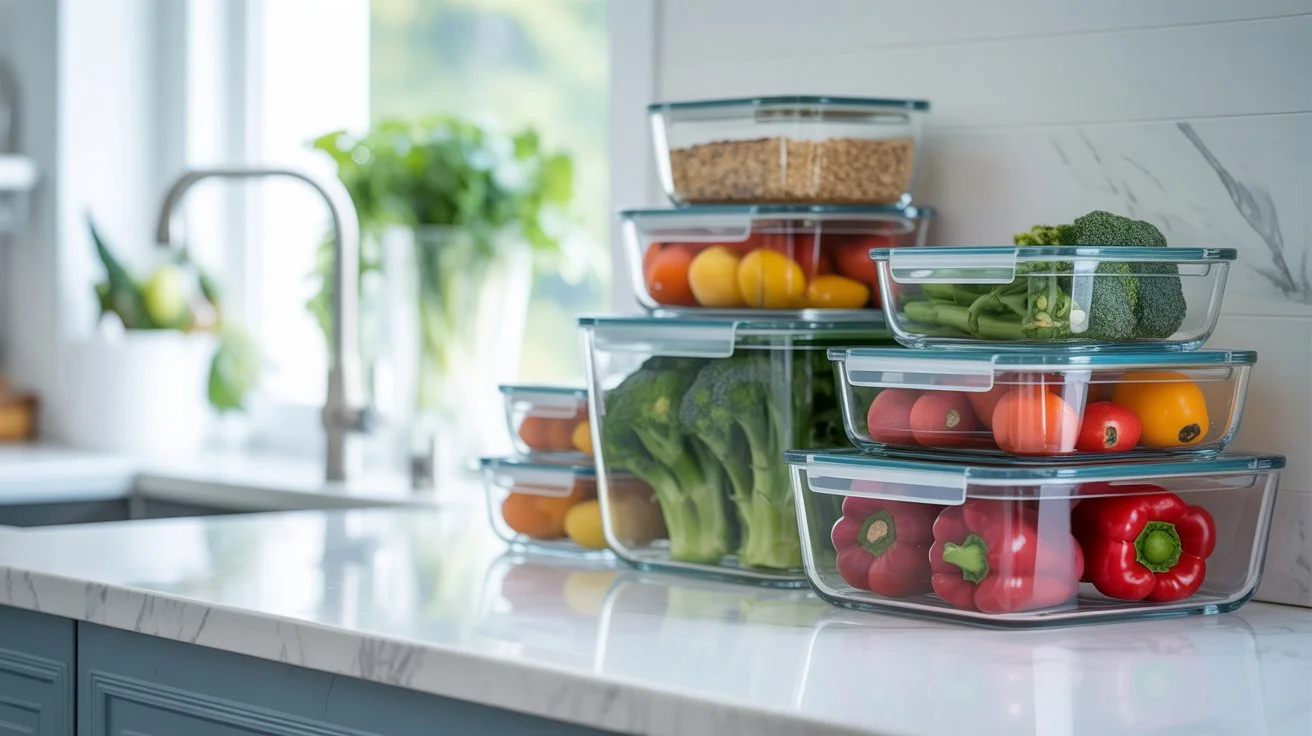

If you’re tired of plastic containers that stain, smell, and make you second-guess whether they’re safe to microwave it’s time to make the switch. The best glass food storage containers are safer, cleaner, and better for the planet. Here’s everything you need to know before you buy.
Table of Contents
ToggleWhat Are Glass Food Storage Containers?
Glass food storage containers are kitchen vessels made from food-grade glass, designed to store, transport, and often heat food. They come with lids usually made from plastic, silicone, or bamboo and range from small single-serving sizes to large family-sized containers.
Unlike plastic, glass is non-porous and chemically inert. That means it won’t absorb food odors, won’t stain, and won’t leach chemicals into your food even when heated. Most containers on the market today are made from either tempered glass food containers or borosilicate glass food storage containers, each with slightly different strengths (more on that below).
You’ll find them in all kinds of shapes: rectangular meal prep boxes, round bowls with snap lids, tall pantry jars, and stackable nesting sets. Whether you’re storing leftovers, batch-cooking for the week, or organizing your pantry, there’s a glass container built for the job.
Why Choose Glass Over Plastic?
The short answer: glass is better in almost every way that matters for daily cooking and food safety. If you want a deeper breakdown, this glass vs plastic comparison covers all the specifics but here are the four biggest reasons people are making the switch.
No Harmful Chemicals
This is the big one. Standard plastic containers can contain BPA (bisphenol-A), a chemical linked to hormonal disruption. And here’s the catch even “BPA-free” plastics often substitute similar compounds like BPS or BPF that carry their own concerns. When you heat plastic in the microwave, those chemicals can migrate into your food.
Glass contains none of that. It’s made from natural materials primarily silica sand and doesn’t react with food, acids, or heat. What you put in is what you get out. No mystery chemicals, no worrying about what’s leaching into your lunch.
Better Taste
Ask anyone who’s switched from plastic to glass: food genuinely tastes better. That’s not a placebo effect. Plastic is slightly porous and absorbs flavors over time. Store curry in a plastic container for a month and it picks up the smell permanently. Glass stays neutral. Your leftovers taste exactly like they did when you made them not like the ghost of last Tuesday’s dinner.
Recycles Forever
Glass is one of the most recyclable materials on Earth. It can be melted down and remade into new glass indefinitely without losing quality. Plastic, on the other hand, degrades with each recycling cycle and eventually ends up in a landfill anyway. For anyone paying attention to the environmental cost of kitchen tools, glass is the clear winner.
Lasts Longer
A good glass container, treated reasonably well, can last a decade or more. Plastic scratches, warps, discolors, and eventually cracks. Most people replace plastic containers every year or two. With glass, you buy once and you’re done which makes the higher upfront cost much easier to justify.
Benefits of the Best Glass Food Storage Containers
Beyond the safety and sustainability wins, the best glass food storage containers offer some very practical day-to-day advantages.
They’re microwave-safe. Most microwave safe glass containers can go straight from the fridge to the microwave without any issue. No transferring food to a different dish. That alone saves time every day.
They’re dishwasher-safe. Every glass container on this list is dishwasher safe. Clean-up is easy and complete, no residue, no lingering smells.
They keep food fresher longer. Because glass is non-porous, it doesn’t harbor bacteria the way scratched plastic does. Food stored in glass stays fresher for longer, which means less waste.
They’re see-through. This sounds minor until you have a full fridge and can’t remember what’s in half your containers. Clear glass lets you see exactly what’s inside at a glance.
They don’t warp. Plastic warps over time, especially with heat. Glass holds its shape permanently.
Types of Glass Food Storage Containers
Not all glass containers are designed for the same purpose. Knowing the types helps you build a set that actually fits your kitchen habits.
Meal Prep Containers
These are usually rectangular and come in multiple matching sizes. The design is optimized for portioning out a week of lunches or dinners efficiently. They stack neatly in the fridge, and many are oven safe glass food containers, which means you can cook and store in the same vessel. If you batch cook on Sundays, a good set of meal prep containers will change your week.
Round Containers
Round glass containers are ideal for soups, stews, salads, and anything that doesn’t need to be perfectly portioned. They nest well when empty and tend to feel more like bowls than boxes. Many people prefer them for storing leftovers that will be reheated on the stovetop.
Rectangular Containers
Rectangular containers maximize fridge space because they stack and fit neatly side by side. They’re the most common shape in large sets, and for good reason they’re versatile enough for sandwiches, pasta, roasted vegetables, and everything in between. Many oven safe glass food containers come in this shape.
Jars and Canisters
Glass jars are the go-to for dry goods: grains, pasta, coffee, tea, nuts, and spices. They’re airtight, easy to label, and look great on a countertop or shelf. If you’re serious about pantry storage, a set of wide-mouth glass jars is worth every penny. They’re also perfect for overnight oats, smoothie prep, and fermentation projects.
Stackable Nesting Sets
These are designed to collapse into each other when empty to save drawer and cabinet space. Stackable sets are a practical choice for smaller kitchens. Many come with matching lids that store together. They’re great for households that want variety without the clutter.
For freezer-specific needs, check out these recommended freezer containers that are built to handle frozen temperatures without cracking.
What to Look for in a Food Storage Container
Shopping for glass containers can feel overwhelming when every product claims to be the best. Here’s what actually matters:
Glass type. Borosilicate glass food storage containers handle thermal shock better than standard tempered glass. If you plan to go from freezer to oven, borosilicate is worth the upgrade. For everyday fridge-to-microwave use, tempered glass does the job fine.
Lid quality. The lid is often where these containers succeed or fail. Look for lids with multiple locking tabs for a leakproof seal. Silicone gaskets help with airtightness. Avoid cheap snap lids that lose their grip after a few dishwasher cycles.
Size variety. A good set covers a range small containers for sauces and snacks, medium for single meals, large for batch cooking and leftovers. Most sets of 10 to 18 pieces will cover the range well.
Temperature ratings. Check that the containers are rated for microwave, dishwasher, freezer, and if you need it oven use. The oven rating matters: lids are almost never oven-safe, so the container needs to go in bare.
Stackability. Think about your actual fridge and cabinet space. Containers that stack flat save a surprising amount of room.
Brand reputation. Anchor Hocking glass containers and Snapware glass containers have both been around long enough to have a real track record. Newer brands can be good too just check verified reviews carefully.
Avoid Lead in Glass
This doesn’t get talked about enough, but it’s worth knowing: some decorative or imported glassware contains lead, especially items with colored patterns or decorations baked into the glass surface. Food-grade glass storage containers sold by reputable brands in the US are required to meet FDA standards and should be lead-free. But cheap, unbranded containers imported from unverified sources are worth avoiding.
The safest choice is clear, undecorated glass from established brands. If you’re buying colored or patterned containers, stick to brands that explicitly state their products are lead-free and cadmium-free in their product materials. Borosilicate glass food storage containers are typically the safest option since borosilicate is a high-purity formulation by nature.
When in doubt, clear glass with no decoration is always the safest bet.
How to Choose the Best Glass Food Storage Containers for Your Needs
The right container set depends on how you actually use your kitchen.
If you meal prep weekly, prioritize oven safe glass food containers in rectangular shapes. Being able to cook and store in the same container saves time and dishes. Pyrex and JoyJolt are strong choices here.
If you pack lunches, focus on leakproof lids and portable sizes. Rubbermaid Brilliance and Snapware glass containers both have excellent seal mechanisms.
If you’re stocking your pantry, skip the standard sets and go straight to jars and canisters. Wide-mouth glass jars are ideal for dry goods and look great on open shelving.
If you have freezer space to fill, make sure your containers are explicitly rated as freezer safe. Not all glass containers handle extreme cold well freezer containers specifically rated for frozen storage are worth the investment.
If budget is a concern, Amazon Basics and HOMBERKING both offer solid tempered glass at lower price points. You give up some premium features, but the core function is the same.
Best Glass Food Storage Containers Reviewed
Here are eight of the best glass food storage containers available right now, based on glass type, lid performance, temperature ratings, value, and real-world usability.
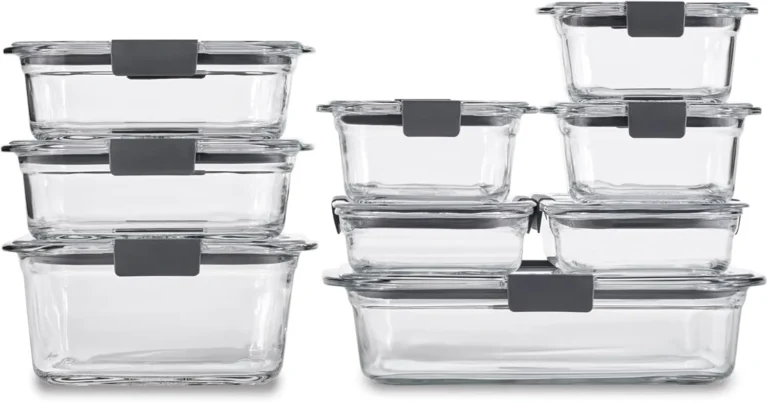
The Rubbermaid Brilliance set is the one to recommend when someone wants a single set that handles everything. The four-tab locking lid creates a genuinely leakproof seal carry soup in your bag without a second thought. The crystal-clear tempered glass lets you see exactly what’s inside at a glance, which is more useful than it sounds when your fridge is full.
Sizes range from about 1.3 cups to 8.1 cups, covering individual snacks up to large batch leftovers. It’s microwave safe and dishwasher safe. Not oven safe, which is the one real limitation if you want to cook in your container, look at Pyrex or JoyJolt instead.
The main drawback is the price. At $79.99, it’s the most expensive set here. But Rubbermaid’s build quality is consistent, and these will last for years without warping or losing their seal.
Best for: Everyday household use, leakproof lunches, fridge organization.
Pros:
- BPA-free, ensuring safety for your food
- Crystal-clear design for easy visibility
- Microwave and dishwasher-safe, offering convenience and durability
Cons:
- Heavier than plastic containers, which might not be ideal for everyone
- The lid may not seal properly if not aligned correctly, affecting the container’s airtight function
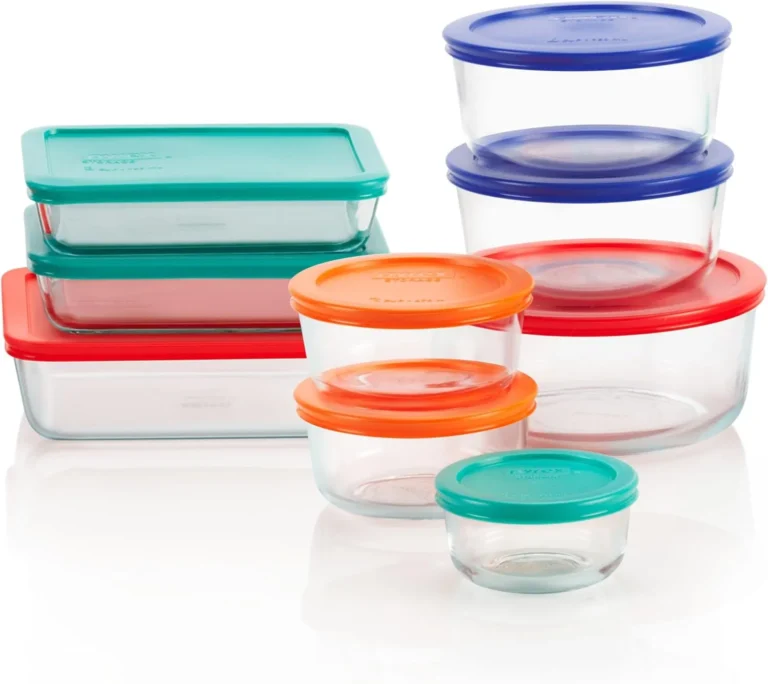
Pyrex has been making glass cookware for over 100 years, and this meal prep set shows why they’re still trusted. The standout feature is the oven-safe rating to 450°F (lids removed). That means you can roast vegetables or reheat a casserole directly in the container, then snap the lid on and refrigerate it. One less pan to wash every time.
The rectangular shapes stack efficiently in both the fridge and the cabinet. At $29.39, it’s the best value on this list for anyone who cooks and stores food in the same vessel. The lids are color-coded by size, which makes matching lids to containers fast and simple.
Best for: Batch cooking, Sunday meal prep, oven-to-fridge workflow.
Pros:
- Oven, microwave, and freezer-safe, offering versatile use.
- Secure locking lids to keep food fresh.
- Long-lasting durability for everyday use.
Cons:
- Lids can be tough to close tightly, which may affect sealing efficiency.
- Limited size options in the set, which could be restrictive for some users.
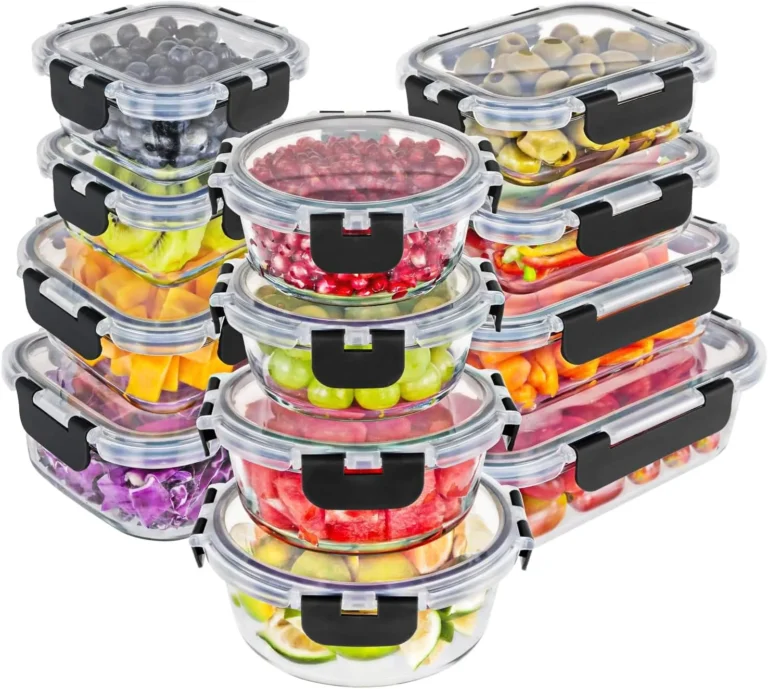
The Magic Mill set is designed for volume. At 18 pieces and $39.99, it covers every storage need a large household has from individual snack containers to large batch-cooking vessels. The locking lids are airtight and freezer-safe. Dishwasher and microwave safe.
These don’t have the premium feel of Rubbermaid or JoyJolt, but they’re built well enough to handle daily use. The variety of sizes is the real selling point you’ll always have the right size container when you need it.
Best for: Large families, households that store large batch meals.
Pros:
- Airtight and leak-proof design keeps food fresh longer
- Freezer, microwave, and dishwasher-safe for convenience
- Comes in multiple sizes to suit a variety of storage needs
Cons:
- Lids can warp after repeated use, affecting their seal
- Some users report difficulty locking lids securely, which could impact freshness preservation
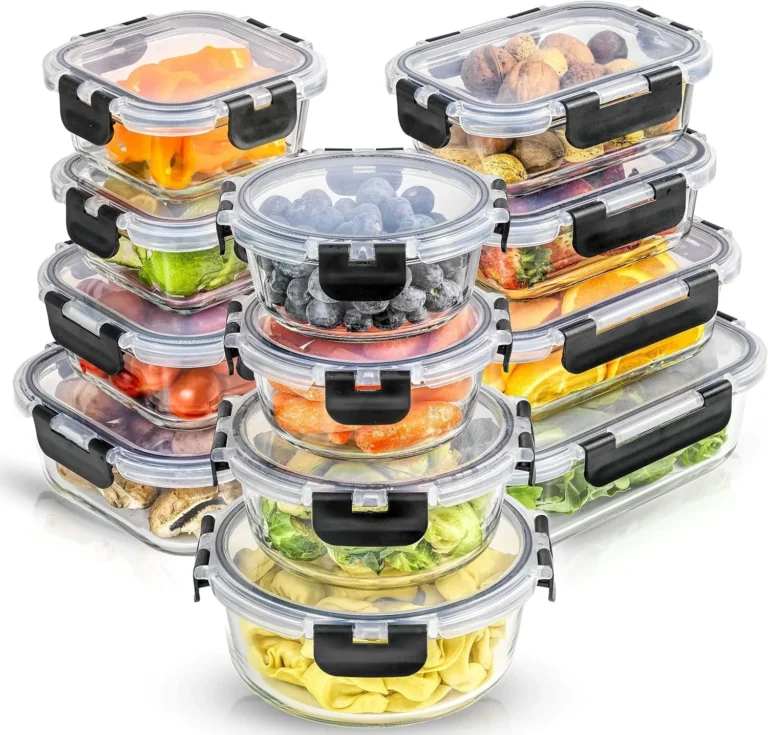
JoyJolt’s set is the top pick if you want borosilicate glass food storage containers. The difference matters in practice: borosilicate handles extreme temperature changes without risk of cracking. That means you can take these from a -40°F freezer to a 500°F oven without a gradual warm-up period. For serious meal preppers, that’s a real advantage.
The airtight lids with silicone gaskets form an excellent seal, and the glass itself is noticeably clearer and thicker-feeling than budget tempered alternatives. Read the full JoyJolt review for a deeper breakdown of lid performance and long-term durability.
Best for: Heavy cooks, freezer-to-oven use, anyone who wants the safest glass type.
Pros:
- Heat-resistant and ideal for microwave-safe containers.
- Leak-proof design to keep food fresh and secure.
- Great for meal prep and batch cooking.
Cons:
- Glass can break if exposed to sudden temperature changes.
- Lids require extra care to maintain their locking function, making them less convenient for those in a hurry.
If you want to know more about Joyjolt Borosilicate Glass Container Set, then you can see this.
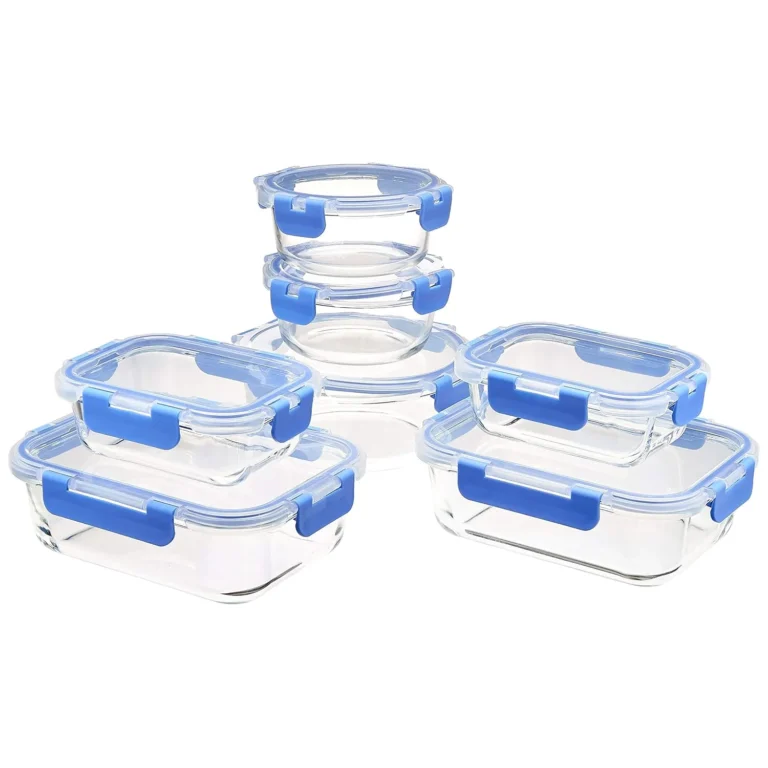
Amazon Basics offers exactly what the name suggests: solid, no-frills tempered glass containers at the lowest price on this list. The four-sided locking lids are reliable, the glass is BPA-free, and the set includes a good range of sizes. These are microwave safe glass containers with dishwasher-safe lids.
The build quality is a step below Rubbermaid or JoyJolt the lids aren’t as precise and the glass is slightly thinner. But for everyday use, leftovers, and meal storage, they get the job done at a price that makes buying two sets affordable.
Best for: Budget-conscious buyers, starter sets, secondary storage.
Pros:
- Affordable price point makes it a great option for budget-conscious buyers
- Easy-to-lock lids ensure airtight storage
- Microwave and freezer-safe for all types of food storage
Cons:
- Lids may not fit as snugly over time, affecting the container’s freshness retention
- The glass thickness might feel thin for some users
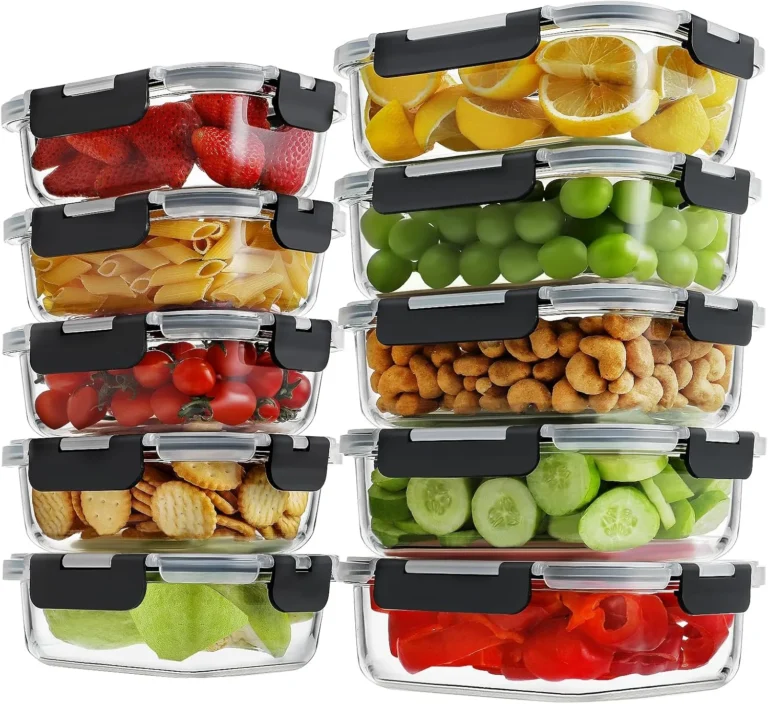
HOMBERKING positions itself as commercial-grade quality at a consumer price. The containers have thicker walls than most budget sets, four-sided locking lids with silicone gaskets, and a sturdy feel in hand. They’re freezer, microwave, and dishwasher safe. Not oven safe.
The lids don’t have quite the precision of Rubbermaid, but they seal reliably and hold up through repeated dishwasher cycles. At $29.44 for 10 pieces, these are an excellent value for anyone who wants better-than-budget quality without spending $60 or more.
Best for: Daily use, packing lunches, anyone who wants durability on a mid-range budget.
Pros:
- Commercial-grade quality for long-lasting durability
- Keeps food fresh for long periods
- Microwave and dishwasher-safe for convenience
Cons:
- Larger containers might be too bulky for smaller kitchens
- Expensive compared to other options in the market
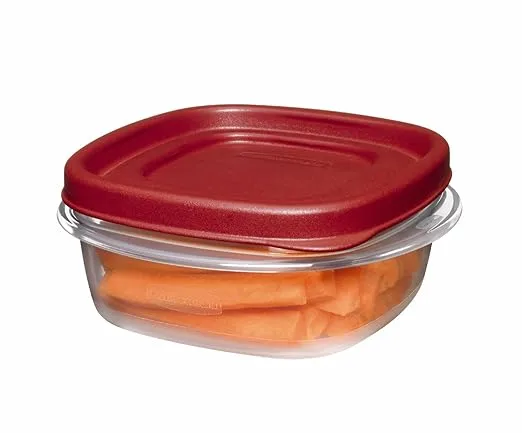
If you only need one container for daily lunches or as a standalone addition to an existing set this single Rubbermaid Brilliance container is the pick. The same four-tab locking mechanism as the full set, the same leakproof performance, and the same crystal-clear visibility.
It’s a 4-cup square container, which fits most single-serving meals comfortably. At under $10, it’s a low-risk way to test the Brilliance line before committing to the full set.
Best for: Solo use, testing before buying a full set, single-meal packing.
Pros:
- Leak-proof and odor-resistant for food safety
- BPA-free for health-conscious storage
- Clear design makes it easy to identify contents
Cons:
- Limited to a single container, which may not meet all storage needs
- Not stackable with other Rubbermaid products, reducing storage efficiency
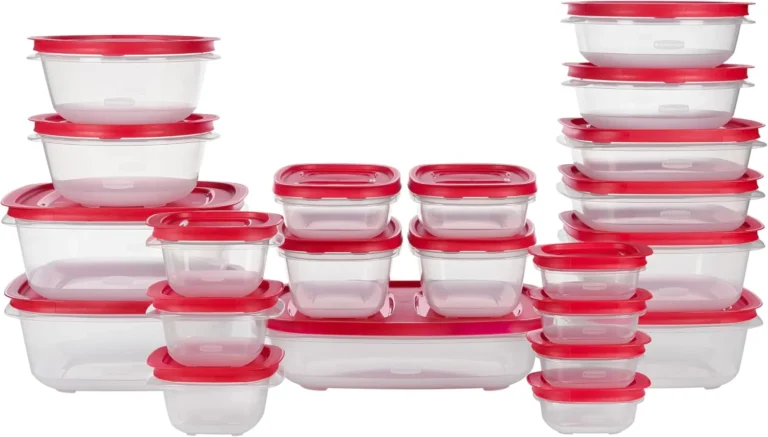
The EasyStore is less about individual container quality and more about solving the chaos of a poorly organized container drawer. 44 pieces, designed to nest and store together cleanly. Lids have a designated storage system. For anyone who has ever opened a cabinet and had plastic lids rain down on them, this system is a solution.
The glass itself is standard tempered freezer and microwave safe, not oven safe. This set is optimized for organization first and pure performance second, which is the right priority for most households.
Best for: Kitchen organization, households replacing a full container collection at once.
Pros:
- Space-efficient design to maximize kitchen storage
- Microwave and dishwasher-safe for easy use and maintenance
- Ideal for organizing different food items
Cons:
- Slightly larger and bulkier than other sets
- Lids can be harder to remove compared to other brands
Glass vs Plastic Food Storage Containers
Here’s the honest comparison. For a full side-by-side breakdown, read this dedicated glass vs plastic article but here are the key points.
Safety: Glass wins. Plastic can leach chemicals, especially under heat. Glass is chemically inert and never does.
Weight: Plastic wins. Glass is heavier, which matters if you’re carrying lunch.
Durability: Glass wins long-term. It doesn’t scratch, warp, or absorb odors. It can break if dropped on hard surfaces, but a glass container that stays whole will last indefinitely. Most plastic containers degrade significantly within a couple of years.
Cost: Plastic wins upfront. Glass costs more to buy initially, but replacing a $30 plastic set every two years adds up faster than buying one $60 glass set that lasts a decade.
Food freshness: Glass wins. The non-porous surface doesn’t trap bacteria or absorb residual flavors. Food stored in glass stays genuinely fresher.
Environmental impact: Glass wins. It recycles infinitely without quality loss. Most plastic eventually ends up in a landfill regardless of recycling efforts.
The verdict is clear: for anyone who cooks at home regularly, glass is the smarter long-term choice on almost every measure.
Are Glass Food Storage Containers Worth It?
Yes, with one honest caveat. Glass costs more upfront. If you’re comparing a $15 plastic set to a $60 glass set, the price difference is real. But when you factor in lifespan, safety, and the fact that you won’t be replacing them every two years, glass pays for itself.
There’s also an invisible cost to cheap plastic that’s worth considering. Plastic containers that leach chemicals, stain, and lose their seal faster than expected aren’t actually saving you money. They’re just deferring the cost and adding waste.
The best glass food storage containers also make daily kitchen life genuinely better. Food stays fresher, reheating is easier, and there’s no guessing about what’s safe to microwave. That consistency has real value. If your current containers are scratched, stained, or have lids that don’t seal anymore, switching to glass is worth every dollar.
Frequently Asked Questions
What is the best brand for glass food storage?
Rubbermaid Brilliance is the best all-around brand for everyday use, while JoyJolt leads for borosilicate glass and Pyrex is the top pick for oven-safe meal prep.
Are glass containers better for food storage?
Yes, glass is chemically inert, doesn’t absorb odors or stains, keeps food fresher longer, and doesn’t leach harmful chemicals the way plastic can, especially when heated.
What is the healthiest type of glass for food storage?
Borosilicate glass food storage containers are considered the healthiest option because borosilicate is a high-purity, thermally stable formulation that’s free from the impurities sometimes found in lower-grade glass.
Which glass is best for food?
Borosilicate glass is best for high-heat and freezer-to-oven use, while tempered glass food containers are excellent for everyday fridge, microwave, and dishwasher use at a more accessible price.