


Over the past decade, silicone kitchen utensils have become a staple in homes worldwide — and for good reason. They’re flexible, heat-resistant, easy to clean, and gentle on cookware. But as more people pay close attention to what their food touches, a growing question has emerged: are silicone cooking utensils actually safe?
The short answer is yes — food-grade silicone cooking utensils are generally safe, non-toxic, and chemically inert. They don’t react with food, don’t produce harmful fumes under normal cooking temperatures, and are approved by both the FDA and European food safety authorities. But that answer comes with important nuances. Not all silicone is created equal, and low-quality products can tell a very different story.
In this guide, you’ll learn exactly what makes silicone safe (or unsafe), how to identify high-quality products, how it compares to other kitchen utensil materials, and how to use silicone tools the right way every time.
What Are Silicone Cooking Utensils?
Silicone is a synthetic polymer made from silicon, oxygen, carbon, and hydrogen. Unlike plastic, it’s derived from silica (sand) rather than petroleum, which gives it a fundamentally different chemical structure and a much more stable performance profile at high temperatures.
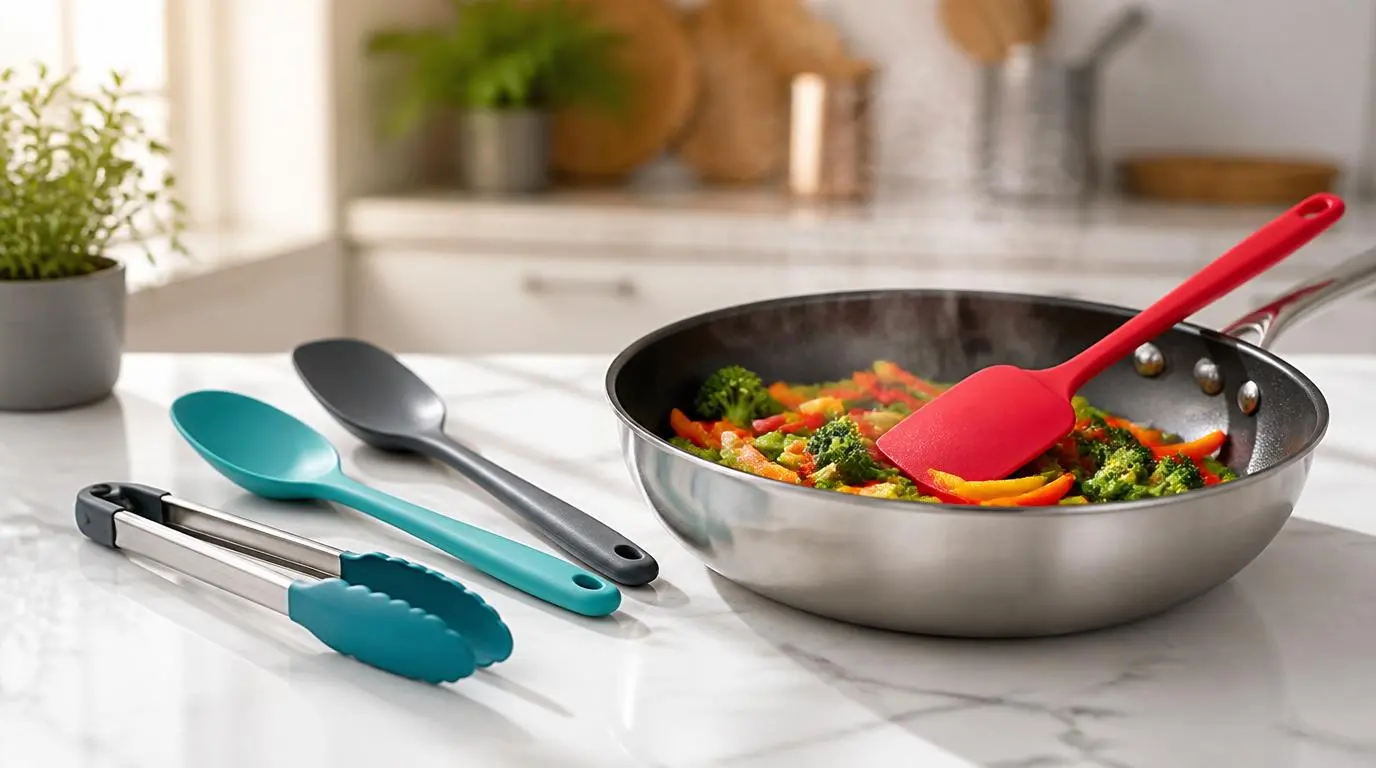
Silicone cooking utensils include spatulas, spoons, tongs, whisks, ladles, and brushes used during everyday cooking. They come in two main forms:
- Pure food-grade silicone — made entirely from silicone polymer, typically more rigid, more expensive, and safer
- Silicone-coated or filled silicone — cheaper products that use silicone mixed with fillers like clay or other extenders to reduce costs
The type you choose makes a significant difference in both safety and performance. Pure food-grade silicone is odorless, tasteless, and highly heat-resistant. Filler-laden silicone is softer, cheaper, and potentially prone to leaching compounds when exposed to heat.
Understanding Food-Grade Silicone Safety Standards
Not all silicone sold in kitchen products meets the same safety threshold. Food-grade silicone is specifically formulated to be safe for direct food contact. It must meet regulatory standards set by bodies like:
- The U.S. Food and Drug Administration (FDA) under 21 CFR 177.2600
- The European Food Safety Authority (EFSA)
- German LFGB standards — widely considered the strictest food-contact material testing in the world
When a product is labeled “food-grade” and certified under one of these frameworks, it has been tested to confirm it won’t leach chemicals into food under standard cooking conditions.
The distinction matters because general-purpose silicone — used in industrial or automotive contexts — is not safe for food contact and is processed with additives that would never pass food safety testing. Always look for explicit food-grade or FDA-approved labeling when buying silicone kitchen tools.
Are Silicone Cooking Utensils Safe?
Yes — silicone cooking utensils are safe for everyday use when made from pure food-grade silicone. Here’s what the research and regulatory consensus confirms:
- Silicone is chemically inert, meaning it does not react with food, acids, or fats during cooking
- It does not leach chemicals into food under normal cooking temperatures
- It is BPA-free and free from phthalates, heavy metals, and other common plastic toxins
- It is heat-resistant up to approximately 428°F–448°F (220°C–230°C), making it safe for sautéing, baking, and everyday stovetop use
- It does not produce toxic fumes when used within its rated temperature range
The safety concern arises with low-quality or counterfeit silicone products that contain fillers. These cheap alternatives may begin to degrade or leach compounds when exposed to heat — which is why identifying pure food-grade silicone is critical.
According to food safety experts, silicone utensils are not recommended for extreme, prolonged high-heat scenarios like deep-frying at very high temperatures or open-flame cooking. For the vast majority of home cooking tasks, however, they perform safely and reliably.
Is Black Silicone Utensils Safe?
Black silicone utensils are among the most popular on the market — and one of the most frequently questioned. The concern is reasonable: dark colorants require pigments, and some wonder whether those pigments are safe for food contact.
The short answer: black silicone utensils are generally safe, but the quality of the product determines the risk. Here’s what you need to know:
High-quality black silicone utensils use food-safe carbon-based or mineral pigments that are stable under heat and don’t migrate into food. These products pass the same FDA and LFGB standards as clear or brightly colored silicone tools.
The real risk comes with very cheap black silicone products, where:
- Low-quality pigments may not be food-safe
- Carbon black fillers (an industrial pigment not intended for food contact) are occasionally used
- Inconsistent manufacturing can result in uneven curing, which reduces chemical stability
To determine whether your black silicone utensils are truly safe, apply the pinch test: firmly twist or pinch the silicone. If white streaks appear, the product likely contains fillers that are not pure food-grade silicone. High-quality, filler-free black silicone should hold its color uniformly under stress.
Additionally, check for LFGB or FDA certification on the packaging. When those certifications are absent on black silicone products, it’s a red flag. If you’re upgrading your toolkit, consider reviewing top-rated silicone utensils that explicitly disclose their material grade and pigment safety.
Silicone vs Other Cooking Utensil Materials
Choosing the right utensil material depends on your cookware, your heat levels, and your priorities. Here’s how silicone compares to the four most common alternatives.
Silicone vs Plastic Utensils
Plastic utensils were once the default for nonstick cookware, but safety questions have shifted consumer preferences sharply toward silicone.
- Heat resistance: Silicone handles up to ~428°F safely; many plastics begin warping or melting well below 300°F
- Chemical leaching risks: Some plastic utensils contain BPA, phthalates, or other compounds that can migrate into food when heated — silicone is inert
- Durability and lifespan: Silicone outlasts plastic significantly — it doesn’t crack, warp, or discolor with regular use
If you’ve ever wondered whether plastic cooking utensils are truly safe, the honest answer is that it depends heavily on the plastic type — and the risk is considerably higher than with food-grade silicone.
Silicone vs Wooden Utensils
Wooden spoons remain beloved for their natural aesthetic and gentle contact with cookware, but they come with trade-offs.
- Hygiene and bacteria resistance: Wood is porous and can harbor bacteria over time, especially if not dried properly — silicone is non-porous and resists bacterial buildup
- Maintenance differences: Wood requires hand washing and occasional oiling; silicone is dishwasher-safe and requires minimal care
- Best cooking uses: Wood excels for high-heat dry cooking and cast iron; silicone is better for baking, nonstick cookware, and liquid-heavy dishes
Both are solid choices for a toxin-conscious kitchen. If you’re building a well-rounded set, having both types on hand covers nearly every cooking scenario.
Silicone vs Stainless Steel Utensils
Stainless steel is the gold standard for durability and longevity — but it’s not always the right tool for every job.
- Cookware protection: Stainless steel can scratch nonstick, ceramic, and enamel surfaces — silicone won’t
- Heat conductivity: Steel handles conduct heat quickly; silicone handles stay cooler and more comfortable to grip
- Safety comparison: Both are non-toxic and food-safe; stainless steel is the better choice for high-heat searing, while silicone is better for delicate surfaces
For guidance on non-toxic cookware that pairs well with both, your pan type should drive the decision.
Silicone vs Nylon Utensils
Nylon was the original “safe for nonstick” material, but it has fallen behind silicone in both heat tolerance and safety profile.
- Heat tolerance: Nylon typically has a maximum safe temperature around 400°F; quality silicone handles 428°F and above
- Toxicity concerns: Some nylon products release fumes or degrade when accidentally overheated — food-grade silicone is stable and does not off-gas
- Nonstick cookware compatibility: Both are nonstick-safe in terms of scratch resistance, but silicone is the safer long-term choice for cookware protection and health
Pros and Cons of Silicone Cooking Utensils
Advantages
- Nonstick-safe: Won’t scratch Teflon, ceramic, or enamel surfaces
- Heat-resistant: Safely handles temperatures up to 428°F–448°F
- Flexible and durable: Resists breaking, warping, and cracking over years of use
- Easy to clean: Non-porous surface resists food buildup and is fully dishwasher-safe
- Odor and stain resistance: High-quality silicone doesn’t absorb food smells or discolor with use
Disadvantages
- Cheap silicone may contain fillers: Low-cost products can include clay or chalk additives that degrade under heat
- Can retain odors if low quality: Filler-laden silicone is more porous and more prone to absorbing cooking smells over time
- Lower durability than metal: For heavy-duty tasks like scraping cast iron or stirring thick doughs, metal utensils offer more strength
- Possible degradation under extreme heat: Sustained exposure above rated temperatures — such as under a broiler — can begin to break down the silicone structure
Identifying Quality vs. Low-Grade Silicone Products
Knowing how to tell good silicone from cheap silicone is one of the most practical skills you can develop as a conscious kitchen consumer. Here’s what to look for:
The Pinch Test is your first and fastest check. Firmly twist or pinch the silicone head of the utensil. Pure, filler-free food-grade silicone will maintain its color uniformly. If white or lighter streaks appear when you twist, the product contains fillers — a sign it’s not pure silicone.
Check the certifications. Reputable products will display FDA food-grade or LFGB (Germany) certification. LFGB is particularly rigorous and is considered a quality benchmark globally. Products lacking any certification deserve extra scrutiny.
Smell test. New pure silicone may have a faint odor, but it should dissipate after a wash or two. A persistent strong or chemical smell suggests impurities or low-grade additives in the material.
Price is a signal, not a rule. Extremely cheap silicone utensil sets — think large multipacks at very low prices — often use inferior materials to hit that price point. You don’t need to pay premium prices for safety, but suspiciously cheap products frequently cut corners on material purity.
Brand transparency matters. Quality brands openly state what grade of silicone they use, what certifications they hold, and what their maximum safe temperature is. If a product listing is vague on materials, that silence speaks volumes.
Are Silicone Cooking Utensils Safe for Nonstick Cookware?
Yes — silicone is widely considered the best material for use with nonstick pans. Unlike metal utensils that scratch and damage PTFE (Teflon), ceramic, or enamel coatings, silicone’s soft, flexible surface glides across cookware without causing any abrasion.
The benefits are twofold: your cookware stays in better condition longer, and you reduce the risk of ingesting coating particles that can flake off damaged surfaces. For a deeper look at how pan material affects utensil choice, the stainless vs cast iron comparison is a useful reference.
For anyone regularly cooking on nonstick pans, switching to silicone is one of the simplest and most effective kitchen upgrades you can make. A quality silicone spatula handles eggs, crepes, and delicate fish without a scratch — and without putting your cookware at risk.
How to Use Silicone Cooking Utensils Safely
Even high-quality silicone utensils need to be used within their safe parameters. Here’s how to get the most out of them while keeping your cooking completely safe:
Stay within the temperature rating. Most food-grade silicone utensils are rated to approximately 428°F (220°C). Avoid leaving silicone in a very hot pan unattended, placing it directly over an open flame, or using it inside a broiler where radiant heat can exceed the rated temperature.
Don’t use silicone for deep frying at very high heat. Cooking oils can reach 375°F–400°F during deep frying, which is within range for quality silicone — but prolonged immersion in very hot oil pushes against the upper limit. Metal tools are better suited for this application.
Inspect your utensils regularly. Over time, silicone can show signs of wear — surface tackiness, visible cracking, persistent discoloration, or strange odors even after washing. Any of these signs mean it’s time to replace the tool.
Wash before first use. Rinse new silicone utensils with warm soapy water before cooking with them. This removes any manufacturing residue and helps eliminate any initial odor.
Use warm soapy water for hand washing. While most quality silicone is dishwasher-safe, hand washing with mild dish soap is sufficient and gentler for maintaining the material’s surface over time.
Avoid sharp implements near silicone. Cutting or scraping silicone with a knife or metal edge can damage the surface integrity, creating small fissures where bacteria can accumulate or where the material starts to break down.
Store away from sharp objects. Keep silicone utensils in a utensil holder or drawer organizer where they won’t be repeatedly pressed against metal edges.
Who Should Avoid Cheap Silicone Utensils?
While high-quality, food-grade silicone utensils are safe for virtually everyone, cheap or uncertified silicone products carry real risks for certain groups who should be especially cautious:
- Parents of young children: Kids are more vulnerable to chemical exposures, and cheap silicone used during cooking or food preparation can introduce unnecessary risk
- People with chemical sensitivities or allergies: Fillers and additives in cheap silicone may trigger reactions in sensitive individuals
- Anyone using nonstick cookware: Low-grade silicone can become tacky, flake, or degrade in ways that may introduce particulate matter into food — especially problematic over a nonstick surface
The safest path for all these groups is the same: choose products that clearly state food-grade or platinum-grade silicone, carry LFGB or FDA certification, and come from brands that are transparent about their materials.
Frequently Asked Questions
Is it unhealthy to cook with silicone?
No — cooking with food-grade silicone is not unhealthy. It is BPA-free, chemically inert, and approved by the FDA for direct food contact, meaning it won’t leach chemicals or release harmful fumes under normal cooking temperatures.
Why should you avoid silicone?
You don’t need to avoid silicone entirely, but you should avoid cheap, uncertified silicone that contains fillers. Low-grade products can degrade under heat, retain odors, and potentially leach compounds — risks that don’t apply to properly certified food-grade silicone.
Which is safer for cooking, silicone or stainless steel?
Both are non-toxic and food-safe. Silicone is safer for nonstick and coated cookware since it won’t scratch surfaces, while stainless steel is the better choice for high-heat searing and heavy-duty cooking tasks.
Why is silicone not good for cooking?
Silicone has limitations rather than outright being “not good.” It isn’t suitable for open-flame cooking or sustained temperatures above ~428°F, and cheap filler-laden silicone can degrade — but high-quality, food-grade silicone performs safely across most everyday cooking tasks.
Is 100% silicone safe for food?
Yes — 100% food-grade silicone is confirmed safe by the FDA, EFSA, and other global regulatory bodies. It is non-reactive, non-toxic, and does not leach chemicals into food under normal cooking conditions.
How long do silicone cooking utensils last?
High-quality food-grade silicone utensils can last a decade or more with proper care. Cheap, filler-laden silicone may show wear — tackiness, cracking, or odor retention — within months and should be replaced as soon as degradation is visible.
Can silicone utensils be used in the oven?
Yes — most food-grade silicone utensils are safe for oven use up to their rated temperature, typically around 428°F (220°C). Avoid placing them under a broiler or in direct contact with heating elements, where temperatures can spike well beyond the safe limit.