
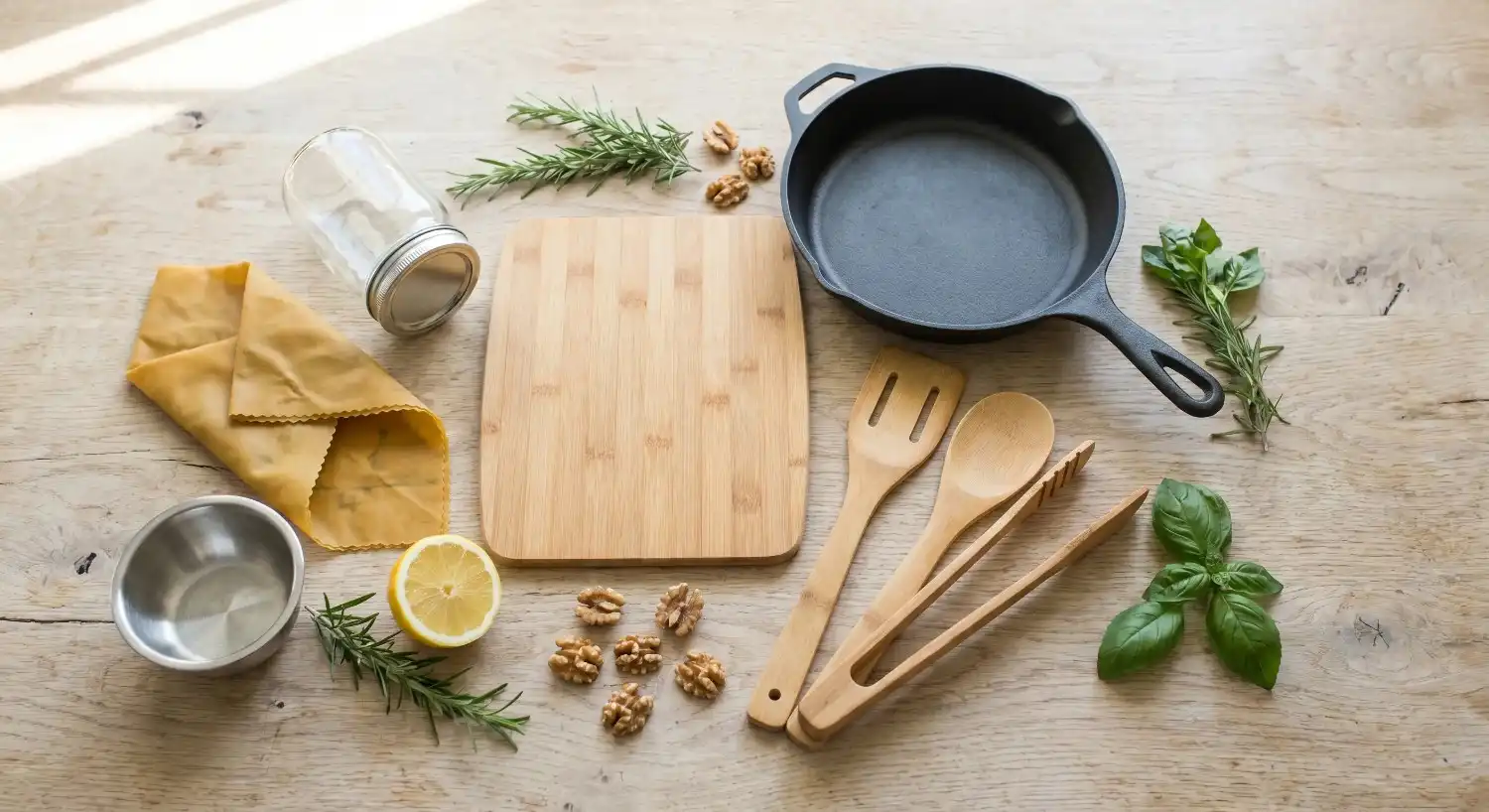

Eco kitchen tools are cookware, utensils, and food storage items made from safe, sustainable materials, like bamboo, stainless steel, cast iron, and glass that reduce environmental harm and protect your health. Switching to them is one of the most impactful changes you can make at home, because your kitchen touches everything you eat, every single day.
The kitchen is where sustainability gets personal. You don’t need to overhaul everything at once. You just need to know what actually matters, what to avoid, and where to start and that’s exactly what this article covers.
Why Eco Kitchen Tools Matter More Than Ever
Most people don’t think twice about the spatula they’re stirring with or the pan their eggs are cooking in. But the materials in your kitchen tools don’t stay in your tools they can migrate directly into your food.
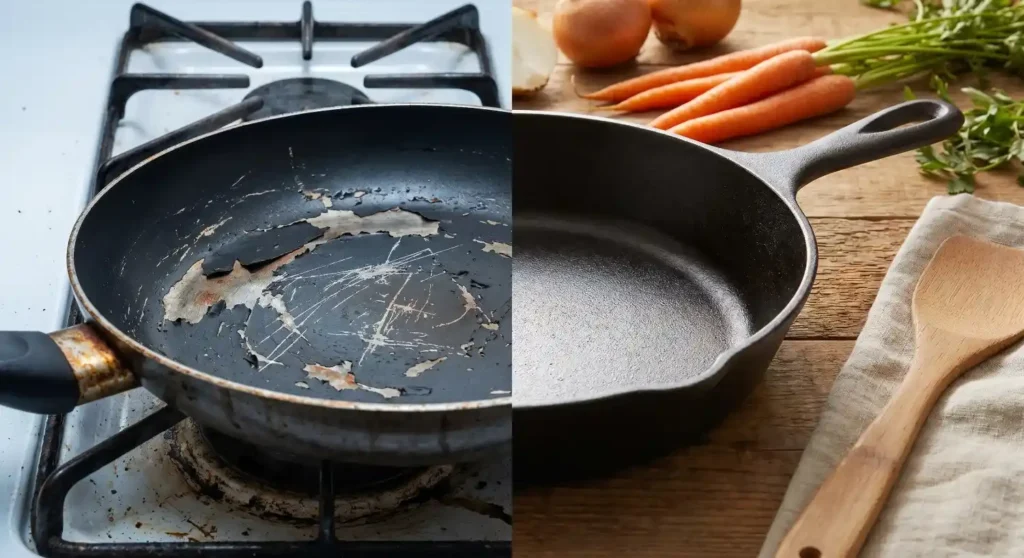
Conventional kitchen plastics often contain BPA and phthalates, both of which are linked to hormonal disruption by the National Institute of Environmental Health Sciences. Non-stick coatings in standard cookware rely on PFAS a class of “forever chemicals” that don’t break down in the environment and accumulate in the human body over time. According to the U.S. EPA, PFAS exposure has been associated with immune dysfunction, thyroid disruption, and certain cancers.
At the same time, consumer behaviour is shifting fast. Research from Nielsen and subsequent market studies consistently show that a growing majority of global consumers particularly under 45 — are willing to pay more for sustainable products. The sustainable kitchenware market is on a strong upward trajectory through 2025 and beyond.
The real cost of “cheap” plastic tools isn’t just environmental it’s financial. A $3 plastic spatula that melts, warps, or leaches chemicals into your food every year costs more over a decade than a $20 stainless steel one that lasts a lifetime.
What Makes a Kitchen Tool Truly Eco-Friendly?
Eco-friendly kitchen tools are those made and designed with the full lifecycle in mind not just the moment of purchase.
A genuinely sustainable kitchen tool checks four things:
- Material sourcing Is the raw material renewable (bamboo, wood), recycled (reclaimed steel), or at least biodegradable at end of life? Avoid virgin plastics and PFAS-coated surfaces.
- Production process How much energy was used to make it? Were workers treated ethically? Certifications like B Corp or Fair Trade are useful indicators.
- Longevity and repairability A cast iron pan that lasts 100 years is more eco-friendly than a “green” coated pan that degrades in 3. Durability is sustainability.
- End of life Can it be recycled, composted, or repurposed? Or does it go straight to landfill? Stainless steel is fully recyclable. Bamboo is compostable. Most plastic-composite tools are neither.
The label “eco-friendly” alone means nothing without these criteria. Let’s look at the materials that genuinely earn that title.
The Best Eco Kitchen Tools by Material
Bamboo Kitchen Tools — Renewable and Biodegradable
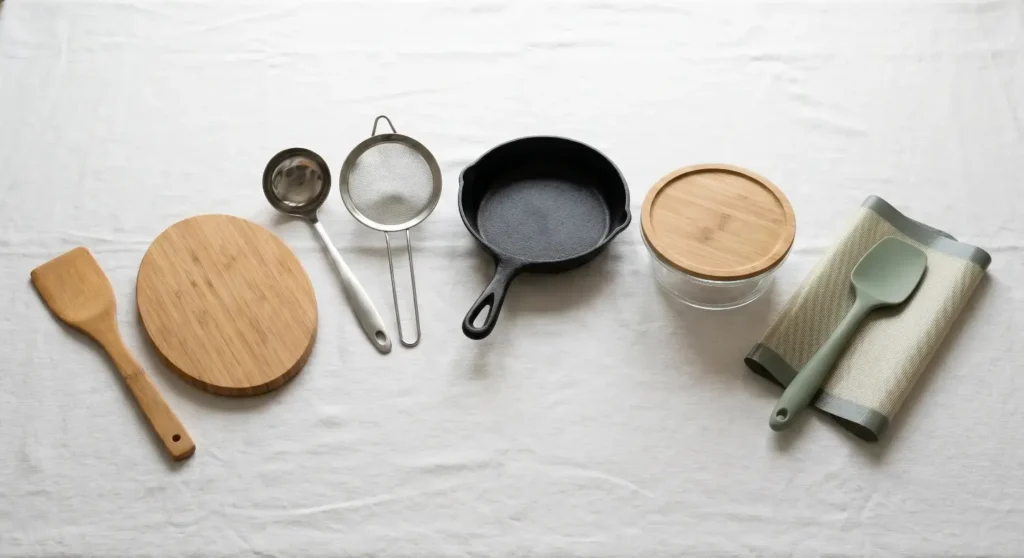
Bamboo is one of the most sustainable materials on earth. It grows up to 35 inches per day, requires no pesticides, and regenerates from its own root system without replanting. For the kitchen, that translates to a raw material with a remarkably low environmental footprint.
Bamboo works best for cutting boards, spatulas, spoons, steamers, and salad servers. It’s naturally antimicrobial, lightweight, and gentle on cookware surfaces so it won’t scratch your stainless steel pans. If you want to go deeper on choosing the right one, our eco friendly cutting board guide covers the full comparison between bamboo and other board materials.
Care is straightforward: hand-wash only, dry immediately, and oil your bamboo boards monthly with food-safe mineral oil. Bamboo tools are ideal for everyday home cooks who want a natural, affordable, and plastic-free kitchen.
One thing to watch: some cheap bamboo products use formaldehyde-based binders in manufacturing. Look for tools that are certified food-safe or use natural binders. Carbonized bamboo is a stronger, darker alternative worth knowing about it’s heat-treated rather than chemically treated.
Stainless Steel — The Long-Game Eco Choice
If you’re thinking about long-term sustainability, stainless steel is hard to beat. It’s non-reactive, meaning it won’t leach chemicals into your food. It’s PFAS-free. It resists corrosion. And at end of life, it’s fully recyclable often made from a significant percentage of recycled content to begin with.
Stainless steel shines as cookware (especially tri-ply construction), strainers, storage containers, measuring cups, and portable utensil sets. The one learning curve is heat management stainless steel heats fast and food can stick if you don’t preheat properly. Our guide to cooking with stainless steel pans walks you through the technique so you can ditch non-stick for good.
For a direct performance comparison between your two best eco options, see our stainless vs cast iron breakdown.
Cast Iron and Carbon Steel — Built to Last Generations
The most sustainable cookware is the kind you never have to replace. A well-maintained cast iron pan can genuinely outlive you and your children. That single fact makes it one of the most eco-conscious purchases in any kitchen.
Cast iron and carbon steel are both naturally non-stick when properly seasoned, free of synthetic coatings, and compatible with every heat source including induction. If you’re wondering whether cast iron is actually safe to cook with daily, the safety profile of cast iron cookware is well-documented.
Here’s a quick comparison to help you choose:
| Feature | Cast Iron | Carbon Steel |
| Weight | Heavy | Much lighter |
| Heat retention | Excellent | Good |
| Seasoning speed | Slower to build | Faster to season |
| Versatility | Oven, stovetop, campfire | Stovetop, oven, wok-style |
| Price | Lower | Slightly higher |
| Best for | Slow cooking, searing | Stir-fry, everyday use |
Both are excellent. Carbon steel is the better choice if cast iron’s weight is a barrier.
Glass and Ceramic — Safe, Non-Toxic, and Versatile
Glass is completely non-reactive, meaning it will never transfer any flavour, chemical, or odour into your food. For food storage, it’s the gold standard oven safe, microwave safe, dishwasher safe, and endlessly reusable. Our full review of glass containers for meal prep covers the best options across different budgets.
Ceramic cookware particularly 100% ceramic (not just ceramic-coated) is free from PTFE, PFOA, and heavy metals. It’s a genuinely non-toxic cooking surface. The limitation? Both glass and ceramic are fragile. Drop a ceramic pot or glass container and it’s gone. They’re also heavier than alternatives and generally not suitable for high-heat searing on a stovetop.
Use glass for storage and baking. Use ceramic for low-to-medium heat cooking and bakeware.
Silicone — Eco-Friendly or Overhyped?
Silicone occupies a complicated middle ground. Health Canada classifies it as safe for food contact, and it doesn’t release harmful fumes or leach known toxins into food at normal cooking temperatures. For bakeware, food wraps, storage bags, and spatulas, it’s a genuinely useful plastic replacement.
Where silicone falls short: it doesn’t biodegrade and can’t currently be recycled through standard programs. So while it’s healthier and more reusable than single-use plastic, it isn’t truly “eco” in the full lifecycle sense.
The verdict: use silicone selectively and purposefully. A silicone baking mat that replaces hundreds of sheets of parchment paper over its lifespan? Great trade-off. Buying ten silicone gadgets you’ll use twice? That’s just green-looking clutter.
Eco Kitchen Tools That Replace Single-Use Plastics
Single-use plastics are where the average kitchen generates the most waste and where the easiest swaps live. According to the U.S. EPA, packaging and food-contact plastics make up a significant share of household landfill waste.
Here are the highest-impact swaps:
- Beeswax wraps replace cling film for covering bowls, wrapping cheese, and packing snacks. One wrap replaces hundreds of plastic sheets.
- Silicone food storage bags replace zip-lock plastic bags for sandwiches, freezer storage, and meal prep.
- Cloth napkins and unpaper towels replace disposable paper towels for drying hands and wiping surfaces.
- Stainless steel or reusable mesh coffee filters replace disposable paper filters cutting both waste and cost.
- Bamboo or stainless portable utensil sets eliminate the need for single-use plastic cutlery when eating out or at work.
Each of these is a one-time purchase that pays for itself quickly while quietly removing plastic from your daily routine.
Eco-Friendly Cookware — What to Avoid and What to Buy
What to Avoid
Non-stick cookware coated with PTFE (the base material in Teflon) remains the most problematic category in most kitchens. When scratched or overheated, these coatings can release toxic fumes dangerous enough that they’re known to be lethal to pet birds, whose respiratory systems are more sensitive than ours.
The broader concern is PFAS per- and polyfluoroalkyl substances. PFOA, one of the most studied PFAS chemicals, was phased out of manufacturing by 2013, but the replacement chemicals may carry similar risks. The regulatory science simply hasn’t caught up yet. Canada has moved to regulate PFAS as a class, and the EU has tabled proposals to restrict them broadly. The pattern is clear.
Also avoid: plastic cutting boards (which can shed microplastics into food over time), aluminium cookware with no protective coating, and anything labelled “non-stick” that doesn’t specify what the coating is made from.
What to Buy
The safest, most sustainable cookware materials are stainless steel, cast iron, carbon steel, 100% ceramic, and glass. All of these are free from synthetic chemical coatings and have decades of safe-use track records.
Best Simple Choice
If you’re starting from scratch or replacing one pan: a quality stainless steel or cast iron skillet covers 80% of what most home cooks need. Check our roundup of the best stainless steel pans for tested recommendations.
5-point buyer’s checklist before purchasing eco cookware:
- Does it specify PFAS-free and PTFE-free on the label?
- Is the material stainless steel, cast iron, carbon steel, glass, or 100% ceramic?
- Is the handle or any secondary component plastic and is that plastic BPA-free?
- Is the brand transparent about its manufacturing process?
- Does it come with a warranty or longevity guarantee?
How to Transition Your Kitchen to Eco-Friendly Tools (Without Overspending)
You don’t need to throw out your entire kitchen on a Tuesday afternoon. The most sustainable approach is actually incremental replacing things as they wear out, and being intentional about what you buy next.
Start with the items that touch your food most directly. Your cooking pan, your cutting board, your storage containers these are higher priority than, say, your colander or your whisk. Swapping a Teflon pan for cast iron has more impact than swapping a plastic measuring cup for a steel one, even though both matter.
Buying secondhand is genuinely one of the best strategies for eco kitchen tools. Cast iron especially holds up for generations a thrift store cast iron skillet is just as functional as a new one, costs a fraction of the price, and keeps a useful item out of landfill.
The repair-before-replace mindset is underrated. A wooden spoon that’s dried out needs oiling, not replacing. A cast iron pan with surface rust needs a re-seasoning session, not a new pan.
Quick-action swap list:
- Plastic spatula → bamboo or stainless steel
- Teflon/non-stick pan → cast iron or stainless steel
- Cling wrap → beeswax wrapping paper
- Plastic containers → glass or stainless steel
- Disposable coffee filters → stainless mesh or reusable cloth filter
- Plastic cutting board → bamboo or hardwood board
Caring for Your Kitchen Tools to Maximise Their Lifespan
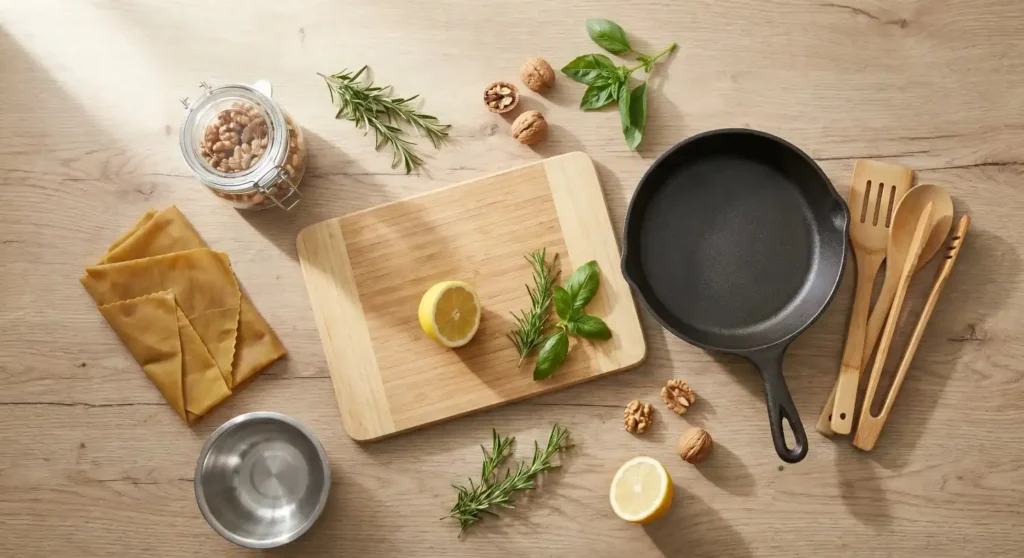
The greenest kitchen tool is the one you keep using for 20 years. Proper care is the most underrated sustainability habit in the kitchen.
Wooden and bamboo tools: Always hand-wash dishwashers will warp and crack them. Never soak in water. Dry immediately with a cloth. Once a month, rub a small amount of food-safe mineral oil into cutting boards and wooden utensils and let them absorb overnight. This prevents splits, warping, and bacteria harbouring in cracks.
Cast iron: Soap is the enemy of seasoning. After cooking, wipe the pan clean while still warm, or use coarse salt and hot water for stubborn residue. Dry the pan thoroughly place it back on a warm burner for a few minutes to drive out any moisture. A thin layer of oil before storage keeps the seasoning intact.
Stainless steel: The key technique is deglazing if food sticks, add a small splash of liquid to the warm pan and use a wooden or silicone spatula to release it. Avoid metal scourers that scratch the surface. For heat management, always preheat the pan before adding oil, and lower the heat if you notice sticking.
Glass and ceramic: The main risks are thermal shock and impact. Don’t transfer glass directly from freezer to oven. Don’t place ceramic on a very high open flame. Store them stacked with cloth or silicone padding between pieces to prevent chipping.
Frequently Asked Questions
What are 10 kitchen tools?
The 10 most essential kitchen tools found in most well-equipped kitchens are a chef’s knife, cutting board, skillet, saucepan, wooden spoon, spatula, mixing bowls, colander, measuring cups and spoons, and a grater. In an eco kitchen, these would be made from bamboo, stainless steel, cast iron, or glass rather than plastic or chemically coated materials.
- Chef’s knife — stainless steel
- Cutting board — bamboo or hardwood
- Skillet — cast iron or stainless steel
- Saucepan — stainless steel
- Spatula and spoon — bamboo or silicone
- Mixing bowls — glass or stainless steel
- Colander — stainless steel
- Measuring tools — stainless steel
- Grater — stainless steel
What are eco-friendly tools?
Eco-friendly tools are products made from materials that have a lower environmental impact — both in production and disposal. In the kitchen context, this means tools that are free from synthetic chemical coatings (like PFAS and PTFE), made from renewable or recycled materials, designed for longevity, and either recyclable or biodegradable at end of life.
- Made from bamboo, stainless steel, cast iron, glass, or ceramic
- Free from BPA, PFAS, and PTFE
- Durable enough to last years, not months
- Produced with ethical labour and minimal energy use
What are eco-friendly kitchen products?
Eco-friendly kitchen products span the full range of items used for cooking, storage, and cleaning — from cookware to food wraps to cleaning tools. The category includes cast iron skillets, bamboo cutting boards, glass storage containers, beeswax food wraps, stainless steel utensils, silicone baking mats, mesh coffee filters, and natural fibre cleaning cloths.
- Cookware: cast iron, carbon steel, stainless steel, 100% ceramic
- Storage: glass containers, stainless steel tins, beeswax wraps
- Utensils: bamboo, wood, or stainless steel
- Cleaning: natural sponges, compostable cloths, plastic-free dish soap
What are the 20 kitchen tools and their uses?
The 20 core kitchen tools and their primary uses are: chef’s knife (chopping), paring knife (peeling and detail cuts), cutting board (food prep surface), skillet (frying and searing), saucepan (boiling and sauces), stockpot (soups and large batches), colander (draining), mixing bowls (preparation), spatula (flipping), wooden spoon (stirring), whisk (emulsifying and aerating), tongs (gripping and turning), peeler (vegetable prep), grater (shredding), can opener (opening cans), measuring cups (volume measurement), measuring spoons (small quantities), ladle (serving soups), kitchen shears (cutting herbs and packaging), and a thermometer (checking internal temperatures). For eco kitchen tools, the priority materials for each are stainless steel, bamboo, cast iron, or glass.
What are the 7 cooking materials?
The seven primary cooking materials you’ll encounter — ranked from most to least eco-friendly — are:
- Cast iron — chemical-free, lasts generations, naturally non-stick when seasoned
- Carbon steel — similar to cast iron but lighter and faster to heat
- Stainless steel — non-reactive, recyclable, PFAS-free
- 100% ceramic — fully non-toxic, good for baking and low-heat cooking
- Glass — chemically inert, ideal for storage and baking
- Silicone — non-toxic but not biodegradable; useful for specific applications
PTFE/non-stick coatings — convenient but chemically problematic; best avoided