


I’ll be honest, the first time someone mentioned carbonized bamboo to me, I thought they were talking about burnt wood. Like, someone left their fence in a fire and decided to sell it. I was wrong. Really wrong. And after spending the last couple of years working with bamboo products, I can tell you carbonized bamboo is one of the more interesting material upgrades hiding in plain sight.
Here’s what I’ve learned, tested, and occasionally gotten annoyed about.
Table of Contents
ToggleWhat Does Carbonized Bamboo Mean?
What is carbonized bamboo? Simply put, it’s bamboo that’s been heat-treated in a controlled, low-oxygen environment to alter its color, density, and chemical makeup. The bamboo doesn’t burn. It transforms. The sugars and starches inside the fibers break down, what’s left is a darker, harder, more stable material than what you started with.
The technique isn’t new. Heat-treating wood and plant materials goes back centuries in Japan and parts of Southeast Asia, where craftsmen figured out that controlled burning or steaming made timber last longer. Modern carbonization of bamboo is a more precise version of that same logic, applied industrially.
The simplest way I can explain what does carbonized bamboo mean to someone who’s never heard of it: imagine bamboo going through a really intense sauna. It comes out darker, denser, and a lot less appealing to insects. That’s the short version.
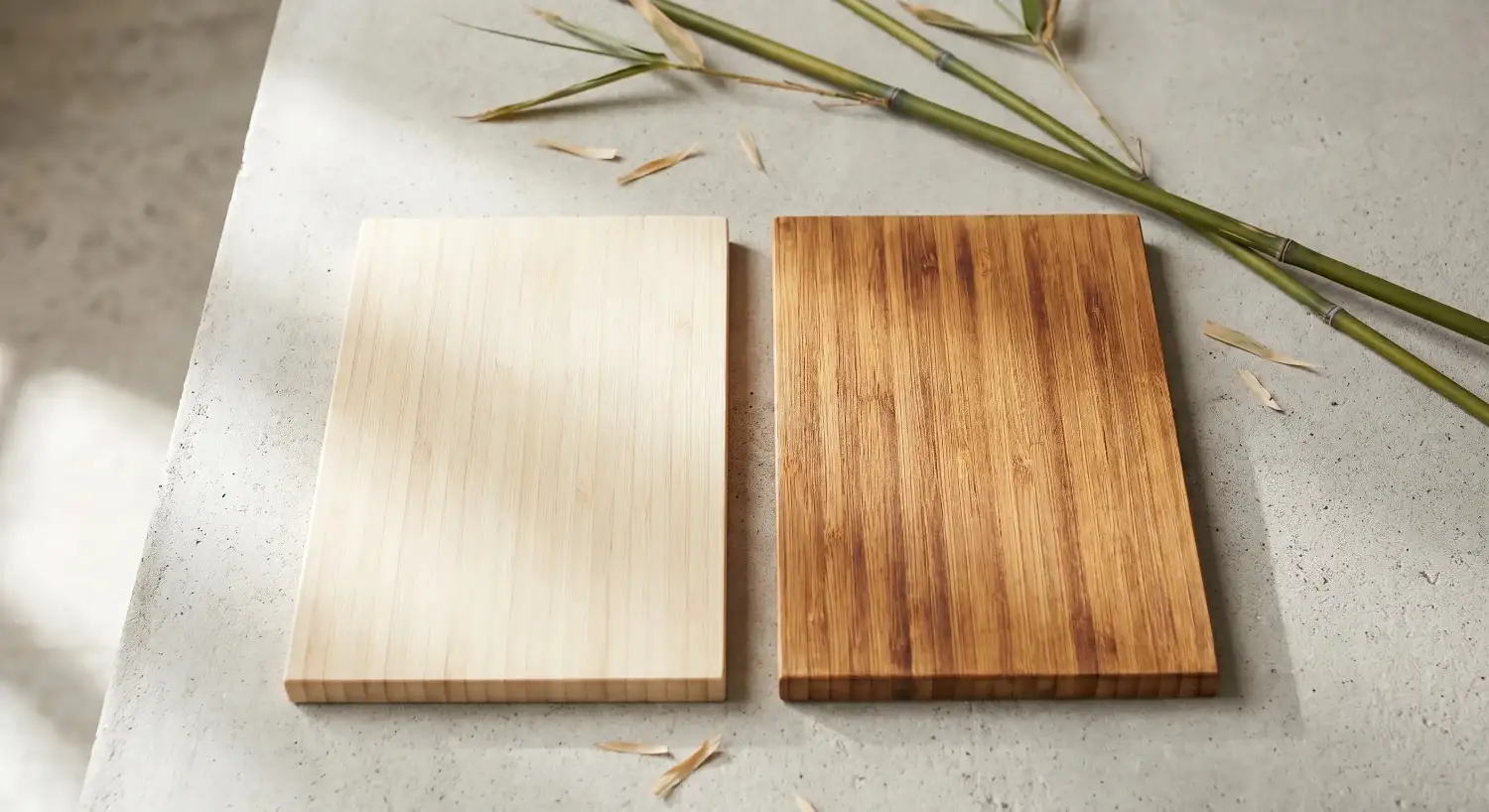
What separates it from raw bamboo at a glance is the color. Natural bamboo is pale, almost creamy. Carbonized bamboo is a warm caramel or dark brown. You’d notice the difference immediately on a shelf.
The Carbonization Process: How Is Bamboo Carbonized?
What Does Carbonized Bamboo Mean?
What is carbonized bamboo? Simply put, it’s bamboo that’s been heat-treated in a controlled, low-oxygen environment to alter its color, density, and chemical makeup. The bamboo doesn’t burn. It transforms. The sugars and starches inside the fibers break down, what’s left is a darker, harder, more stable material than what you started with.
The technique isn’t new. Heat-treating wood and plant materials goes back centuries in Japan and parts of Southeast Asia, where craftsmen figured out that controlled burning or steaming made timber last longer. Modern carbonization of bamboo is a more precise version of that same logic, applied industrially.
The simplest way I can explain what does carbonized bamboo mean to someone who’s never heard of it: imagine bamboo going through a really intense sauna. It comes out darker, denser, and a lot less appealing to insects. That’s the short version.
What separates it from raw bamboo at a glance is the color. Natural bamboo is pale, almost creamy. Carbonized bamboo is a warm caramel or dark brown. You’d notice the difference immediately on a shelf.
The Carbonization Process: How Is Bamboo Carbonized?
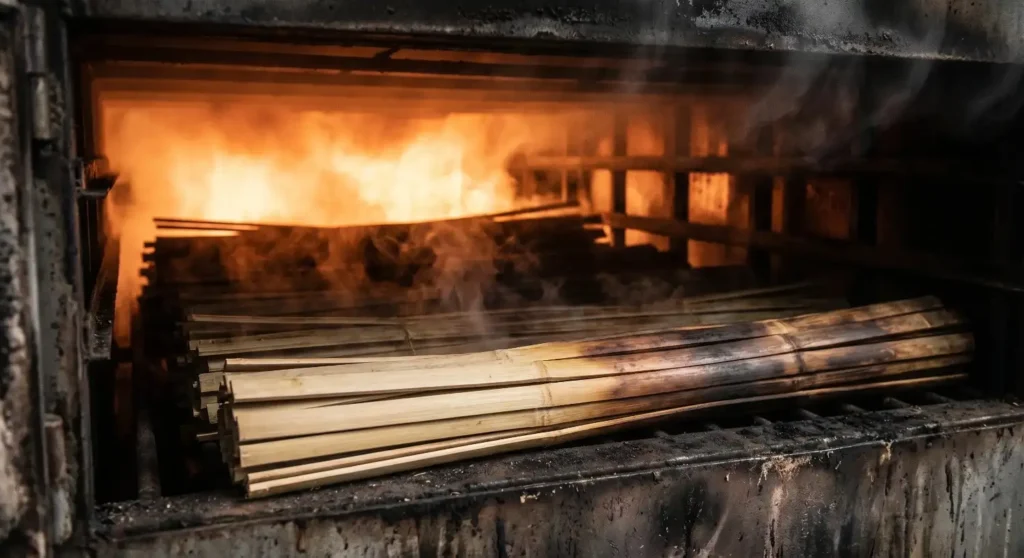
The process starts with raw bamboo strips or boards being placed in a pressurized chamber where oxygen is restricted. Then the heat goes up, typically somewhere between 1,800 and 2,200 degrees Fahrenheit depending on the desired result.
At those temperatures, thermal decomposition kicks in. The organic compounds inside the bamboo, mainly the sugars and starches, break down and get driven out of the fiber. What remains is a restructured cellulose matrix that’s denser and chemically different from what went in.
There are two main settings people use: light carbonization and heavy carbonization. Light carbonization produces that medium caramel tone and keeps more of the bamboo’s original structural density. Heavy carbonization pushes longer and hotter, giving you a deep chocolate-brown color but slightly reducing hardness in the process. I’ve seen both in flooring samples, and honestly the dark version looks better to me, though I’d use the lighter version anywhere load-bearing matters.
No chemicals. No bleach. No adhesive coatings baked in. The color change is entirely a result of heat. That’s worth knowing about.
Carbonized Bamboo vs Natural Bamboo: Key Differences
This is where it gets interesting. Carbonized bamboo vs natural bamboo isn’t just a cosmetic difference. The two materials behave differently in ways that actually matter.
Color
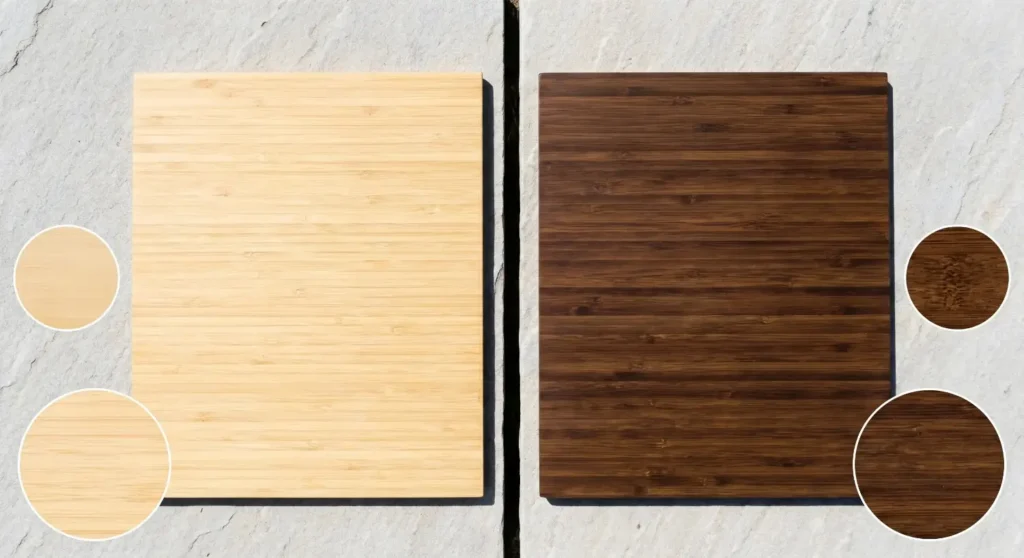
Natural bamboo is pale, yellowish, and consistent. It’s clean-looking but can feel cold in warmer interior spaces. Carbonized vs natural bamboo on a showroom floor is an immediate visual contrast. Carbonized has that warm amber-to-dark-brown tone that reads more like hardwood than bamboo. If you’ve ever wanted bamboo but found it looked too “tropical” or lightweight, carbonized is the fix.
Hardness and Durability
Here’s where a lot of people get confused. Carbonization actually reduces the Janka hardness rating slightly compared to raw strand-woven bamboo. Natural strand-woven bamboo can hit around 3,000+ on the Janka scale. Carbonized strand-woven drops a bit from that. But we’re talking about a difference that’s only relevant in commercial high-traffic environments. For residential use, furniture, cutting boards, or cabinetry, carbonized bamboo is hard enough. Really hard enough. I’ve had a carbonized bamboo shelf holding about 40 kilos of books for two years. Not a scratch on it.
Moisture and Insect Resistance
This is where carbonized bamboo wins clearly. Because the sugars and starches are removed during heat treatment, insects have almost nothing to feed on. Termites, powder post beetles, the usual culprits that destroy untreated wood? Less interested in carbonized bamboo.
Natural vs carbonized bamboo in a humid environment tells the story fast. Natural bamboo will absorb moisture more readily and can swell, warp, or discolor over time. Carbonized bamboo’s altered fiber structure makes it noticeably more stable. I put a natural bamboo tray and a carbonized one in my bathroom for six months. The natural one started showing faint swelling at the edges. The carbonized one looked exactly the same.
Structural Strength
Does carbonization weaken bamboo? Slightly, yes, if we’re being precise. The heat breaks down some of the lignin holding fibers together. But in practical terms, for most products, you won’t notice. Where it matters is in structural applications like load-bearing flooring or construction panels, where you’d want to check the specific product specs before assuming carbonized works identically to natural.
Cost
Carbonized bamboo vs natural bamboo on price, carbonized usually costs more. The heat treatment adds a processing step and energy cost. The premium isn’t huge, maybe 10–20% depending on the product category, but it’s there. Whether it’s worth it depends on your use case. For cutting boards and bathroom accessories, I’d pay the extra without hesitation. For a fence you’re painting over anyway, probably not.
Properties and Benefits of Carbonized Bamboo
Enhanced hardness is the headline benefit, even with the slight Janka reduction from heavy carbonization, carbonized bamboo outperforms most softwoods and rivals many hardwoods in everyday applications.
Moisture resistance makes it practical for kitchens, bathrooms, and outdoor-covered spaces. It won’t perform like teak in a full monsoon, but for normal indoor humidity fluctuations it holds up really well.
Insect repellence is real and not overstated. The removal of organic compounds that bugs eat means carbonized bamboo naturally deters the most common wood pests without any chemical treatment.
Dimensional stability is the underrated one. Less swelling, less warping, less shrinking with temperature changes. For flooring and furniture, this is actually the property that saves you the most headaches over years of use.
And the aesthetics. That warm brown tone works with a lot of interior styles. I’ve seen it in Japandi-style apartments and rustic farmhouse kitchens and it fits both without trying.
What Is a Carbonized Bamboo Cutting Board?
What is a carbonized bamboo cutting board? It’s a cutting board made from heat-treated carbonized bamboo rather than raw natural bamboo or wood. And if you’re in the market for a kitchen cutting board, this matters more than you’d expect.
The hardness means it won’t gouge as easily. The low sugar/starch content means bacteria and mold have fewer organic materials to colonize. The moisture resistance means it won’t absorb meat juices and odors the way softer woods do. I switched to one about 18 months ago and I don’t think about my cutting board anymore, which is how it should be.
Is it safe for knives? This is a real debate. Bamboo cutting boards are harder than wood, and hard boards can dull knife edges faster. If you’re precious about Japanese knives, use an end-grain wood board for those. For everything else, a carbonized bamboo board is practical and easy to clean.
Care is simple. Hand wash, dry immediately, oil it with food-grade mineral oil every couple of months. Don’t soak it, don’t put it in the dishwasher. Same rules as any quality cutting board.
Common Uses and Applications of Carbonized Bamboo
Flooring is probably where most people encounter it first. Carbonized strand-woven bamboo floors look like premium hardwood, cost less, and are sourced from a plant that regrows in 3–5 years instead of 50.
Furniture and cabinetry is the second biggest category. Shelving, chairs, table surfaces, drawer fronts. The color and hardness make it a natural fit.
Kitchen products go beyond cutting boards. Utensils, serving boards, countertop surfaces, storage containers. You’ll find carbonized bamboo all over functional kitchenware because it handles moisture and daily abuse better than natural bamboo does.
Outdoor furniture works in covered spaces. A carbonized bamboo chair on a shaded patio, sure. Left out in the rain year-round, no.
Construction materials are the industrial end. Carbonized bamboo plywood panels are used in interior wall cladding, structural panels, and flooring underlays in commercial buildings. It’s a legitimate building material, not just a novelty.
Is Carbonized Bamboo Eco-Friendly and Sustainable?
Yes, with some nuance.
Bamboo itself is one of the most renewable materials on earth. It grows fast, some species a meter a day, sequesters carbon while growing, needs no pesticides, and regrows from its own root system after harvesting. The base material is about as clean as it gets.
The carbonization process uses heat, not chemicals. There’s no bleach, no formaldehyde, no synthetic coating baked in. The energy cost is real but the chemical footprint is minimal compared to treated hardwoods or PVC-based materials.
Compared to plastic alternatives, carbonized bamboo isn’t close. Plastic cutting boards, plastic furniture, plastic flooring tiles all carry manufacturing and disposal footprints that bamboo simply doesn’t. Compared to certified hardwoods, bamboo wins on replenishment rate by a wide margin.
If sustainability matters to you, look for FSC certification on the bamboo source and OEKO-TEX certification on finished products. Those certifications confirm both the forest management and the product safety standards. Not every brand carries them, but the good ones do.
Frequently Asked Questions
Is carbonized bamboo better?
For most home applications, yes carbonized bamboo is better. The moisture resistance, pest resistance, and aesthetic warmth make it a practical upgrade over natural bamboo.
Is carbonized bamboo safe to use?
Completely. No chemicals are used in the carbonization process, it’s pure heat treatment. Food-safe, furniture-safe, no off-gassing concerns.
What is the difference between natural and carbonized bamboo?
Natural bamboo is pale, slightly softer, and more vulnerable to moisture and insects. Carbonized bamboo is darker, more moisture-resistant, and chemically altered to remove the organic compounds bugs like to eat.
What does carbonized bamboo mean?
It means bamboo that’s been heat-treated in a low-oxygen environment, changing its color, density, and chemical composition without burning it.
What are the two main types of bamboo?
In the context of bamboo products, the two main types you’ll see are natural bamboo and carbonized bamboo. Within those, you’ll also find strand-woven and flat-pressed constructions, but the natural vs. carbonized distinction is the primary one that affects performance and appearance.