

I switched to stainless steel bakeware about three years ago after reading one too many articles about what non-stick coatings actually do inside a hot oven. I wasn’t panicking — but I figured if I was already buying better ingredients, I should probably think about what I was baking on. That decision changed my kitchen more than I expected.
This isn’t a sponsored post. I’ve actually used this stuff, burned cookies on it, scrubbed it at midnight, and formed real opinions. Here’s everything I know.
Table of Contents
ToggleWhat Is Stainless Steel Bakeware? (Material Science Made Simple)
Stainless steel bakeware is made from an iron-chromium alloy — sometimes with nickel added for durability. The grade stainless steel you’ll see most often is 18/10 stainless steel bakeware, where 18% is chromium and 10% is nickel. That nickel content is what makes it resist rust and corrosion over time. 18/8 is close behind, and 18/0 stainless steel baking sheet options exist for people with nickel sensitivities.
The grade that matters most for baking? 18/10 stainless steel baking sheet is the sweet spot. Some brands use T-304 surgical-grade steel, which is genuinely the best you can get.
One thing people don’t talk about enough: stainless steel on its own is a poor heat conductor. That’s why good stainless steel bakeware uses an aluminum core sandwiched in the middle — it solves the heat distribution problem without the reactivity issues of bare aluminum. Tri-ply construction takes it further with two stainless layers and one aluminum layer. The result is even browning with no hot spots.
Stainless Steel Bakeware vs Other Materials: A Head-to-Head Comparison
Here’s where I’ll be direct. Not all baking sheets are equal.
Aluminum is cheap and conducts heat well. But non aluminum baking sheets are worth the upgrade if you’re baking acidic things regularly — tomato-based dishes, lemon bars, anything with vinegar. Aluminum reacts. Stainless doesn’t.
Non-stick pans with PTFE/Teflon coatings? I used them for years. The problem isn’t using them carefully — it’s that coatings scratch, chip, and eventually end up in your food. Non toxic stainless steel bakeware skips that problem entirely.
Ceramic-coated looks nice. But the coating wears out. Glass holds heat well but is slow to heat up and easy to crack. Cast iron is a workhorse but it’s heavy and not ideal for delicate baked goods.
Safe baking trays made from stainless steel are the only option where durability, safety, and performance actually overlap.
Benefits of Using Stainless Steel Bakeware
The first thing I noticed after switching was how clean my stainless steel sheet pans stayed over time. No peeling, no staining, no weird discoloration from high heat.
Non toxic stainless steel baking sheet options don’t leach chemicals. They don’t react with acidic foods. They won’t warp the third time you run them through a hot oven — assuming you bought a heavy duty stainless steel baking sheet with proper gauge thickness.
They’re also dishwasher safe sheet pans, which matters when you’ve roasted vegetables for a crowd and absolutely do not want to hand-scrub. Baking trays that don’t rust in the dishwasher are harder to find than you’d think — good quality stainless is one of the few that genuinely holds up.
The lifespan argument alone sells me. I have aluminum pans from five years ago that are warped and discolored. My stainless steel baking sheets still look basically new.
Potential Downsides of Stainless Steel Bakeware (Honest Review)
I’ll be honest: the sticking issue is real. Steel baking sheets are not non-stick, and if you forget to line your pan or grease it properly, you will spend quality time with a metal spatula trying to rescue your cookies. It gets old.
The heat conductivity thing is also worth understanding. A bare single-ply steel cooking sheet won’t give you consistent results on its own. You need either tri-ply construction or an aluminum core — otherwise you’re fighting hot spots.
Nickel allergy is a real concern for a small percentage of people. If that’s you, stick to 18/0 stainless steel baking sheet options, which are nickel-free.
And the price. High quality stainless steel bakeware costs more upfront than a $12 aluminum pan. That’s just true. Whether it’s worth it depends on how often you bake and whether you care about what your food touches.
Types of Stainless Steel Bakeware: Complete Product Category Guide
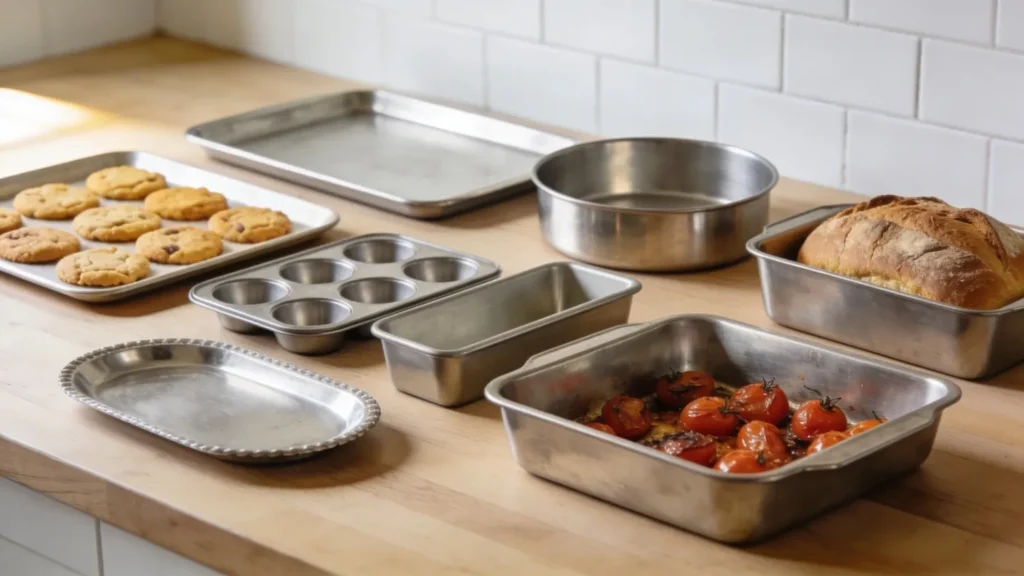
Stainless Steel Baking Sheets and Half-Sheet Pans
The stainless steel baking sheet is where most people start, and for good reason. A good stainless steel sheet pan handles almost everything — roasting, baking, reheating, sheet dinners. The standard size is a half-sheet (18″ x 13″), and it’s the single most useful pan you can own.
I use mine at least four times a week. Sheet dinners, roasted broccoli, reheating pizza. The best stainless steel sheet pans have a rolled rim that doesn’t warp and a weight that feels substantial without being awkward. Heavy duty stainless steel baking pans in this category are the ones worth spending on.
Stainless Steel Cookie Sheets (Rimmed vs Rimless)
The stainless steel cookie sheet debate — rimmed or rimless — is more personal than technical. Rimless sheets give you easy cookie removal and slightly better airflow around the edges. Rimmed stainless steel baking sheets are more versatile. I use rimmed for everything and just accept that I’ll slide cookies off the edge occasionally.
The best stainless steel cookie sheet I’ve used has a medium gauge (not paper-thin, not absurdly heavy), a light interior finish, and handles that actually fit inside a standard oven. The 18/10 stainless steel cookie sheet grade is what I’d look for. Some of the stainless steel cookie sheets made in USA brands use it as a selling point, and it’s a legitimate one.
Avoid anything marketed as “metal cookie sheet” with no grade information. That’s a red flag. Cheap steel cookie sheet options often use mixed-grade metal that rusts or warps fast. These are not the safest cookie sheets for baking long-term.
Stainless Steel Cake Pans (Round, Square, Loaf)
Here’s one category I didn’t expect to love this much. Stainless steel baking pans in round, square, and loaf shapes are rock-solid. No warping, no coating to scratch, no rust.
I bake banana bread at least twice a month, and my stainless steel bake pan loaf has outlasted two non-stick versions I owned before it. For cakes, the key is lining with parchment — stainless conducts heat evenly, but it is not forgiving if you skip the prep.
Stainless Steel Roasting Pans and Racks
A large stainless steel baking pan with a rack is one of those kitchen investments that sounds boring until you actually use it. I roast a chicken on mine every other week. The rack lifts the bird so heat circulates underneath, and the stainless steel baking pan catches all the drippings without reacting with them.
Large stainless steel baking pans in this category are also great for sheet cakes, big batches of roasted vegetables, or anything where a half-sheet pan doesn’t give you enough depth.
Stainless Steel Muffin and Cupcake Tins
Most people default to dark non-stick for muffin tins, but stainless steel bakeware options exist and are worth considering. The tradeoff is honest: you’ll need paper liners every time. Cupcakes don’t unmold cleanly from ungreased stainless. But the upside is you’re not eating bits of peeling coating on your morning muffin, which feels like a reasonable trade.
Stainless Steel Pie Pans and Tart Pans
Thin, light, and great at conducting heat around a flaky crust. Stainless steel baking trays and pie pans actually brown the bottom of a crust better than glass does, in my experience. Glass looks nicer on the table, but if you care about a properly cooked bottom crust, stainless wins.
Stainless Steel Jelly Roll Pans
The stainless steel jelly roll pan is basically a rimmed baking sheet in a slightly smaller format (usually 15″ x 10″). Great for bar cookies, Swiss roll cakes, roasting small batches of vegetables, or toasting nuts. It’s a pan that doesn’t get talked about enough. Mine gets used constantly for things that don’t fit the full half-sheet.
Stainless Steel 9×13 Baking and Casserole Dishes
The 9×13 is the workhorse. Lasagna, brownies, casseroles, sheet cakes. A stainless steel baking pan in this size is incredibly versatile. It’s also where the “non-reactive” argument matters most — anything with tomato sauce or acidic marinades stays in that pan for a while, and you don’t want it reacting with the pan surface. Stainless steel baking pans handle that without any issue.
How to Choose the Best Stainless Steel Bakeware: Buying Guide
Start with grade. 18/10 stainless steel bakeware is the standard I recommend. It’s more durable and more rust-resistant than lower grades. If nickel allergies are a concern, 18/0 stainless steel baking sheet is the move.
Gauge matters. Thicker pans warp less. Look for “heavy duty stainless steel baking sheet” language and actually check the gauge spec — 18-gauge or thicker is what you want. Paper-thin baking sheets stainless steel will betray you.
Construction matters for even baking. Single-ply stainless is fine for roasting, but for baking cookies roasting tasks where even browning matters, look for tri-ply or a pan with an aluminum core. The best stainless steel baking pans almost always mention this.
If buying American-made matters to you, there are solid stainless steel baking sheets made in USA options — 360 Cookware being the most well-known. The quality is real.
Best Stainless Steel Bakeware Brands (Tested & Reviewed)
360 Cookware is the brand I recommend most for professional stainless steel bakeware. Surgical-grade 18/10, made in Wisconsin, and the pans bake with the kind of consistency that makes you wonder why you used anything else. Not cheap. Worth it.
TeamFar is my pick for budget-friendly non toxic cookie sheet options. Their stainless steel baking sheets are 18/0, which means nickel-free, and they’re shockingly good for the price. If you’re just starting out and don’t want to spend $80 on a single pan, start here.
Nordic Ware makes solid stainless steel sheet pans with good weight and consistent results. Widely available. Reliable. Not exciting, but that’s fine.
Hestan OvenBond is the premium option for people who want beautiful, brushed stainless that performs at a professional level. The best stainless steel sheet pan in their lineup is genuinely impressive for both home and serious baking use.
How to Use Stainless Steel Bakeware: Tips for Perfect Results
Line your pans. Parchment paper is the best approach for most baking — it solves the sticking issue without adding any coating or chemical concern. For roasting, a light oil coat is enough.
Stainless steel cooking sheets take slightly longer to heat than dark pans. If a recipe was developed with dark non-stick bakeware, add a few minutes or bump temperature by 10-15 degrees. Once you’ve done it a couple of times, it becomes second nature.
For baking cookies roasting vegetables, or anything where browning matters, put your pan in the oven while it preheats. A hot pan under cold dough gives you a better bottom crust and more consistent results.
How to Clean and Care for Stainless Steel Bakeware
Most days, warm water and dish soap is all you need. For baked-on food, soak first — seriously, just let it sit for 20 minutes. It makes the scrubbing part actually manageable.
For stains and discoloration, Bar Keepers Friend is the answer. It removes heat discoloration, stuck-on grease, and water spots. I use it once a month on my stainless steel sheet pans and they come out looking nearly new.
Stainless steel baking sheets are dishwasher safe, but hand washing keeps them looking better longer. It’s baking trays that don’t rust that you want, and high-quality stainless delivers on that — just dry them promptly after washing.
Final Verdict: Is Stainless Steel Bakeware Worth It?
Yes. Not for everyone, not immediately, but for anyone who bakes regularly, it’s the better long-term choice.
The best stainless steel bakeware is the kind you buy once and stop thinking about. No coating to coddle, no rusting, no warping, no wondering what’s in your food. The upfront cost is higher than aluminum or non-stick, but you’re not replacing it in two years.
If I were starting from scratch, I’d buy one best stainless steel baking sheet in half-sheet size, a 9×13 pan, and a stainless steel jelly roll pan. That covers 90% of what most home bakers need. Once you use them, you’ll understand the appeal pretty quickly.
Frequently Asked Questions
Is stainless steel bakeware good for baking?
Yes — especially for roasting and high-heat baking. For delicate items like cookies, just use parchment and you’re fine.
What is the healthiest bakeware?
Non toxic stainless steel bakeware, particularly 18/10 stainless steel bakeware, is one of the healthiest options available. No chemical coatings, no reactivity with food.
What should not be cooked in stainless steel?
Nothing is truly off-limits, but very sticky, low-fat baked goods without parchment will give you grief. Use liners and you’ll be fine.
What are the disadvantages of stainless steel pans?
Not non-stick, costs more upfront, and single-ply versions don’t heat as evenly as pans with an aluminum core. That’s about it.
Which is better, cast iron or stainless steel?
Depends what you’re making. Cast iron holds heat longer and is better for searing. Stainless steel baking pans are lighter, easier to clean, and better for most baking tasks. I use both.