

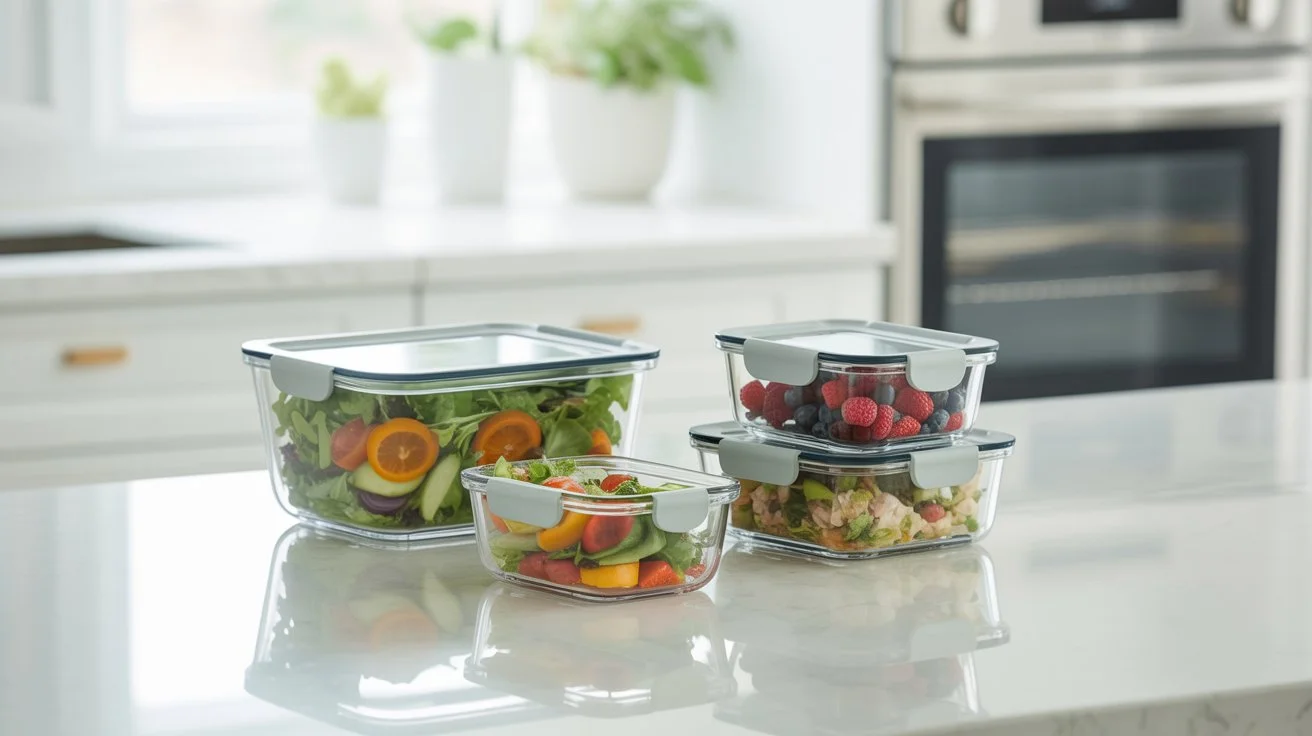

I’ve gone through a lot of food storage phases. Plastic bins stained orange from pasta sauce. Mismatched lids that somehow multiplied while the containers vanished. The flimsy zip-lock bag era I’d rather forget. Last spring I finally switched to joyjolt glass storage containers and honestly, it’s one of those small home upgrades that I keep thinking I should have done years earlier.
This review covers everything I’ve actually tested: seal performance, oven limits, lid durability, and how they stack up against Pyrex and the other big names. If you’re on the fence about whether glass storage is worth the money, stick around.
Table of Contents
ToggleWhy Glass Food Storage Is Worth It (And Why JoyJolt Stands Out)
Plastic containers leach chemicals. That’s just the reality. BPA gets a lot of the headlines, but BPS and phthalates are in there too, and heat accelerates the whole mess. Every time I microwaved leftovers in my old plastic containers I was doing something I probably shouldn’t have been doing.
Glass doesn’t do that. It doesn’t absorb smells, it doesn’t stain, and it doesn’t release anything into your food at any temperature. After six months with joyjolt glass in my kitchen, my fridge actually looks organized for the first time in my adult life. The containers are clear enough that I can see exactly what’s inside without opening anything, which sounds minor until you realize how much food waste that alone prevents.
JoyJolt sits in an interesting spot in the market. It’s not the cheapest option, but it’s nowhere near the premium pricing of some European brands. The build quality punches above its price point. That’s the short version.
JoyJolt Glass Container Sets: What’s in the Box & Which Set to Buy
10-Piece vs. 18-Piece vs. 24-Piece Set: Full Breakdown
The 10-piece set is a starter kit. You get 5 containers paired with 5 lids, covering the small and medium size range. If you’re a single person or a couple who meal preps occasionally, it’s enough. I started there.
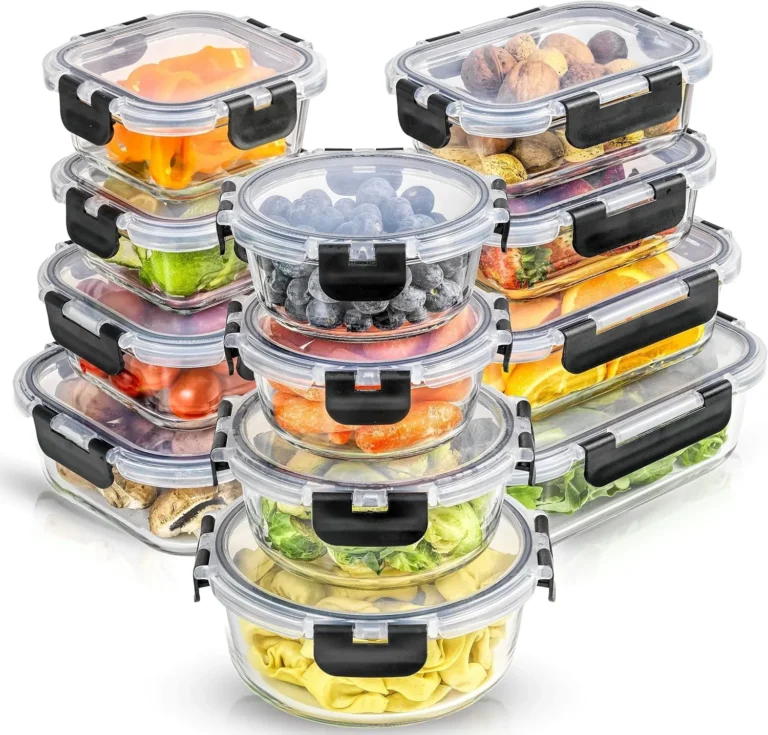
The 18-piece is where it starts making real sense. You get more size variety: a couple of larger containers for batch cooking, smaller ones for snacks and sauces, and mid-size for the everyday leftovers. It’s the set I’d actually recommend to most households. The price-per-piece value is noticeably better than the 10-piece.
The 24-piece is overkill for some people and exactly right for others. If you’re cooking for a family, doing serious weekly meal prep, or just hate doing dishes mid-week, the 24-piece covers everything without you ever running out of containers at the wrong moment. I upgraded to it a couple months in and haven’t looked back.
Container Shapes: Round vs. Rectangular vs. Square
Rectangular containers are the workhorses. They fit efficiently in a fridge shelf and stack cleanly. I use them for marinated proteins, sliced vegetables, and basically anything that needs to stay flat.
Round containers handle saucy dishes and soups better. The shape distributes heat more evenly in the microwave. My only complaint is they waste more fridge real estate than I’d like.
Square containers are weirdly underrated. They’re the best for pantry dry goods and snacks, and they stack tighter than the rounds. If I was buying again I’d intentionally get more squares.
Actual Container Weights by Size
This is something nobody tells you upfront. The small containers run around 230–250g. Medium ones are closer to 380–400g. The large containers hit around 560–580g, and the extra-large can get to 700g+. That’s before any food goes in them.
For home fridge and oven use, the weight is completely fine. For packing a work lunch every day? The medium containers feel noticeably heavier than plastic, and that gets old after a few weeks. It’s a real tradeoff worth knowing about.
Full Technical Specifications
Temperature Range: Freezer, Fridge, Oven, and Broiler Limits
JoyJolt glass containers are rated safe from -4°F in the freezer up to 572°F in the oven. That’s a 576-degree range, which covers almost every real cooking scenario. Broiler use is supported but I’d keep it under 500°F just to be safe — radiant heat from a broiler is uneven in ways that oven specs don’t fully account for.
Glass Wall Thickness and Structural Integrity Testing
The borosilicate glass walls measure around 3–4mm on the smaller containers, slightly thicker on the large ones. I dropped a medium container from counter height onto a tile floor once. It survived. I wouldn’t rely on that, but it was reassuring.
FDA Food-Safe & Lead-Free Compliance
JoyJolt glass is FDA-certified food-safe and explicitly lead-free. No coating, no lining, no hidden additives. Just glass. That matters, especially if you’re storing acidic foods like tomato sauce or citrus-based dishes, which can pull trace compounds from lower-quality glass over time.
Stackability and Nesting Dimensions
Same-size containers stack cleanly inside each other without lids. With lids on they stack about 4 high before getting unstable. The rectangular sets are particularly good for fridge shelving — they use space efficiently in a way the rounds don’t.
Airtight Seal Performance: Real-World Testing Results
The four-locking-tab lid system is the thing I was most skeptical about going in. Snap-lock lids always sound great in marketing and usually disappoint in practice.
These don’t disappoint. I filled a medium container with water, locked all four tabs, flipped it upside down, and left it on my counter for two hours. Not a drop. I repeated it with a thinner tomato broth and got the same result. The food-grade silicone gasket creates a real seal, not a theoretical one.
After six months, the gaskets on my first set are still intact. No warping, no thinning. I’ve run them through the dishwasher probably 200+ times. The seal on the first container I bought feels the same as the day I got it. That actually surprised me — I expected at least one to start leaking by now.
Oven Safety: Temperature Limits, Thermal Shock & Freezer-to-Oven Use
Thermal shock is what happens when glass experiences a sudden temperature change too fast for the material to adjust. Cheap glass cracks. Borosilicate doesn’t, because its thermal expansion coefficient is low enough to handle the stress.
Going from freezer to oven: remove the lid first (always), then let the container sit at room temperature for 10–15 minutes before putting it in a preheated oven. I’ve skipped the rest period a few times when I was impatient. Nothing bad happened, but I don’t recommend it. The right way is the safe way here.
The lids are not oven-safe. That’s a common mistake. Silicone gaskets and plastic lock tabs don’t survive oven temperatures. Glass only in the oven, full stop.
Microwave & Dishwasher Safety: What’s Allowed and What’s Not
Microwave with the lid off or vented. The containers reheat evenly and I’ve never had a cold spot issue with the rounds, which is more than I can say for my old plastic containers. For acidic foods like tomato-based sauces, long-term storage is fine — the glass won’t react. Just don’t store lemon juice for three weeks and expect no flavor transfer from whatever was in the container before.
Dishwasher: top rack for lids, either rack for the containers. After 200+ cycles the glass still looks new. The lids have held up too, though I’ve noticed the lock tabs on one of my older lids are very slightly stiffer than they were. Not broken, just stiffer. Minor thing.
Lid Care, Gasket Maintenance & Replacement Guide
Pull the silicone gasket out of the lid channel after every few washes and clean underneath it. Food residue builds up in that groove and if you leave it long enough you’ll get odors that seem to come from nowhere. It’s a five-second job. Most people skip it. Don’t.
Signs a gasket needs replacing: it’s visibly thinned, cracked, or has developed a permanent warp that keeps it from sitting flat. A compromised gasket won’t seal properly no matter how hard you press the tabs.
Replacement lids are sold separately on the JoyJolt website and Amazon. This is actually one of the things I appreciate about the brand — you don’t have to replace the whole container when a lid eventually wears out. Just the lid.
What Users Love: JoyJolt Advantages at a Glance
Crystal clarity is the first thing people mention, and it’s real. You can read the contents from across the kitchen without opening the container. Stains from curry, beets, and tomato sauce that would ruin plastic just wipe clean off glass.
Odor resistance is the other big one. My old plastic containers smelled like garlic for months after storing leftovers. These don’t retain a single smell. I’ve stored fish, kimchi, and blue cheese in the same containers across different weeks and there’s never any carryover.
For anyone doing weekly meal prep, the workflow is genuinely smooth: cook in the container, lid it, refrigerate it, put it straight in the microwave. No transferring, no extra dishes. I prep on Sundays and eat out of these same containers all week.
Honest Drawbacks: What JoyJolt Doesn’t Tell You
Weight is real. I’ll say it clearly: joyjolt glass storage containers are heavy. If you’re packing lunch and commuting, the medium container adds noticeable weight to your bag every single day. After a month of carrying it on the subway I switched to a smaller size for lunches. Not a dealbreaker but not nothing either.
New-container smell is a thing. When my 24-piece set arrived, several containers had a faint chemical smell — not strong, just present. It went away after two dishwasher runs. If you smell it, don’t panic. Run them through the dishwasher and it’s gone.
Breakage during shipping happens occasionally. Two of my extra-large containers from my second order arrived with hairline chips at the rim. JoyJolt replaced them without any friction, but it’s worth inspecting everything when your order arrives and not waiting a month to report it.
Long-Term Durability: 6-Month Real-World Testing
I’ve been using my original 10-piece set since last April. That’s around 180+ days of daily use, regular dishwashing, and a fair amount of oven reheating. No chips in normal use (that one drop was my fault). No seal failures. No cloudiness in the glass.
The lock tabs on two of my older lids have developed a slightly snappier sound when engaging, which I think means the plastic has hardened slightly. They still seal perfectly. Just sounds different. Could be nothing.
Customers who’ve used joyjolt reviews over longer periods report consistent durability, and that matches what I’m seeing. The 2-year warranty adds a real safety net if something does go wrong before that.
JoyJolt vs. Pyrex vs. Rubbermaid vs. Anchor Hocking: Head-to-Head
Airtight Performance Comparison
JoyJolt wins this category. Pyrex’s standard lids aren’t actually airtight — they’re snap-on covers that work fine for fridge storage but fail the liquid inversion test. Rubbermaid Brilliance (glass version) is the closest competitor on seal quality. Anchor Hocking uses a similar silicone gasket system to JoyJolt but with fewer locking tabs.
On a simple inversion test repeated 10 times across all four brands, JoyJolt and Rubbermaid Brilliance passed every time. Pyrex leaked on 6 out of 10. Anchor Hocking on 3 out of 10.
Oven Temperature Limits Side by Side
JoyJolt: 572°F. Pyrex: 450°F (and their borosilicate transition in the US to soda-lime glass a while back created real controversy). Rubbermaid Brilliance glass: 425°F. Anchor Hocking: 425°F.
If oven performance matters to you, JoyJolt’s higher temperature ceiling is a real advantage, not just a spec sheet number.
Price-Per-Piece Value Analysis
At current pricing, JoyJolt’s 18-piece set works out to roughly $3.50–$4.50 per piece depending on the sale. Pyrex runs slightly cheaper per piece but the lids aren’t airtight, so you’re not comparing the same product. Rubbermaid Brilliance is more expensive per piece. Anchor Hocking is comparable to JoyJolt on price.
Given the seal quality difference, JoyJolt’s value per dollar is hard to beat in this price range.
Warranty and Customer Support Comparison
JoyJolt’s 2-year warranty covers manufacturing defects, and from my experience getting two chipped containers replaced, customer support is fast and doesn’t argue with you. Pyrex’s warranty process is more bureaucratic. Rubbermaid’s is fine but not exceptional. Anchor Hocking’s warranty is limited and harder to navigate.
Which Brand Wins for Meal Prep? Which Wins for Casual Storage?
Meal prep: JoyJolt. Airtight lids, oven-safe, microwave-safe, leak-proof transport. It does everything a meal prepper needs in a single container.
Casual storage: Pyrex is honestly fine for basic fridge-and-microwave use, and it’s slightly cheaper. If you don’t need an airtight seal and you’re not using your containers in the oven regularly, Pyrex does the job.
Best Use Cases: When JoyJolt Containers Excel
Weekly meal prep is the obvious one. But I also use them for storing dry pantry goods: oats, protein powder, flour. The airtight seal keeps things fresh significantly longer than the bags they came in.
Restaurant leftovers. I keep two containers in my bag when I go out. Zero waste guilt and the food tastes better reheated in glass anyway.
They also work surprisingly well as a gift. A joyjolt brand 18-piece set as a housewarming gift is practical, good-looking, and the kind of thing the recipient actually uses rather than shoves in a cupboard.
Buying Guide: Which JoyJolt Set to Buy & Where
Singles or couples: start with the 10-piece. Families or serious meal preppers: go straight to the 18-piece. The 24-piece only makes sense if you’re cooking for more than 4 people or hate running out of containers mid-week.
Amazon is the most reliable place to buy with the best return process. The official JoyJolt website sometimes runs sales that beat Amazon pricing. Walmart carries select sets but the variety is limited. Stick to authorized retailers — counterfeits of popular container brands do exist and you won’t get a valid warranty through gray-market sellers.
Best time to buy: Black Friday, Prime Day, and JoyJolt’s occasional site-wide sales in January and September. I got my 24-piece set at around 30% off during a Prime Day sale.
Is JoyJolt a Good Brand?
Brand Reputation, Product Range, and Quality Track Record
Is JoyJolt a good brand? Yeah, it is. They started with drinkware — the double-wall glasses that went semi-viral on Instagram a few years back — and expanded into food storage. The brand has maintained quality consistency across both categories, which isn’t guaranteed when a company expands product lines.
Their customer support record is better than most brands in this price range. The warranty is real and they actually honor it.
Where Is JoyJolt Made?
Where is JoyJolt made? The glass components are manufactured in China, which is where most glass kitchenware is produced regardless of brand. Quality control on JoyJolt’s manufacturing is solid — I’ve seen more variation in Pyrex production than in JoyJolt’s across the same number of purchases.
JoyJolt Drinkware vs. JoyJolt Food Storage: Is Quality Consistent?
I have both. The double-wall coffee glasses I bought two years ago still look perfect. The insulation hasn’t degraded. The food storage line matches the same build standard. The joyjolt brand isn’t coasting on its drinkware reputation with a lower-quality storage line — both are good.
Are JoyJolt Glass Containers Worth It in 2026?
Yes. If you’re still using plastic containers, switching to joyjolt glass storage containers is one of the most practical kitchen upgrades you can make. Better food safety, longer freshness, actually airtight lids, and they look decent doing it. The weight is a real consideration for daily commuters, and the shipping damage issue is worth watching for. Everything else clears the bar. Buy the 18-piece.
Frequently Asked Questions
What is the best brand of glass storage containers?
For airtight performance and oven safety combined, JoyJolt glass storage containers are the best value in 2026. Rubbermaid Brilliance is a close second but costs more per piece.
Where is JoyJolt glass made?
JoyJolt glass is manufactured in China with FDA-certified, lead-free borosilicate glass.
Are JoyJolt containers actually leak-proof?
Yes. The four-tab locking lids with silicone gaskets pass liquid inversion tests. They’re the real deal.
Are JoyJolt glass containers oven safe?
Up to 572°F — lids off, glass only.
Can you go from freezer to oven with JoyJolt?
Yes, but let them sit at room temp for 10–15 minutes first. Don’t rush it.
Are replacement lids available?
Yep, sold separately on Amazon and the JoyJolt website.
Do the containers smell when new?
Sometimes a faint smell on arrival. Two dishwasher cycles clears it completely.